

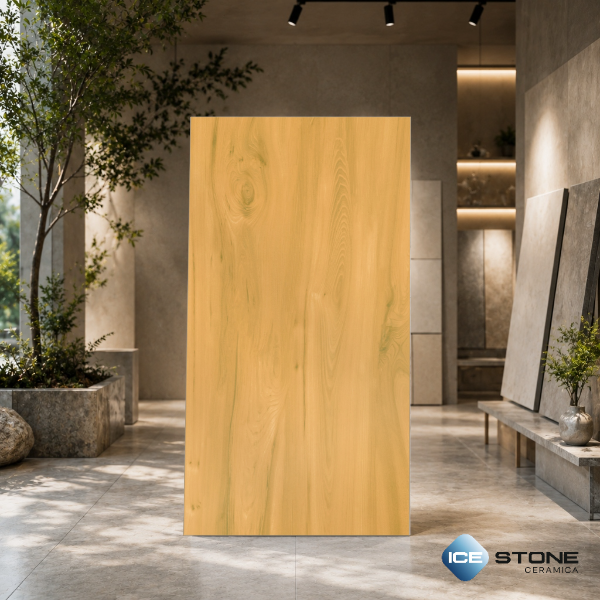
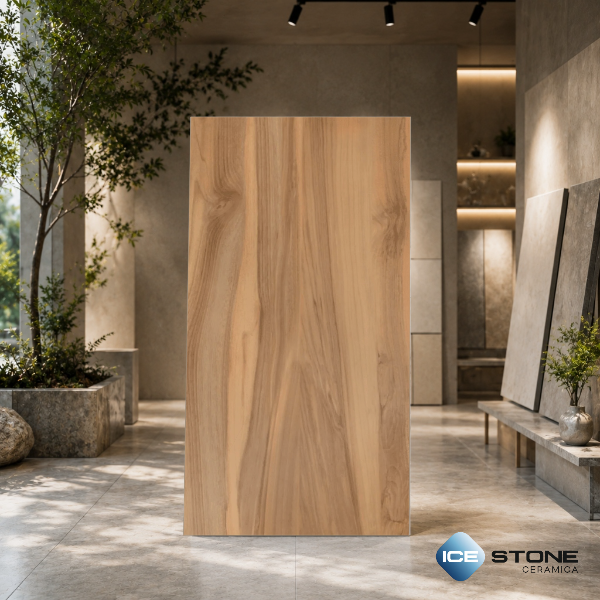
Quick answer: Wooden floor tiles are ceramic or vitrified tiles with a wood grain digitally printed and textured onto the surface. They give a floor the look of real timber while resisting water, scratches, and termites in ways natural wood flooring cannot.
Real wood flooring warps in humidity, scratches under foot traffic, and needs sanding and refinishing every few years to stay looking good. A wooden floor tile solves all three problems by putting the same grain and tone on a fired ceramic or vitrified body, built to handle daily use without a single maintenance call.
What makes wooden floor tiles different from real wood
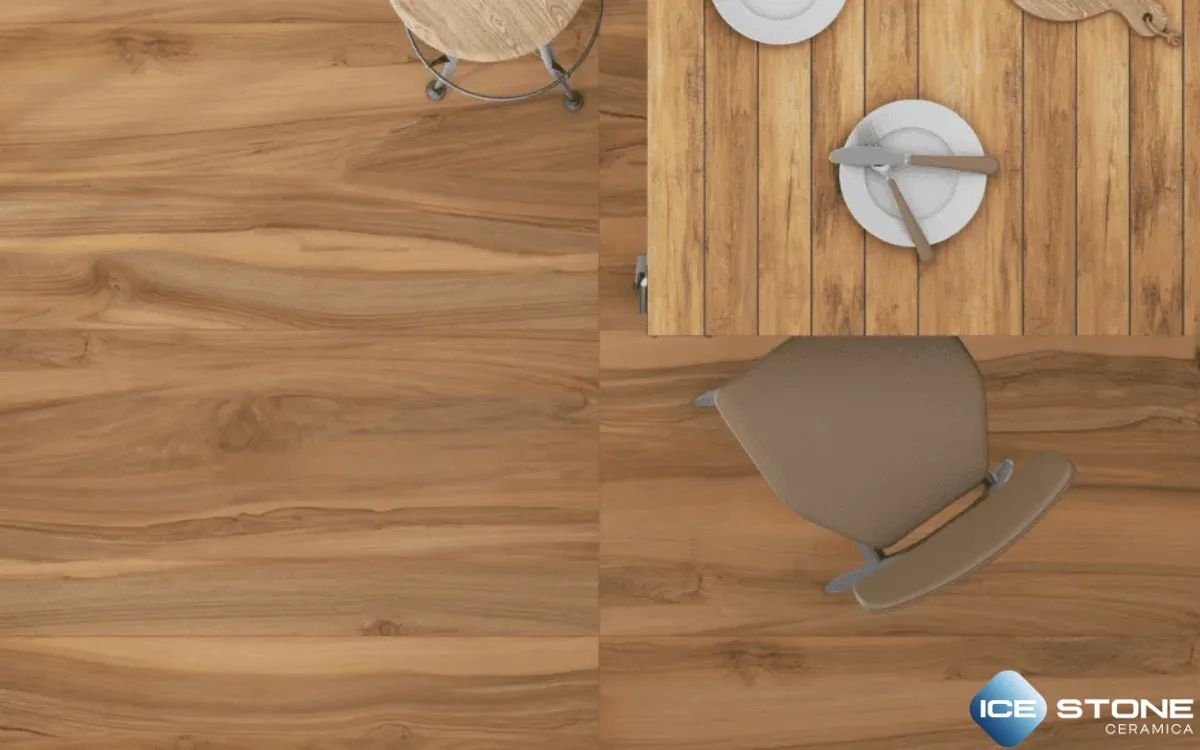
A wooden floor tile is not wood. It’s a porcelain, vitrified, or ceramic tile with a printed and embossed wood-grain surface, fired at high temperature so the pattern and texture become part of the tile itself, not a coating that wears off.
That base material is what gives it three advantages real timber can’t match:
Water resistance. Vitrified and porcelain wood-look tiles absorb almost no water, so they don’t swell, cup, or stain the way solid wood does near kitchens, entryways, or humid rooms.
No pest risk. Termites and wood-boring insects have nothing to feed on in a ceramic tile, which removes one of the biggest long-term risks of real timber flooring.
Zero refinishing. The wood-look finish is fired into the tile, not applied as a surface coat, so it never needs sanding, staining, or resealing the way a real wood floor does every few years.
The trade-off is a small amount of the underfoot warmth real timber gives you. For most homes, especially in a climate with real humidity, that trade favors the tile.
Real wood vs wooden floor tiles at a glance
| Factor | Real wood flooring | Wooden floor tiles |
|---|---|---|
| Water resistance | Swells and stains in humidity | Near-zero water absorption |
| Termites | At risk without treatment | No risk, ceramic base |
| Refinishing | Needed every few years | Never needed |
| Underfoot feel | Warmer, more natural | Close, not identical |
| Upfront cost | Higher for solid timber | Generally lower |
| Long-term upkeep cost | Ongoing sanding, sealing, repairs | Sweeping and mopping only |
Wooden floor tiles design
Plank-style and modern wood-look designs
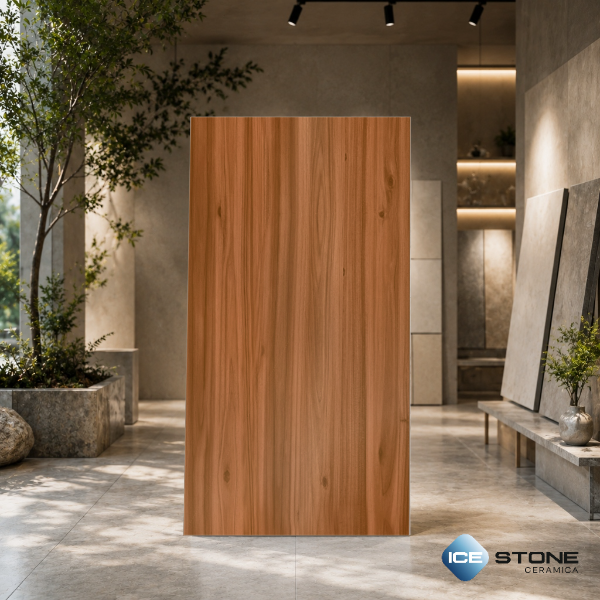
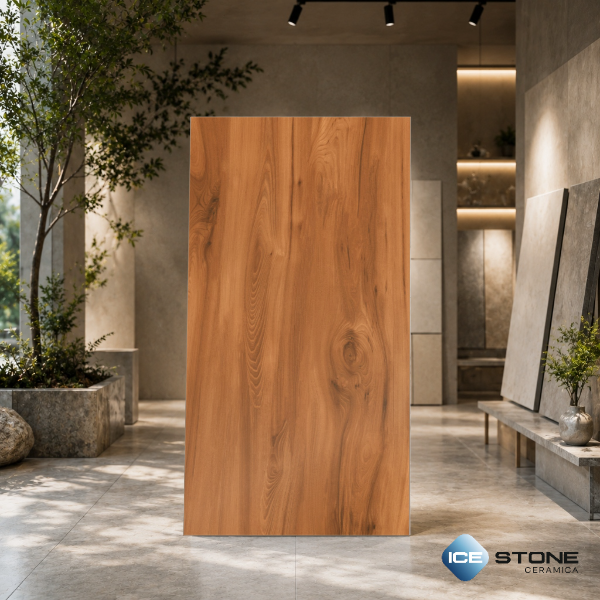
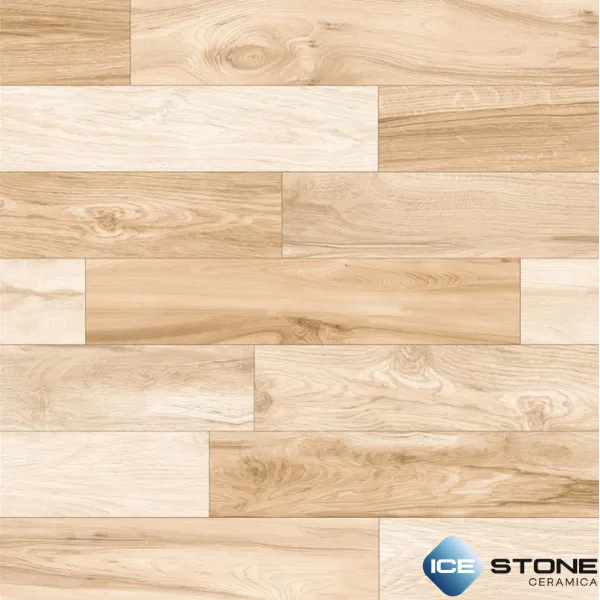
Modern wood-look tile design favors long, narrow plank formats over square tiles, since the elongated shape mimics real floorboards far more convincingly. Laid in a straight line, this format reads as genuine timber flooring from a few feet away. Light oak and washed-grey tones dominate current buyer preference over the darker mahogany and teak shades that were common a decade ago.
Herringbone and pattern layouts
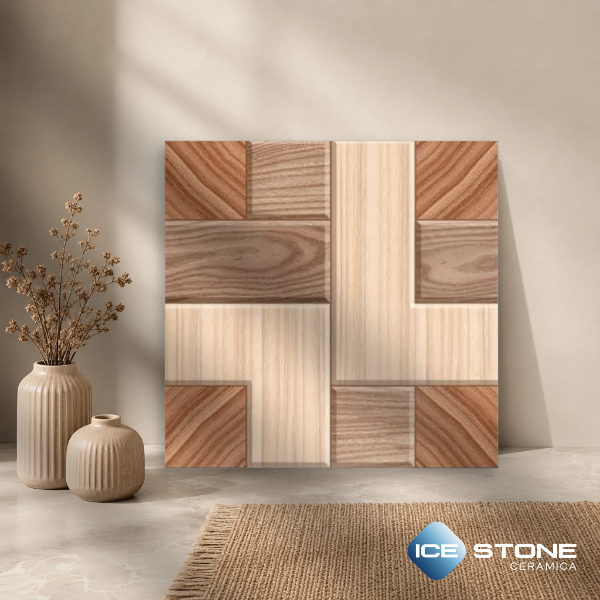
Herringbone and chevron layouts work particularly well with plank-format wood-look tiles, since the elongated shape suits an angled lay in a way a square tile doesn’t. A herringbone wood floor reads as a deliberate design upgrade rather than a default choice, which is why it shows up most often in living rooms and bedrooms going for a more considered look. See the broader Wooden Tiles design collection for both wall and floor formats.
Wooden floor tiles texture
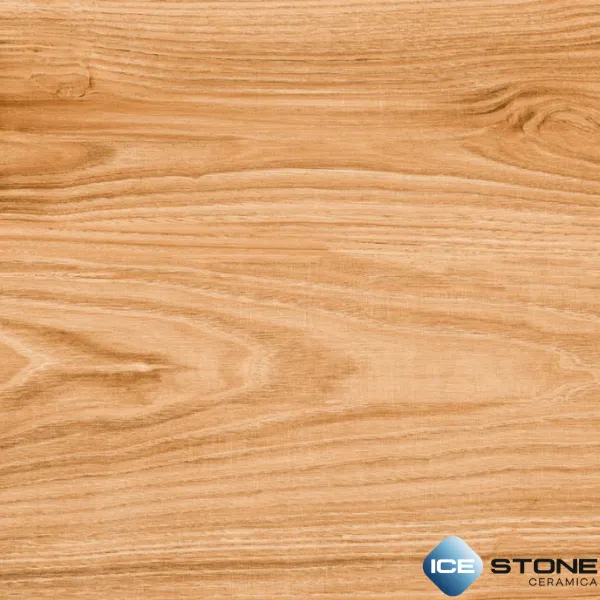
Texture is what separates a convincing wood-look tile from an obviously printed one. The better tiles emboss a grain texture directly onto the surface, so the pattern is felt underfoot as well as seen, with the physical texture lining up to the printed grain lines.
A matte or low-sheen finish is standard for wood-look tiles, since real timber has no glossy surface and a high-shine finish would break the illusion immediately. Matte also happens to hide dust and light scuffs better than a polished surface, which suits bedrooms and living rooms well.
A carving or rustic finish goes a step further, with deeper grain depth you can feel under a bare foot, closer to a reclaimed or weathered wood look. This finish suits a more rustic or farmhouse interior style, though the deeper texture can hold more dust in high-traffic areas than a plain matte surface. See Matt Tiles, Carving Tiles, and Rustic Tiles for the full texture range.
Wooden floor tiles by colour
Oak and light-honey tones remain the most requested wood-look colours, since they brighten a room and suit almost any furniture style. Walnut and darker brown tones bring a heavier, more traditional character, working well in living rooms and studies. Grey-wood tones have grown in popularity for a cooler, more contemporary take on timber without the warm undertone.
Browse the palette on Brown Tiles, Beige Tiles, and Grey Tiles, each carrying multiple wood-look designs.
Where to use wooden floor tiles
Living room
Wooden floor tiles suit living rooms well, prioritizing a warm, comfortable feel over the stain resistance a kitchen would need. A plank-format tile in a straight or herringbone lay works especially well here. See Living Room Floor Tiles for the full range.
Bedroom
Bedrooms are the other strongest fit, since the goal is comfort and warmth underfoot rather than heavy-duty durability. Lighter oak tones keep a smaller bedroom feeling open, while a darker walnut tone grounds a larger room. See Bedroom Floor Tiles for more designs.
Other spaces
Wooden floor tiles also work in home offices and halls that want a residential feel rather than a stone or marble-look floor. For covered balconies or semi-outdoor areas, check that the specific collection is rated for outdoor exposure. A standard indoor wood-look tile isn’t built for direct sun and rain the way an Outdoor Floor Tiles design is.
Wooden floor tiles sizes
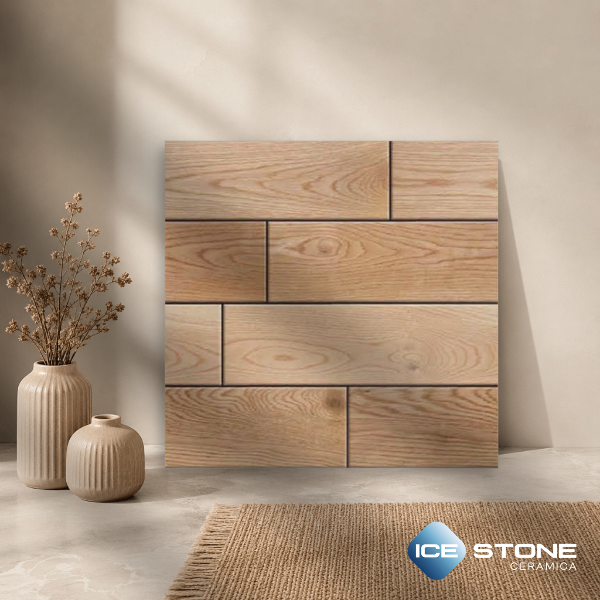
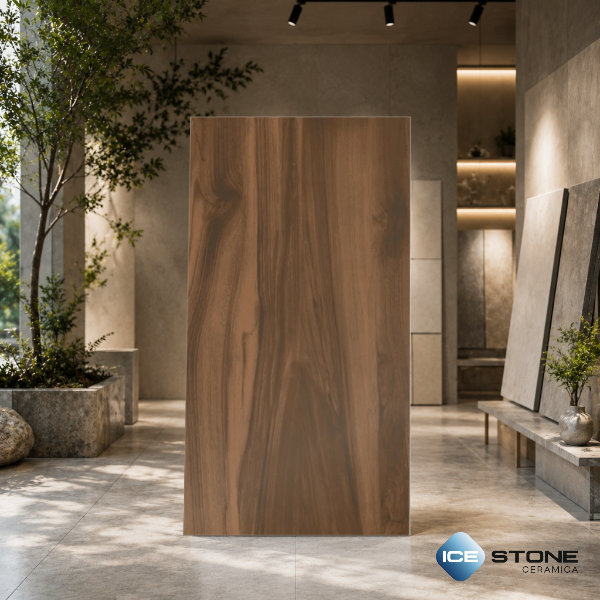
Wood-look tiles come in two broad formats: standard square tiles and elongated planks. The 2×2 feet (600×600 mm) format remains the most common size, offering an easy, low-wastage installation for most rooms. Plank formats run longer and narrower, closer to real floorboard proportions, and generally cost more per square foot due to a more specialized manufacturing process.
Wooden floor tiles price
2×2 wooden floor tiles price
2×2 (600×600 mm) wood-look tiles are the most searched size-and-price combination in this category, and pricing here depends on whether the tile is ceramic or vitrified and how detailed the wood-grain print is. See current 2×2 pricing on the 2×2 Floor Tiles page.
Price by size
| Size | Approximate Price (₹ / Sq. Ft.) |
|---|---|
| 600 x 600 mm | ₹55 – ₹83 |
| 600 x 1200 mm | ₹62 – ₹81 |
Note: The prices that are quoted above are approximate. For accurate prices, kindly visit our respective product pages or get in touch with our customer support team.
How to choose the right wooden floor tile
Choose by room. Bedrooms and living rooms are the most natural fit, prioritizing warmth and comfort over the stain resistance a kitchen or bathroom needs.
Choose by texture. Look for a tile where the embossed surface texture matches the printed grain pattern. That match is what makes the wood-look effect convincing underfoot, not just visually.
Choose by colour. Lighter oak tones suit smaller or lower-light rooms by reflecting more light. Darker walnut tones work better in larger, well-lit spaces where they won’t make the room feel smaller.
Choose by format. A square 2×2 tile installs faster and with less wastage, while a plank format gives a more convincing timber look at a higher per-square-foot cost. If the room is small or irregularly shaped, a square tile is usually the easier, more economical fit.
Maintenance
Wooden floor tiles need only regular sweeping and an occasional mop with a pH-neutral cleaner. Because the wood-look finish is fired into the tile rather than applied as a surface coating, it doesn’t wear away or need reapplication the way a real timber floor’s protective finish eventually does. Avoid wax-based or oil-based cleaners made for real wood; they aren’t needed here and can leave a residue on a tile surface.