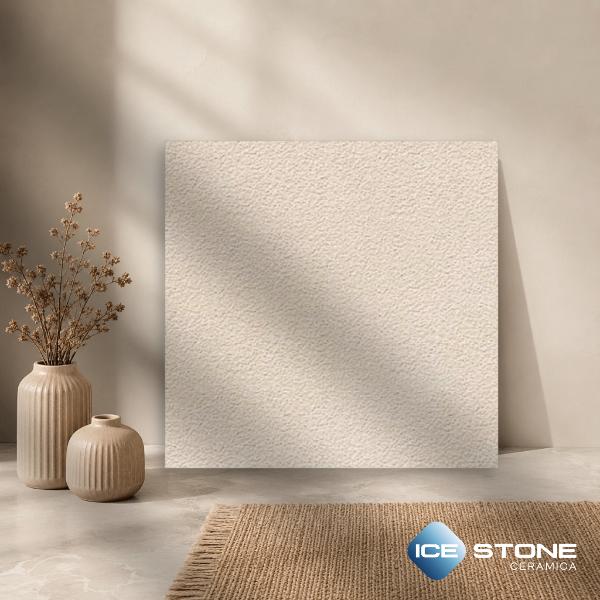
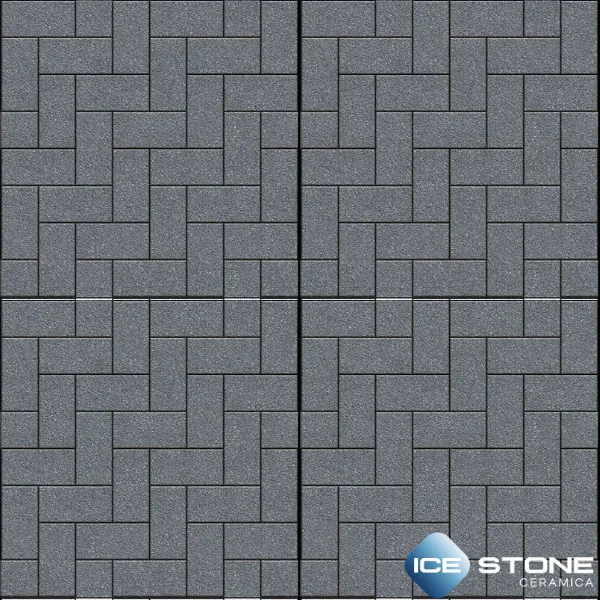
Parking areas take a beating — vehicle weight, oil drips, monsoon runoff, sun exposure, and constant foot traffic. Ordinary floor tiles aren’t built for that. At Icestone Ceramica, our parking tile range is chosen specifically for load resistance, slip resistance, and outdoor durability, so your driveway or car park holds up for years, not seasons.
Whether you’re tiling a home driveway, an open car park, or a commercial parking bay, the right choice comes down to three things: tile strength (material and thickness), surface grip (finish), and how well it handles sun and rain (outdoor rating). Everything below is built around helping you get that decision right — and showing you what we actually stock.
What Are Parking Tiles?
What are parking tiles? Parking tiles are heavy-duty floor tiles engineered for areas that carry vehicle weight and stay exposed to outdoor conditions. They’re typically vitrified or porcelain, chosen for higher load resistance, low water absorption, and anti-skid or matt finishes that stay safe when wet.
Why Regular Floor Tiles Don’t Work as Well
Unlike tiles made for living rooms or bedrooms, parking tiles need to resist:
- Continuous vehicle load, not just foot traffic
- Oil, grease, and tyre marks
- Direct sun, rain, and temperature swings
- Frequent washing without fading or staining
Not every tile in a showroom is rated for this. That’s why parking areas usually draw from a narrower set of materials mainly vitrified, with porcelain as an alternative for open outdoor zones.
How Parking Tiles Differ From Wall or Decorative Tiles
Parking tiles are chosen for performance first load-bearing capacity, water absorption rate, and surface grip with design as a secondary consideration. Wall tiles or decorative floor tiles, by contrast, are chosen mainly for appearance and aren’t rated for vehicle weight or constant outdoor exposure.
Why Choose Parking Tiles for Your Parking Area?
Durability
Vitrified tiles have low porosity and a dense body, which means they hold up better under repeated vehicle movement than standard ceramic tiles. Over time, this translates to fewer cracked or chipped tiles, even in a driveway used daily.
Vehicle Load Considerations
Thicker tiles generally handle vehicle load better. Our stocked vitrified sizes range from 9mm to 15mm depending on size — check the size-wise thickness table below before finalising. Heavier vehicles, or parking bays with frequent turning and braking, put more localised stress on the tile surface, so this isn’t a detail to skip.
Surface Grip
An anti-skid or matt finish reduces slipping in wet conditions, which matters more in a parking area than almost anywhere else in the home. Rain, washing, and the occasional oil spill all reduce traction, so grip should be a non-negotiable when selecting finish.
Outdoor Suitability
Tiles used outdoors need to resist UV fading and water absorption. Vitrified and porcelain tiles perform well here; glazed ceramic is better reserved for covered or indoor use, since prolonged sun and rain exposure can affect its surface over time.
Easy Maintenance
A dense, low-porosity surface resists oil and grease stains and is easier to hose down or scrub compared to more porous flooring. This matters most in a space that rarely gets a deep clean beyond a regular hose-down.
Design Options
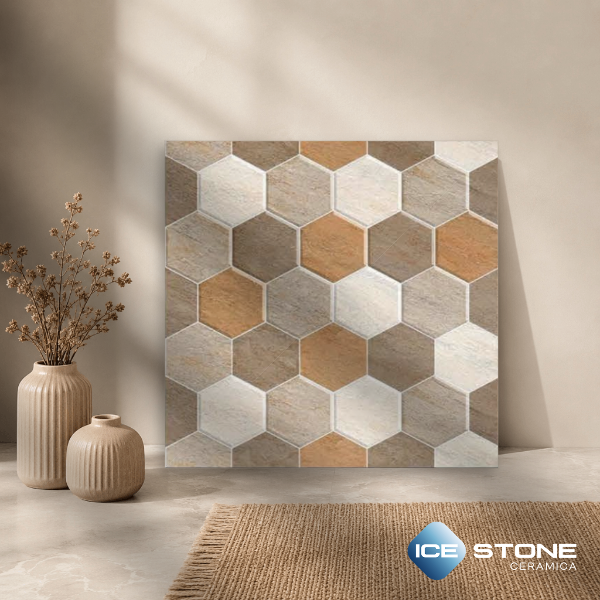
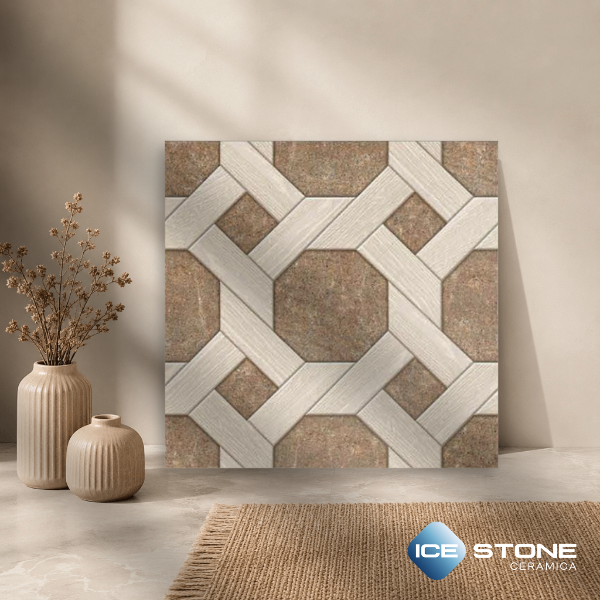
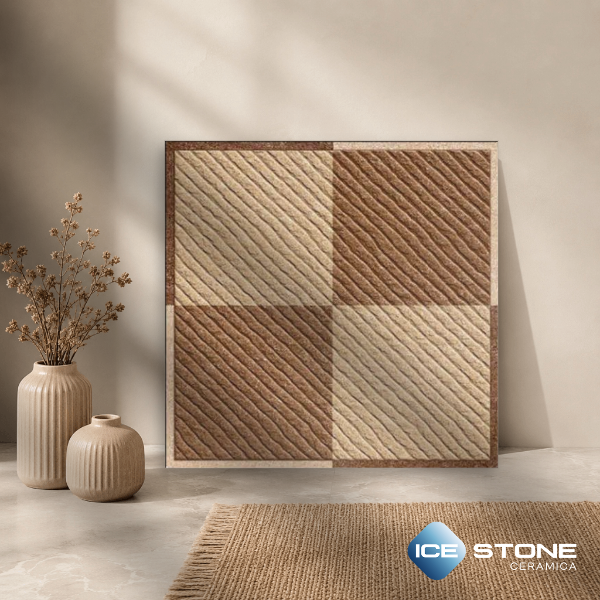
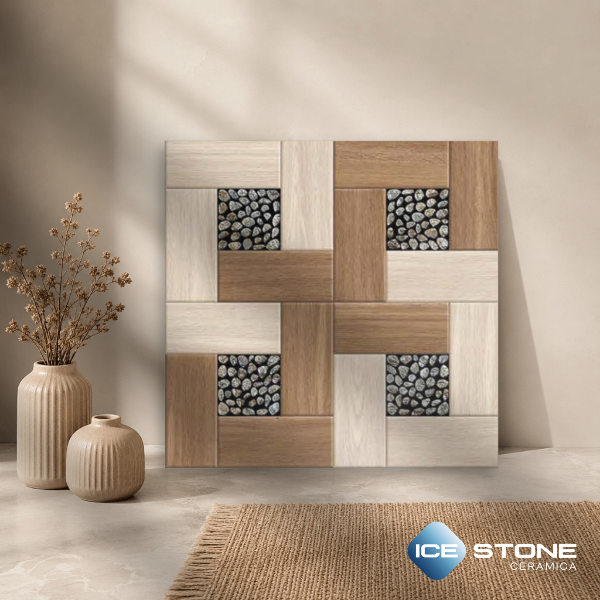
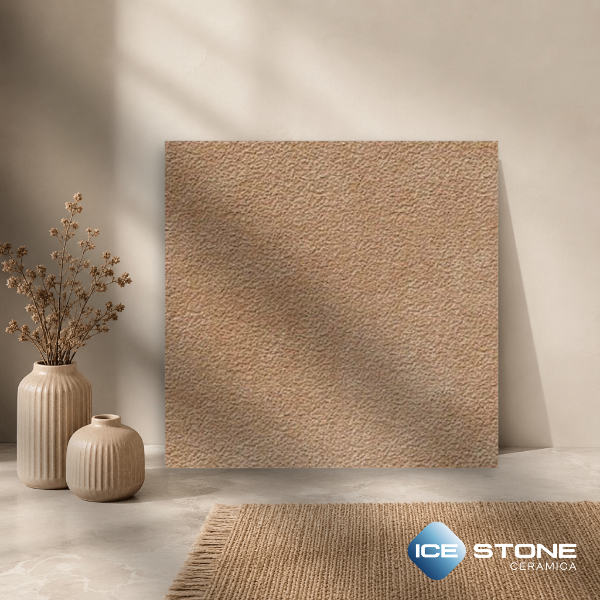
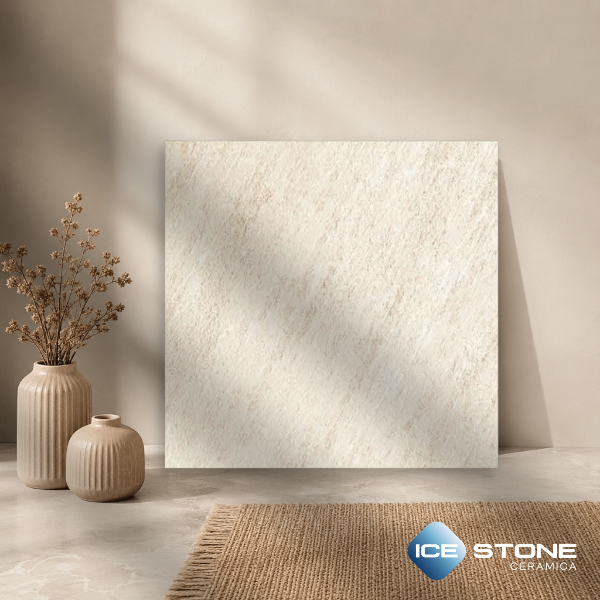
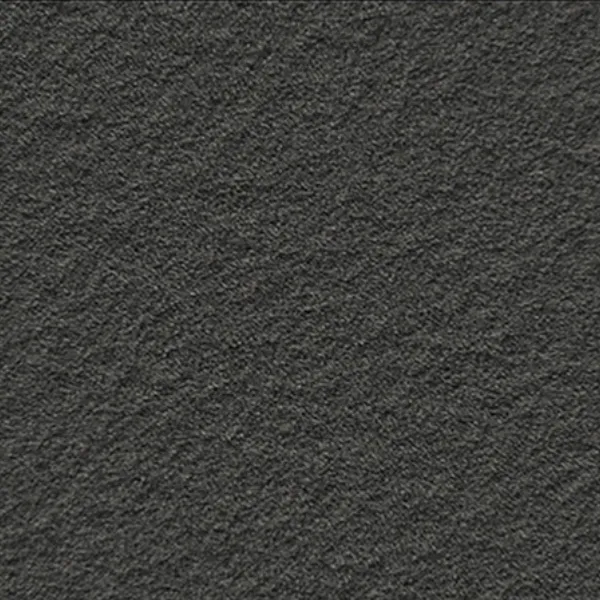
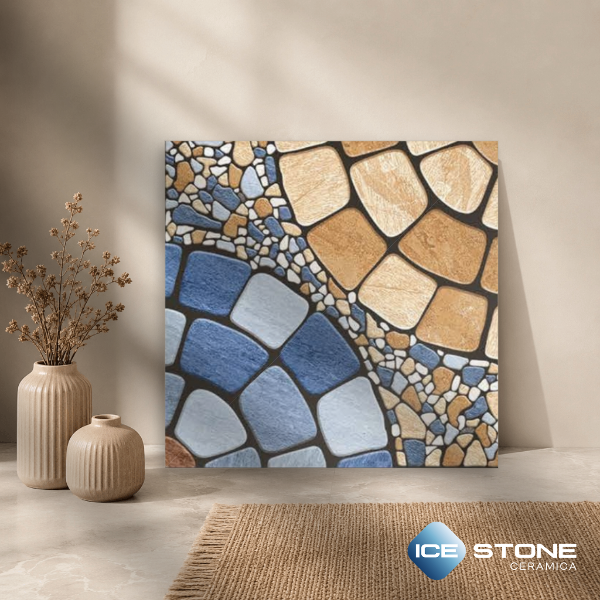
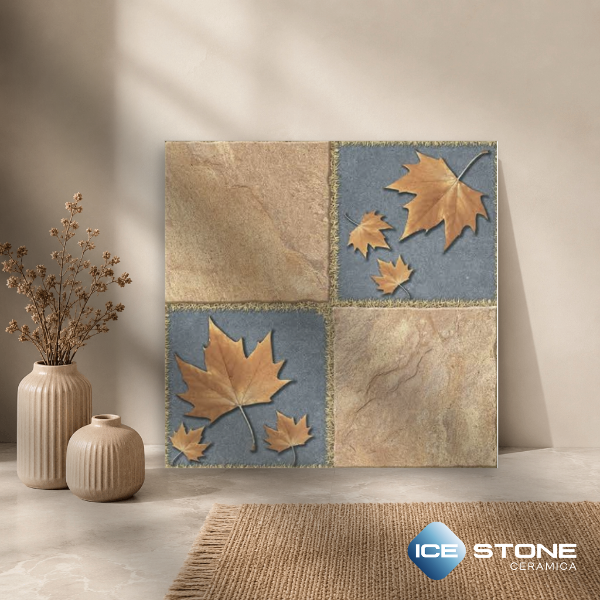
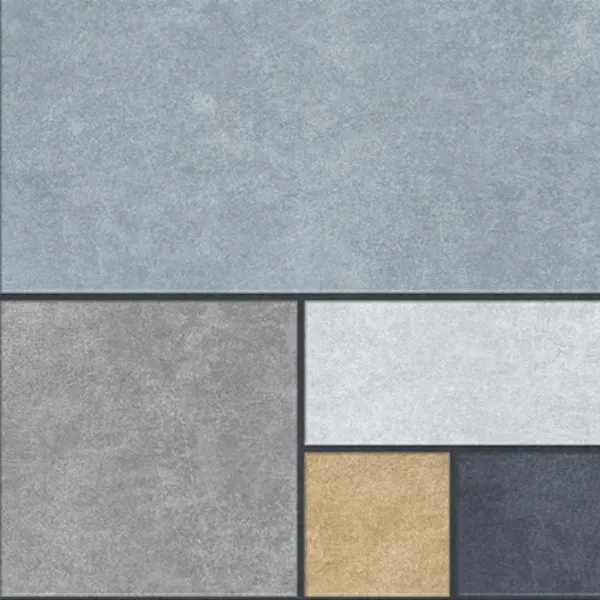
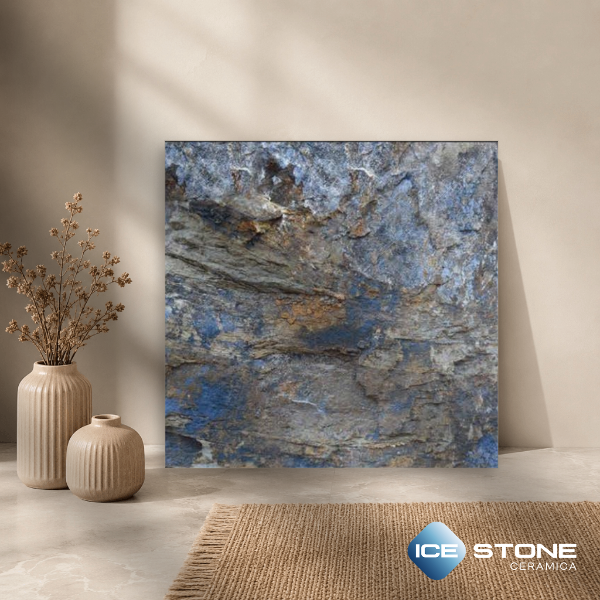
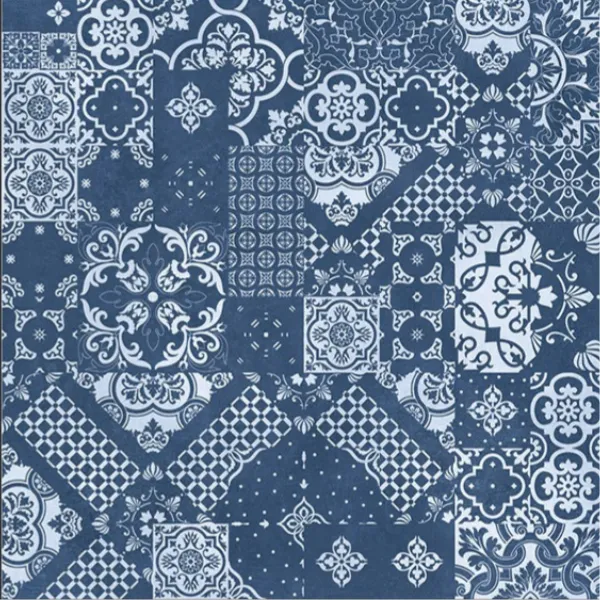
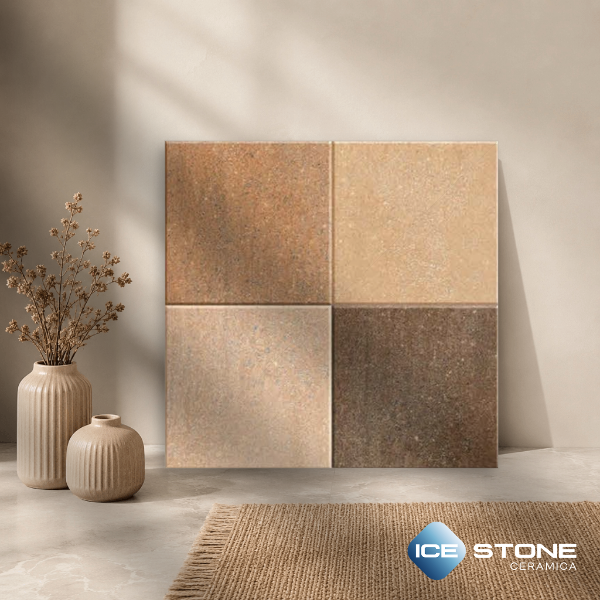
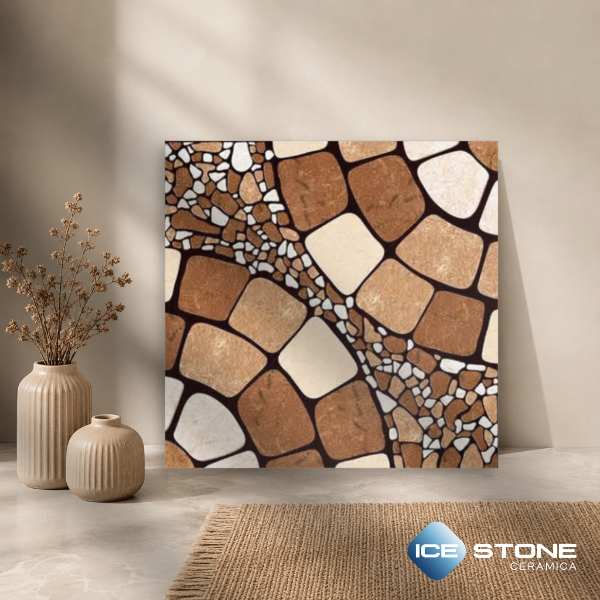
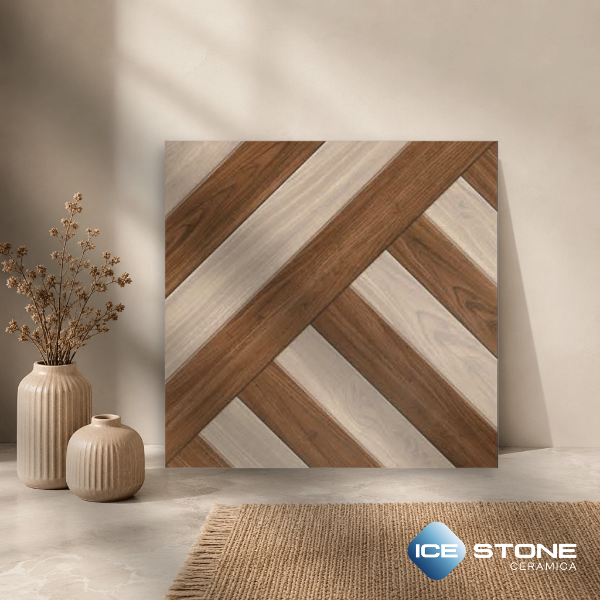
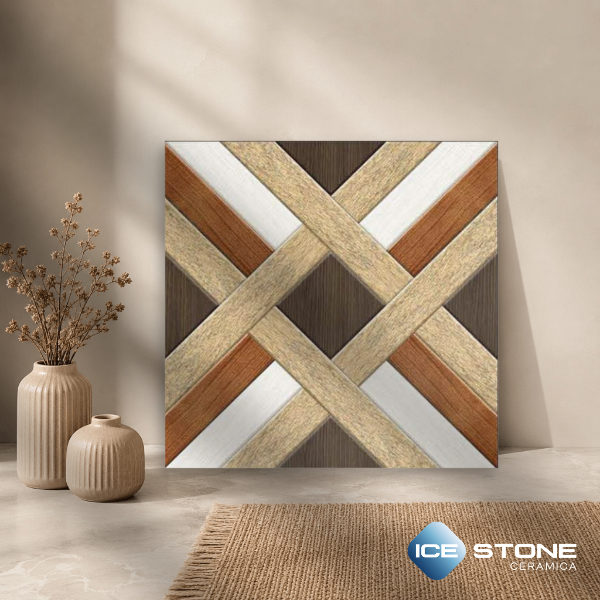
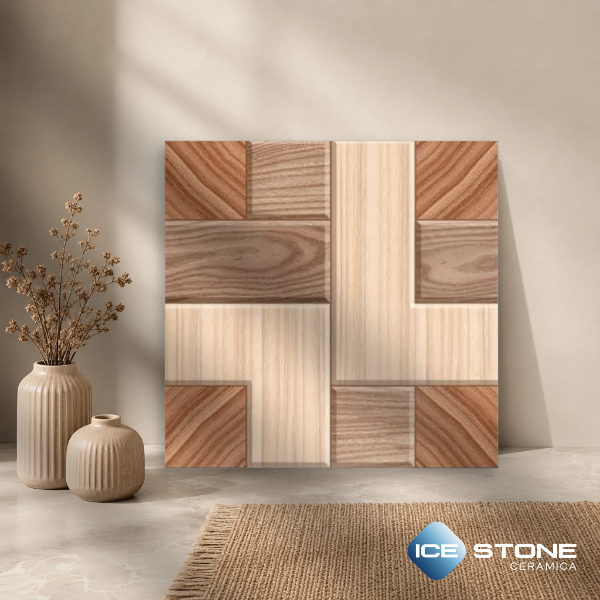
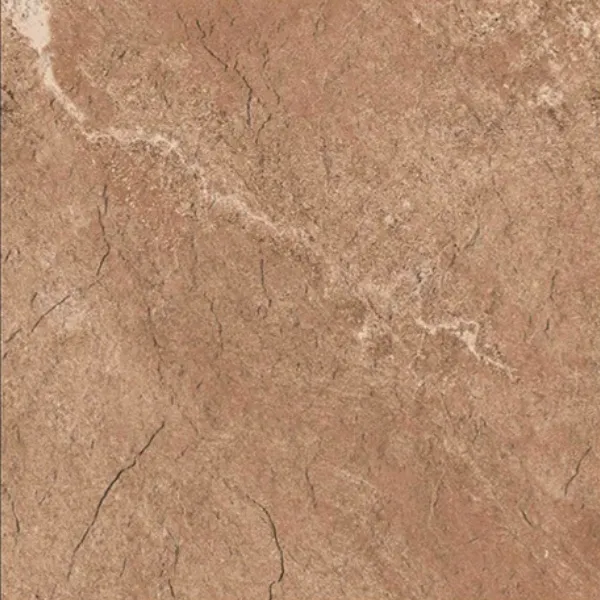
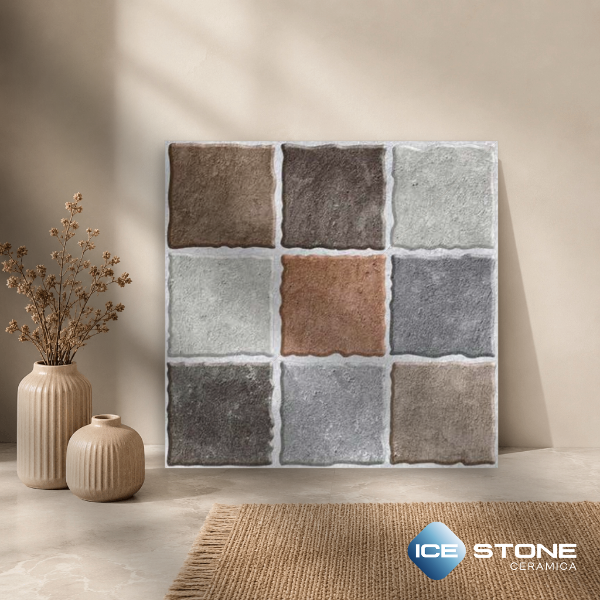
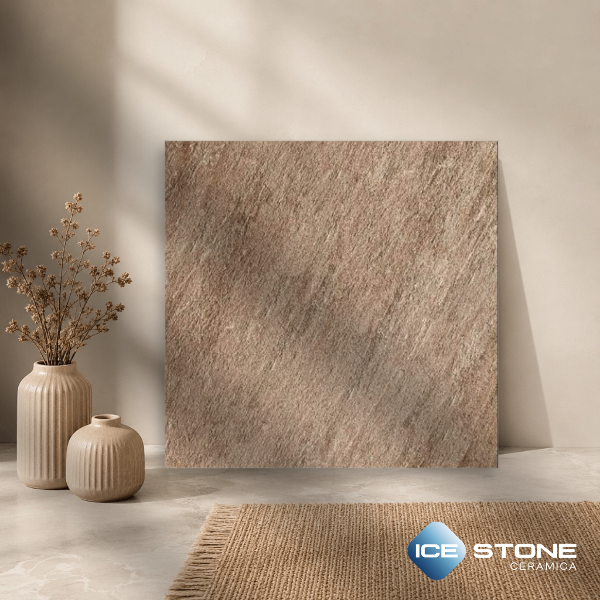
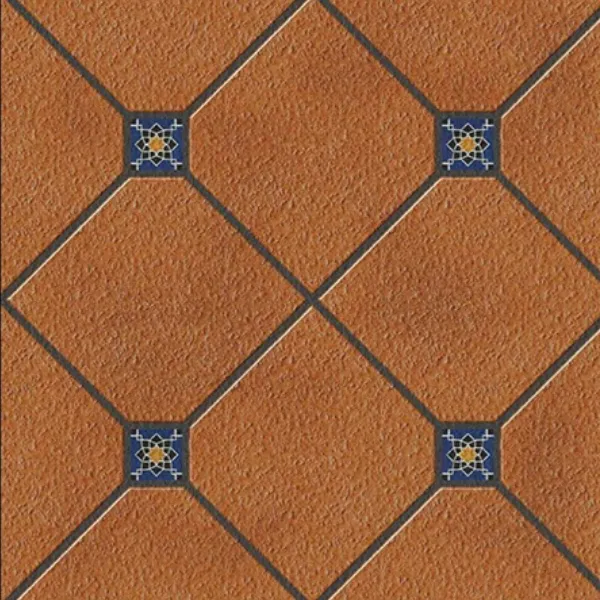
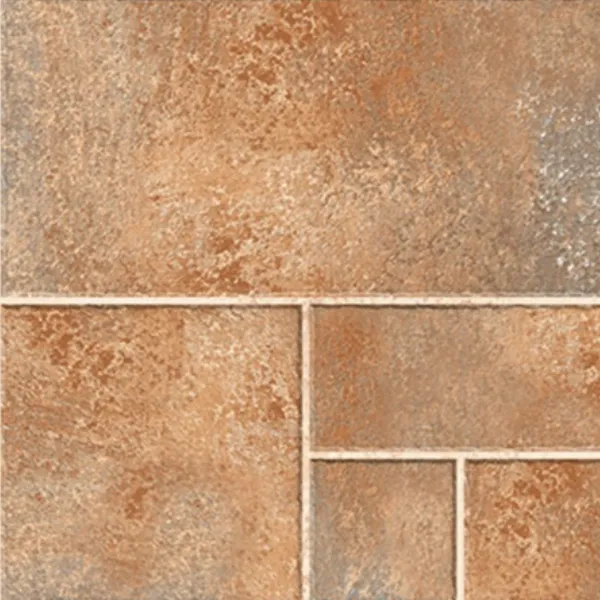
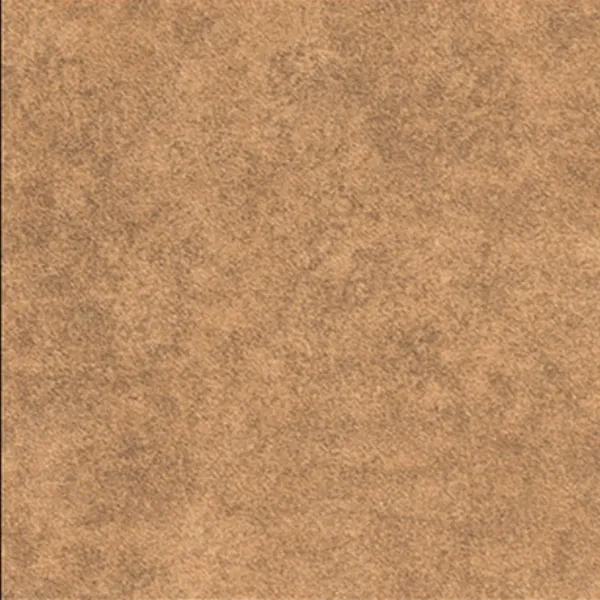
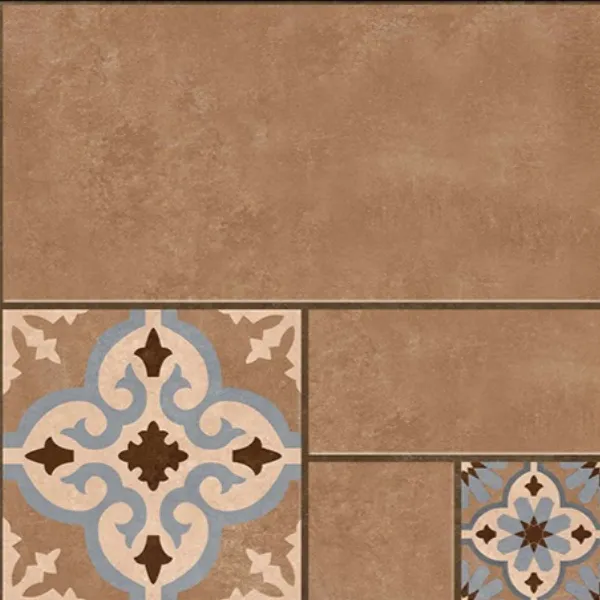
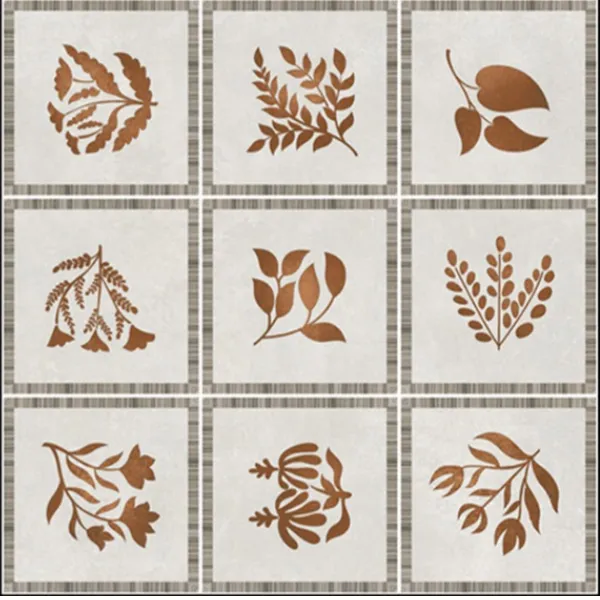
Parking areas no longer have to look purely functional — grey, textured, and stone-look finishes are common choices that blend with the building’s exterior and hide daily wear better than lighter, uniform tones.
Different Sizes and Finishes
We stock parking-suitable tiles across two sizes, each with its own thickness and price point — covered in the size guide below, so you can match the format to your project’s scale and budget.
Types of Parking Tiles
Vitrified Parking Tiles
Our primary recommendation for parking. Vitrified tiles have very low water absorption and higher density, which is why they’re the material we point customers to first for driveways and open car parks. View our vitrified tile collection →
Ceramic Parking Tiles
Ceramic tiles can work for lightly-used, covered parking spaces, but they’re more porous than vitrified and better suited to indoor floors. We currently stock ceramic only in 300×600mm (₹35–75/sq.ft) — for anything with regular vehicle movement, we’d steer you toward vitrified instead.
Heavy-Duty Parking Tiles
Within our vitrified range, the denser body and low water absorption already make these tiles a better fit for vehicle load than standard ceramic, even at our stocked sizes of 400×400mm and 600×600mm.
Anti-Skid Parking Tiles
An anti-skid finish is available across our vitrified range and is worth prioritising for any parking surface exposed to rain. It’s a small spec detail that has an outsized effect on everyday safety.
Outdoor Parking Tiles
For open-to-sky parking, both vitrified and porcelain hold up well against sun and rain. View our porcelain tile collection →
Parking Tiles by Application
Home Parking Tiles
For a residential driveway, most homeowners in Bangalore choose 600×600mm or 400×400mm vitrified tiles a balance of price and durability.
Car Parking Tiles
For a dedicated car parking bay, prioritise anti-skid finish and adequate thickness over design first. Design can still factor in, but it shouldn’t come at the cost of grip or load resistance.
Outdoor Parking Areas
Open-to-sky areas need tiles rated for outdoor exposure — check that the tile is explicitly suited for outdoor use, not just floor use. View our outdoor tile collection →
Garage and Driveway Areas
Garages and driveways see concentrated wheel load in specific spots (where tyres repeatedly stop), so thickness matters more here than in open parking bays where load is spread more evenly.
Commercial Parking Areas
Commercial or shared parking sees more frequent, heavier traffic. Our 600×600mm vitrified tiles are generally the better fit here over 400×400mm, both for durability and for covering larger areas with fewer joints.
Parking Tiles by Size
Available Sizes and Specifications
We currently stock parking-suitable (vitrified) tiles in two sizes:
| Size |
Thickness |
Price Range |
| 400×400mm (16×16) |
12mm |
₹70–85/sq.ft |
| 600×600mm (2×2) |
9mm |
₹55–83/sq.ft |
Note: Prices vary depending on material, design, finish, and collection. Check individual product pages or contact our team for current pricing.
View 16×16 tiles → · View 2×2 tiles →
Choosing Between the Two Sizes
400×400mm tiles are common for tighter driveways and easier handling during installation; 600×600mm suits open parking bays and gives fewer grout lines to maintain. If your parking area has tight corners or irregular edges, the smaller 400×400mm size is usually easier to cut and fit without excessive wastage.
Parking Tiles Designs, Colours & Finishes
Popular Colour Choices for Parking Areas
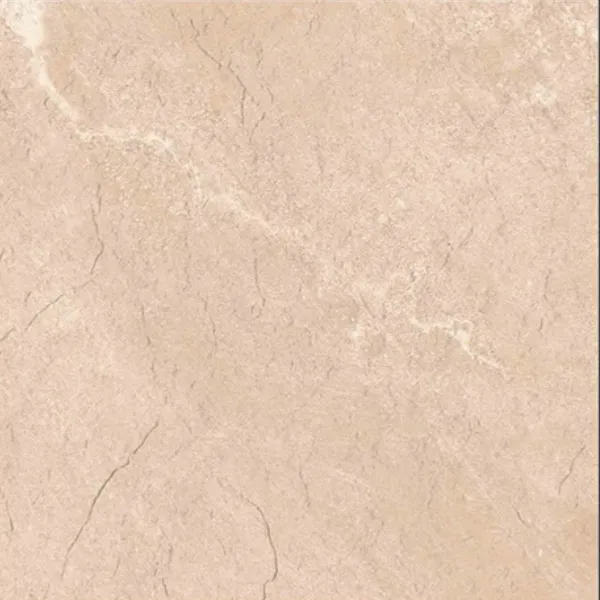
Grey and stone-look finishes remain the most requested for parking areas they hide tyre marks and dust better than lighter shades, and complement most building exteriors. Darker greys in particular tend to stay presentable longer between cleans.
Matt vs Anti-Skid vs Glossy Finishes
Matt and anti-skid finishes are generally preferred over high-gloss for safety reasons in an outdoor, wet-prone space. A glossy finish may look appealing indoors, but it becomes a liability the moment the surface gets wet.
How to Choose the Right Parking Tiles?
Consider Vehicle Load
Heavier or more frequent vehicle use calls for thicker tiles and larger vitrified formats over ceramic.
Choose the Appropriate Thickness
Match thickness to size and use — see the thickness table above before deciding.
Consider Surface Grip
An anti-skid or matt finish is worth prioritising for any surface exposed to rain.
Select the Right Size
Larger tiles reduce grout lines but need a well-prepared, level base; smaller tiles are more forgiving for uneven or tighter spaces.
Consider Outdoor Conditions
For open-to-sky parking, confirm the tile is rated for outdoor/exterior use.
Choose Colour and Design
Grey and stone-look tones are the most practical for hiding dirt and tyre marks.
Check Product Specifications
Always confirm size, thickness, and finish against the product page before ordering — specifications vary by batch and size.
Consider Maintenance Requirements
Denser tiles (vitrified) are generally easier to keep clean than more porous ceramic in a high-wear outdoor space.
Parking Tiles Thickness Guide
Why Thickness Matters
Thickness requirements depend on tile size and how the space is used our 400×400mm tile comes at 12mm, while the 600×600mm format is 9mm.
Matching Thickness to Use Case
A home driveway with one or two cars generally works well with either size; for slightly heavier or more frequent use, the thicker 400×400mm option offers extra reassurance. Always check the specification on the individual product page, since thickness is tied to the specific size and batch. View our full parking tile collection →
Parking Tiles Price
How much do parking tiles cost? Our vitrified parking tiles currently range from ₹55/sq.ft to ₹85/sq.ft, depending on size. 600×600mm is our most price-accessible option (₹55–83/sq.ft), while 400×400mm sits slightly higher (₹70–85/sq.ft).
| Size |
Price Range |
| 400 × 400 mm |
₹70 – ₹85/sq.ft |
| 600 × 600 mm |
₹55 – ₹83/sq.ft |
Note: Prices vary depending on material, design, finish, and collection. Check individual product pages or contact our team for current pricing.
What Affects the Price
Price is driven mainly by:
- Size — larger formats generally cost more per sq.ft
- Thickness — thicker tiles used in larger formats
- Finish — anti-skid and textured finishes can carry a premium over standard matt
- Quantity — bulk orders may qualify for revised pricing; contact us for a quote
Parking Tiles vs Other Flooring Options
Tile vs Concrete: A Side-by-Side Look
| Factor |
Parking Tiles (Vitrified) |
Concrete Flooring |
| Design options |
Multiple finishes, colours, sizes |
Limited to broom-finish or exposed aggregate |
| Surface grip |
Anti-skid finish available |
Depends on finishing technique |
| Maintenance |
Wipes/hoses clean easily |
More prone to staining, harder to clean |
| Installation |
Tile-laying, needs a level base |
Poured and cured on-site |
| Appearance |
Consistent, finished look |
Utilitarian, less design flexibility |
| Application |
Home, commercial, outdoor parking |
Common in commercial/industrial settings |
Which One Should You Choose?
If appearance and easy cleaning matter to you, tiles are usually the better fit. If your priority is the lowest upfront cost for a purely functional surface, concrete remains a common choice though it trades away most of the design flexibility and long-term ease of maintenance that tiles offer.
How to Maintain Parking Tiles
Daily and Weekly Care
- Sweep and hose down regularly to prevent dirt and dust buildup
- Wipe oil or grease spots promptly don’t let them sit and soak into grout lines
- Use a mild tile-safe cleaner for regular washing; avoid strong acidic or bleach-based chemicals on grout
Long-Term Upkeep
- Reseal grout periodically in heavily-used areas to keep it stain-resistant
- Avoid abrasive scrubbing tools that can dull an anti-skid finish over time
- Inspect grout lines every few months for cracking, especially in areas with heavy vehicle turning
Parking Tiles Installation
The Installation Process, Step by Step
A brief overview of what installation involves:
- Surface preparation the base must be clean, level, and structurally sound
- Level checking uneven bases lead to cracking under vehicle weight
- Choosing the right adhesive/bedding system for outdoor and load-bearing use
- Tile placement with consistent spacing
- Grouting and joint treatment suited for outdoor exposure
- Adequate curing time before the area is opened to vehicle traffic
Why Curing Time Matters
Skipping or rushing the curing period is one of the most common installation mistakes driving on freshly laid tiles before the adhesive has fully set can loosen or crack them, undoing an otherwise correct installation.
Why Choose Icestone Ceramica?
Our Parking Tile Range
Icestone Ceramica is a Bangalore-based tile brand offering vitrified, porcelain, and ceramic tiles across multiple sizes, finishes, and price points. For parking areas specifically, our range is built around vitrified tiles for their durability and low water absorption, with sizes in 400×400mm and 600×600mm and pricing to match different budgets and project scales.
Getting Help Choosing
For product-specific questions, thickness confirmation, or bulk pricing, our team is available to help you pick the right tile before you order.