
Your office floor takes a beating. Client shoes, delivery trolleys, rolling office chairs, spilled coffee near the pantry. Pick the wrong tile and you’re looking at chipped edges and dull patches within two years. Pick the right one and it still looks sharp a decade later.
This commercial tile guide covers what actually matters when you’re buying tiles for an office: which material holds up, which size cuts down grout lines and installation time, which finish keeps people from slipping near the entrance, and where each option makes sense in a real floor plan. Everything here is based on the tile categories we actually stock at Icestone Ceramica, not a generic list of flooring types.
Key takeaways
- Porcelain and vitrified tiles are the two materials built for heavy office foot traffic; ceramic is better suited to walls and low-traffic rooms.
- Large-format tiles (2×4 ft or 1200×1800 mm) cut down grout lines and clean-up time in open-plan offices.
- Matt or textured finishes belong at entrances and wet-prone spots; save glossy finishes for reception and cabins.
- Commercial tile pricing on our range runs roughly ₹62–₹130 per sq. ft depending on material, size, and finish.
Why tiles work for office floors
Carpet holds dust and stains. Wood needs babying around water. Tiles just get mopped and moved on.
They take the traffic. Reception areas and hallways see hundreds of footsteps a day. A good porcelain or vitrified tile shrugs that off.
Cleaning is a five-minute job. No shampooing, no special vacuum attachments. A mop and a mild cleaner handle daily upkeep.
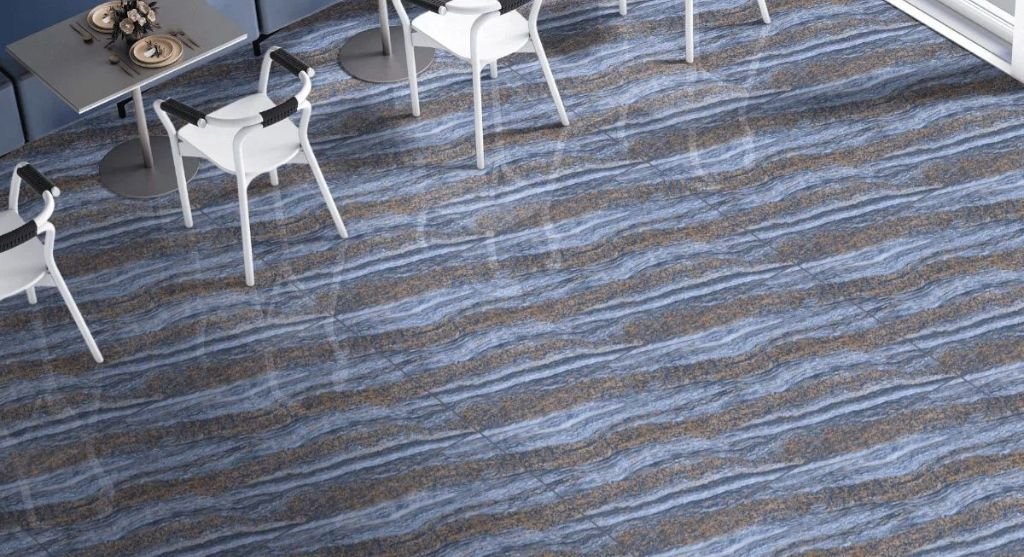
The design range is wide. Marble looks, wood looks, plain minimal finishes, bold patterns for a reception wall. You’re not stuck with one aesthetic.
Indoor air stays cleaner. Tiles don’t trap dust and pollen the way carpet fibers do, which matters in shared, air-conditioned offices.
They cost less over time. Higher upfront spend than vinyl, but a tile floor easily outlasts three or four rounds of cheaper flooring.
The three tile materials that actually matter for offices
Skip the buzzword flooring options you see in generic guides. For a commercial floor, it comes down to three materials, and each has a clear use case.
Porcelain tiles — the workhorse
Porcelain tiles are fired at a higher temperature than ceramic, which makes them denser and far less porous. For offices, that translates directly into scratch resistance and low water absorption, which matters near entrances and pantry areas where spills happen.
Use them for:
- Main floors and hallways
- Reception desks and waiting areas
- Conference rooms
- Pantry and break-out zones
Check the PEI rating before you buy. It’s a 1-to-5 scale that measures how well a glazed tile resists surface abrasion. For office-level foot traffic, PEI IV is the safe minimum.
Vitrified tiles — the large-format choice
Vitrified tiles go through vitrification, a firing process that fuses silica into the clay body so the tile is dense and non-porous all the way through, not just on the glazed surface. That’s what most of our large-format slabs, including the 1200×1800 mm range, are built on. They’re low-maintenance and available in marble, stone, and concrete-look finishes that suit a modern office without the upkeep of the real material.
Use them for:
- Open-plan floors where you want a seamless look
- Executive cabins
- Lobbies and client-facing zones
Ceramic tiles — for walls and lighter-use areas
Ceramic tiles cost less than porcelain or vitrified and come in a wider range of patterned and highlighter designs. They’re not as hard-wearing, so they’re better suited to walls, smaller meeting rooms, or washroom areas than to a heavy-traffic main floor.
Use them for:
- Feature walls near reception
- Office washroom walls
- Low-traffic cabins and meeting rooms
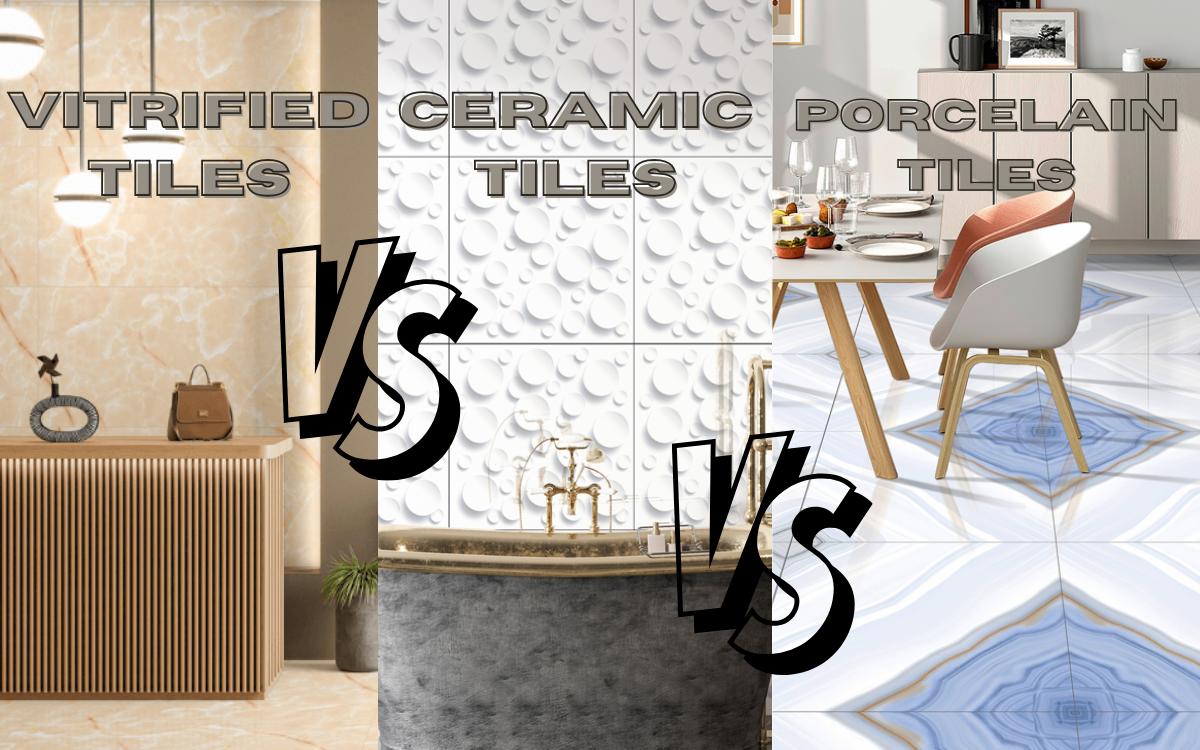
If you’re stuck choosing between the three, our vitrified vs ceramic vs porcelain comparison breaks down the differences in more depth.
Size and format: fewer grout lines, faster installation
Large-format tiles have become the default for modern offices, and for good reason.
1200×1800 mm slabs cover more floor per tile, which means fewer grout lines to collect dust and grime, and a cleaner, more expansive look in open-plan areas. They do need a properly leveled subfloor, so factor that into your installation timeline.
2×4 ft tiles hit a good middle ground for offices that want the large-format look without the sub-floor demands of the bigger slabs.
2×2 ft tiles work well in smaller cabins, washrooms, and pantry corners where a big slab would mean unnecessary cutting and wastage.
Not sure how much you’ll need? Run the numbers on our tile calculator before you place an order.
Finish: this is where slip safety comes in
Finish decides how a tile looks under office lighting, and more importantly, how safe it is to walk on.
- Glossy and high gloss finishes suit reception areas and cabins where you want a polished, premium look. Keep them away from spots that see regular water or spills.
- Matt tiles hide scuffs and footprints better and cut down glare under fluorescent or LED office lighting, which makes them a solid pick for main walkways.
- Rustic and carving finishes add grip through texture, so they’re worth considering for entrances, ramps, and any area exposed to rain or spills.
If your office has an entrance that gets wet during monsoon, don’t put a glossy tile there just because it looks good in the catalog. Look for an R10 slip-resistance rating or higher at doorsteps, ramps, and any spot exposed to rain. Grip matters more than shine at a doorstep.
Design directions that actually suit office interiors
Wood-look tiles for warmth
Wooden-design tiles bring a warm, natural feel to breakout zones and lounges without the maintenance headache of real timber. Big in creative and hospitality-style office fitouts right now.
Stone and marble looks for a premium finish
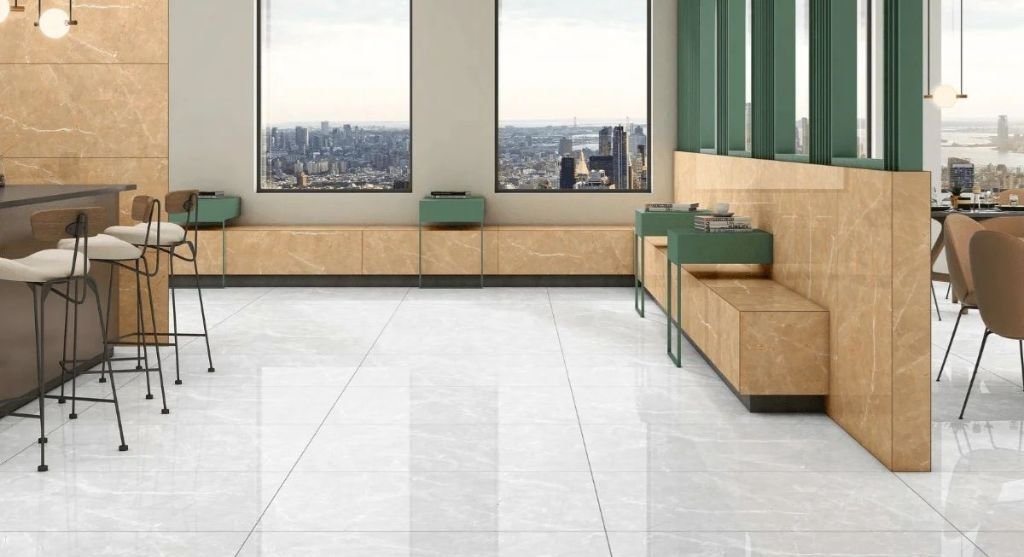
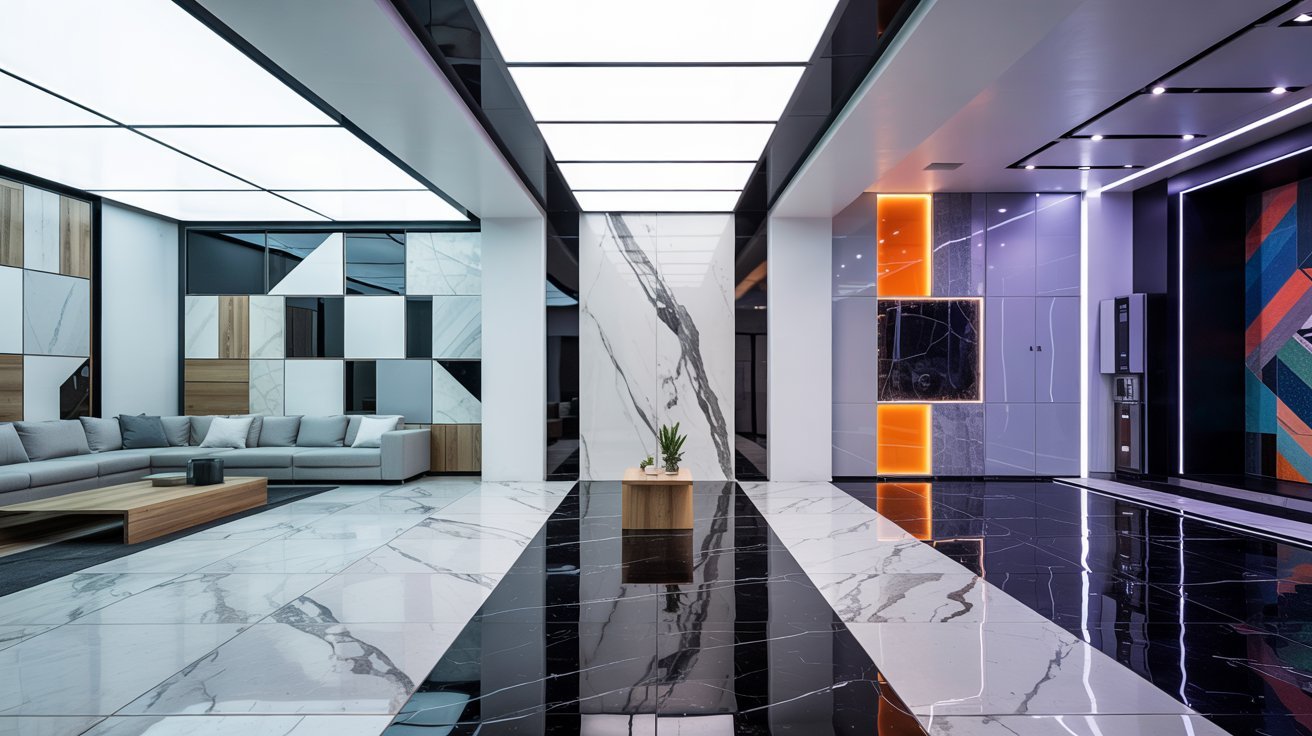
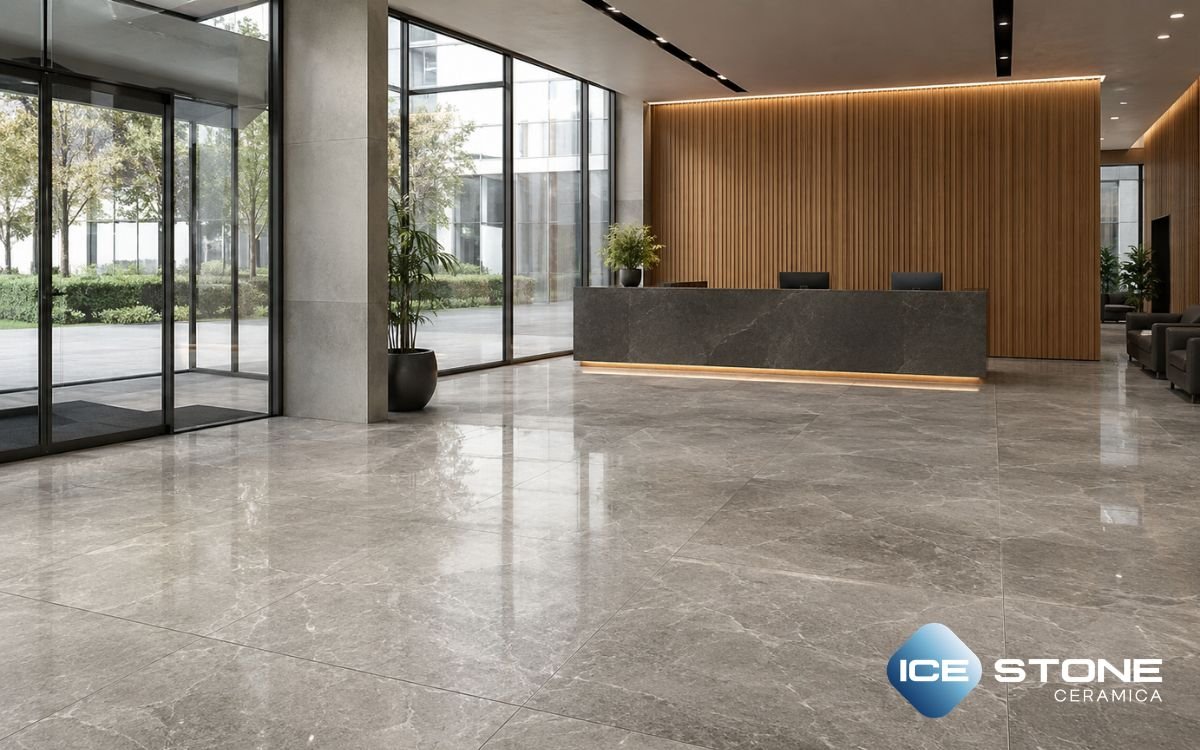
Stone-look and marble-look tiles are the go-to for lobbies and executive cabins where you want a high-end first impression without the sealing and staining upkeep real marble demands.
Subway and pattern tiles for zoning
Subway tiles work well on a reception feature wall, and pattern tiles are a smart way to visually separate zones in an open-plan office, like marking out a breakout corner from the main workstation floor, without adding a physical partition.
Color palette: keep it neutral, add one accent
Most offices do best with a neutral base. Grey and beige tiles are the two most common picks for main floors because they hide daily wear well and pair with almost any brand color scheme. Save bolder colors, like a black or patterned tile, for a single feature wall or a reception accent instead of the whole floor.
Picking tiles zone by zone
- Reception: large-format porcelain or vitrified in a marble or stone look, glossy or high-gloss finish
- Main workstation floor: matt-finish porcelain or vitrified in grey or beige, 2×4 ft or 1200×1800 mm
- Executive cabins: marble-look or wood-look vitrified tiles, glossy for cabins, matt for a quieter look
- Pantry and break-out area: wood-look or textured tiles, matt or rustic finish for grip near water points
- Washrooms: ceramic wall tiles paired with a slip-resistant porcelain floor
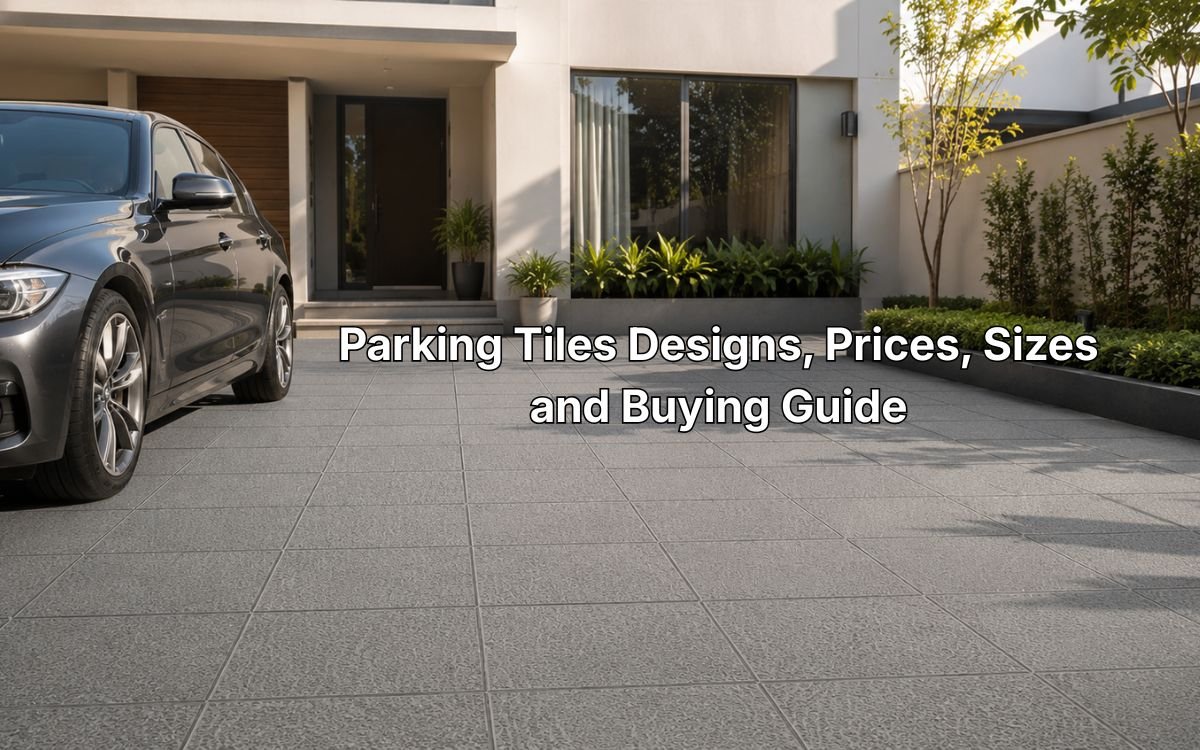
- Entrance and parking approach: rustic or carving finish for grip during wet weather
What it actually costs
Commercial tile pricing on our range currently runs from roughly ₹62 to ₹130 per sq. ft depending on material, size, and finish, with ceramic wall tiles at the lower end and large-format porcelain and vitrified slabs at the upper end. Get exact, current pricing for the specific SKUs you’re considering rather than budgeting off a generic number, since it varies by design and batch.
Installation and upkeep, in short
- Get the subfloor leveled properly, especially before laying large-format slabs
- Use expansion joints so the floor doesn’t crack as it settles
- Hire certified installers if you want your warranty to actually hold
- Sweep and mop porcelain and vitrified floors regularly; that’s really all they need
- For ceramic walls, avoid abrasive cleaners that dull the glaze over time
A quick buying checklist
- Match the PEI rating and material to how much foot traffic that zone actually gets
- Pick finish based on slip risk, not just looks, for entrances and wet-prone spots
- Choose the largest format your subfloor and budget can support to cut grout lines
- Keep the palette neutral on the main floor and save bold designs for one accent zone
- Measure the space properly using the calculator before ordering, so you’re not short a box mid-installation
FAQ
Which tile material is best for a busy office floor?
Porcelain or vitrified. Both are dense and low-absorption enough to handle daily foot traffic without staining or cracking.
Are glossy tiles safe for office entrances?
Not on their own. Pair glossy finishes with door mats and dry zones, or switch to a rustic or matt finish right at the entrance where water tracks in.
What’s the difference between porcelain and vitrified tiles for office use?
Both are dense and low-maintenance. Vitrified is where most of our large-format slabs are made, while porcelain gives you more control over PEI-rated durability for specific high-traffic zones.
Is large-format tile worth it for a small office?
Yes, if your subfloor is level. Fewer grout lines make a small floor plan look less broken up and easier to keep clean.
How do I estimate how many tiles I need for my office?
Measure your total floor area room by room and run it through our tile calculator or area calculator for an accurate box count.