
Your living room floor takes more daily wear than almost any other surface in the house — guests, kids, pets, furniture, and years of foot traffic all show up on it first. Picking the wrong tile means living with a mistake for a decade or more; picking the right one is mostly a matter of working through the same handful of decisions in the right order: room size, material, finish, colour, and budget.
Start With Your Room, Not the Catalogue
Before you look at a single design, walk your living room with three questions in mind:
- How big and what shape is the space? A long, narrow living room behaves differently than a square one — tile size and laying direction can visually correct proportions.
- How much traffic does it actually get? A living room that hosts daily family time, kids, and pets needs a harder-wearing, more slip-resistant surface than a formal drawing room used mainly for guests.
- How much natural light does it get? Rooms with limited daylight benefit from lighter, more reflective finishes; bright, sunlit rooms have more room to go darker and moodier.
These three answers steer everything that follows — size, material, and finish all flow from them.
Browse the full range on our living room floor tiles page.
Choosing the Right Tile Size for Your Living Room
Tile size has the single biggest visual impact on how spacious a living room feels. As a starting point:
- Small living rooms: 600x600mm is the most versatile, forgiving size and works in both compact and mid-size rooms.
- Medium living rooms: 600x1200mm reduces grout lines further and reads as more premium without being hard to install.
- Large or open-plan living rooms: 800x800mm and larger-format slabs (up to 1200x1800mm and beyond) create a seamless, luxurious look that’s become the dominant preference in Indian homes in 2026, particularly for large-format vitrified tiles with minimal grout lines.
One common myth worth correcting: a small living room does not necessarily need small tiles. Fewer, larger tiles usually make a compact room feel bigger, because there are fewer grout lines breaking up the floor visually. Small tiles are better reserved for adding intentional pattern or texture, not for “opening up” a small space.
This is a big enough decision on its own see our dedicated size guide for a full size-by-room chart and layout-direction tips (publishing shortly link to be added once live). In the meantime, browse specific sizes directly: 1200x1800mm tiles, 2×2 tiles, 300x600mm tiles, or the 2×2 floor tiles category page.
Choosing the Right Material
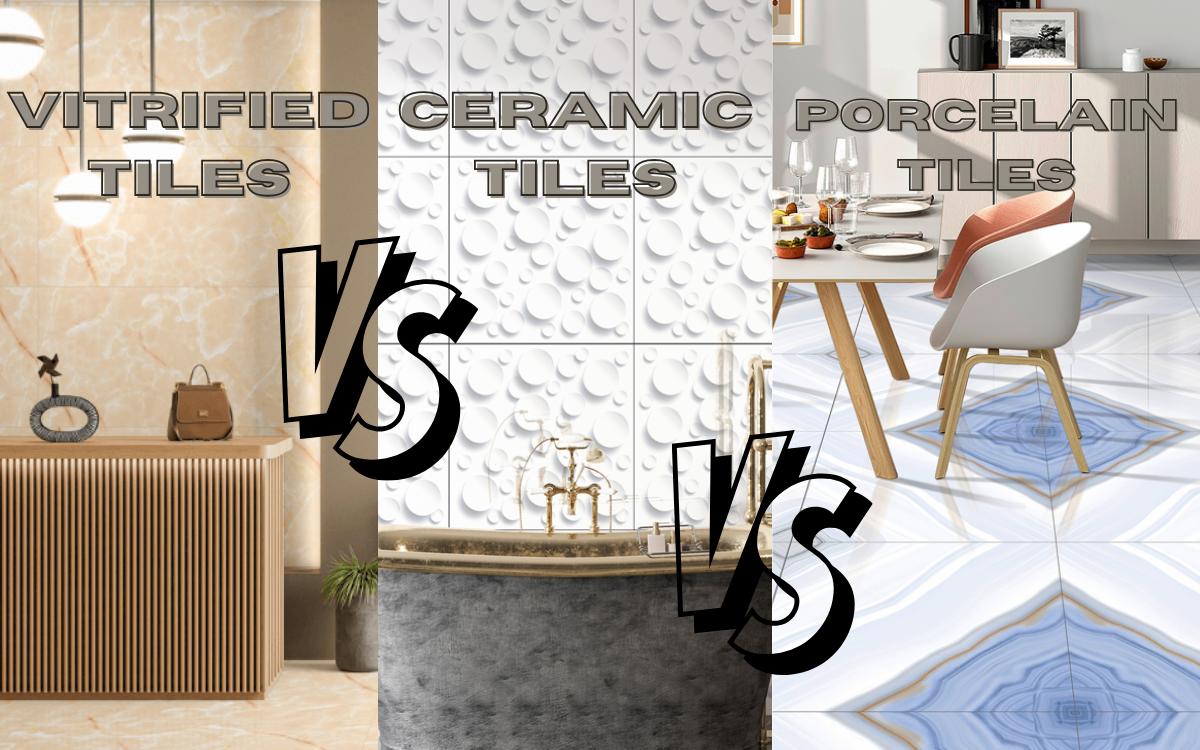
Material determines how the tile performs day to day — scratch resistance, water absorption, and how it feels underfoot. India’s tile market breaks down roughly as: ceramic tiles around 45% share, vitrified around 30%, and porcelain around 12% and growing fastest in premium residential projects (Maximize Market Research, 2025). For a deeper side-by-side, see our vitrified vs ceramic vs porcelain tiles comparison.
Vitrified vs Porcelain Which Is Better for Living Rooms
Both are strong choices for living rooms; the difference is in degree, not kind.
- Vitrified tiles (GVT/PGVT) have very low water absorption—PGVT typically comes in under 0.08% per IS 15622 — and are the most widely used choice for Indian living room floors in 2026, prized for a polished look at a manageable price.
- Porcelain tiles are technically also vitrified-grade (water absorption under 0.5% under IS 15622 Group BIa) but are denser and harder still, better suited to living rooms with very high foot traffic, and increasingly the pick for premium residential projects.
- Full-body vitrified tiles, where colour runs through the full thickness rather than just the surface, are the toughest option for halls that see constant movement, since scratches don’t reveal a different colour underneath. See how they compare to double charge tiles for more on this distinction.
Other Material Looks Worth Knowing
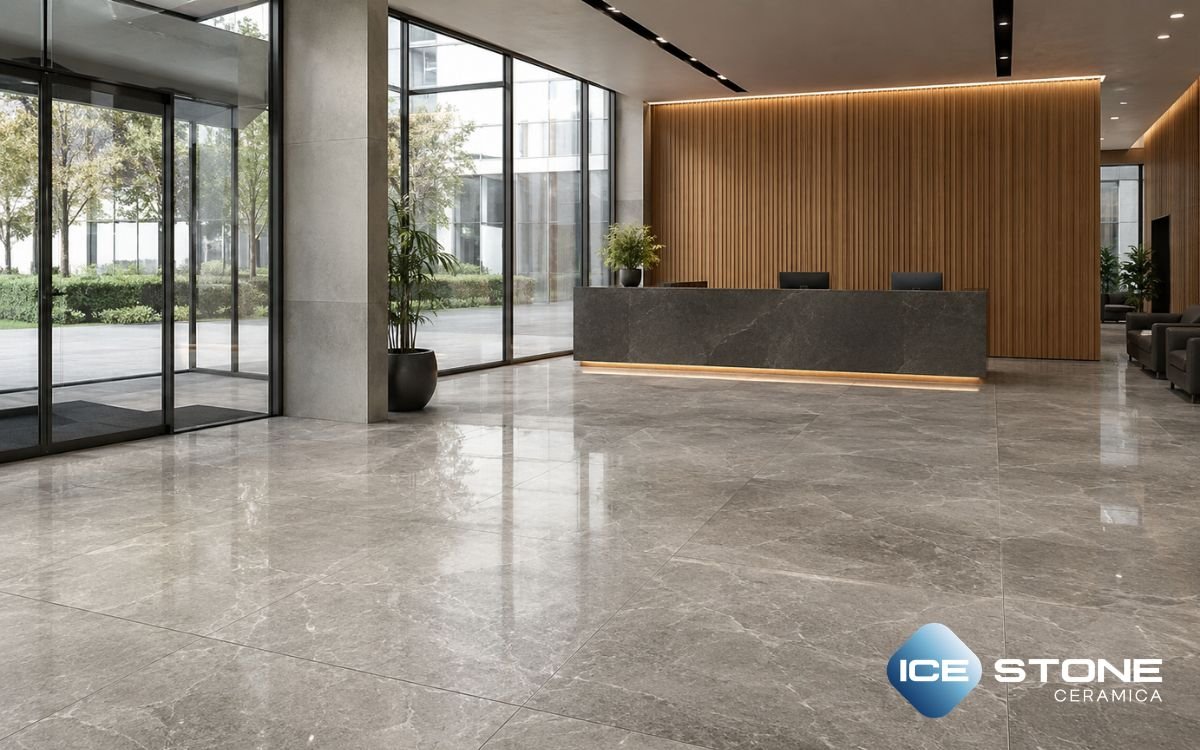
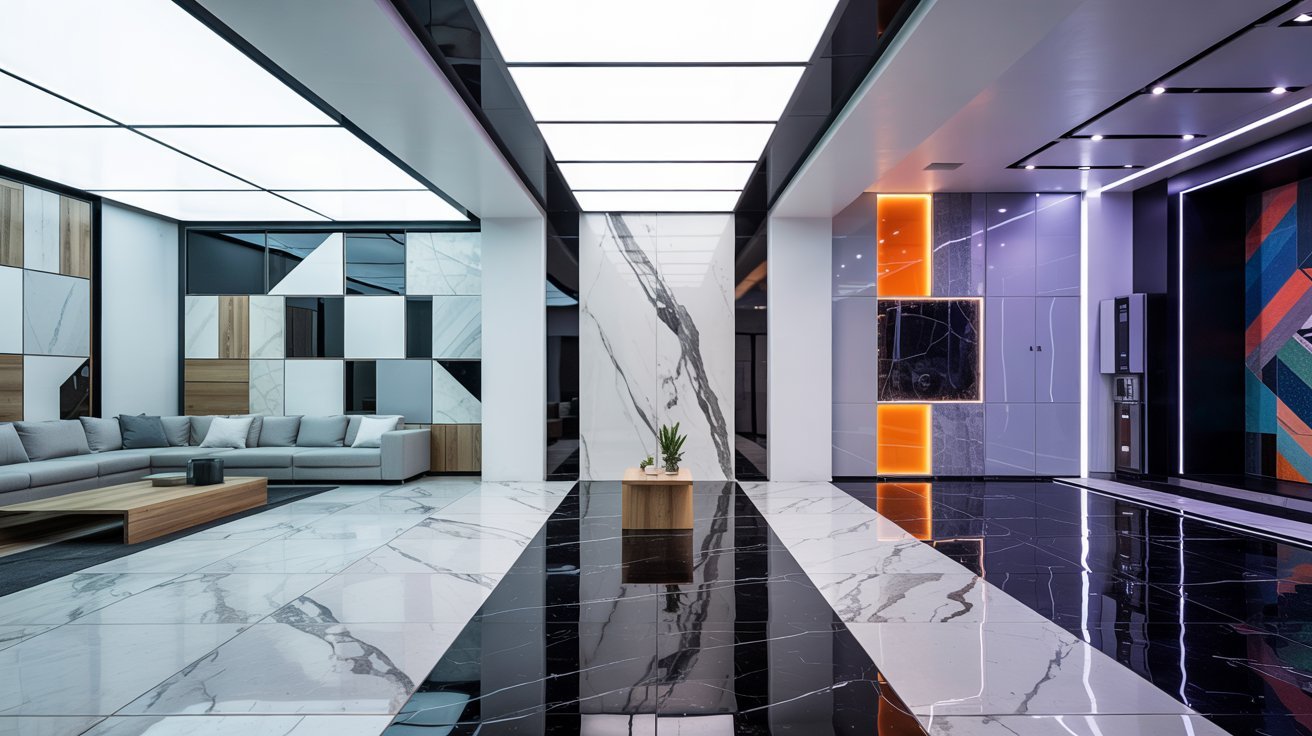
- Marble-look vitrified/porcelain tiles give the veined, luxurious look of real marble without the staining, etching, and ongoing polishing genuine marble demands — increasingly the default choice over real stone for exactly this reason. See our marble floor tiles range and how they compare to real marble.
- Wood-look tiles combine warm, natural texture with the water resistance and durability real timber can’t offer indoors. Browse our wooden floor tiles range.
- 3D and textured tiles add depth and a tactile, contemporary feel, particularly for feature zones or accent walls near the living room. Browse our 3D floor tiles range.
- Natural stone-look tiles capture the raw, organic texture of real stone (including Kota-stone-style looks) with none of the sealing and staining upkeep genuine stone requires. Browse our stone floor tiles range.
Colour and Finish
Colour and finish do more to set the mood of a living room than most people expect, and 2026’s Indian design direction has shifted noticeably toward calmer, more tactile choices.
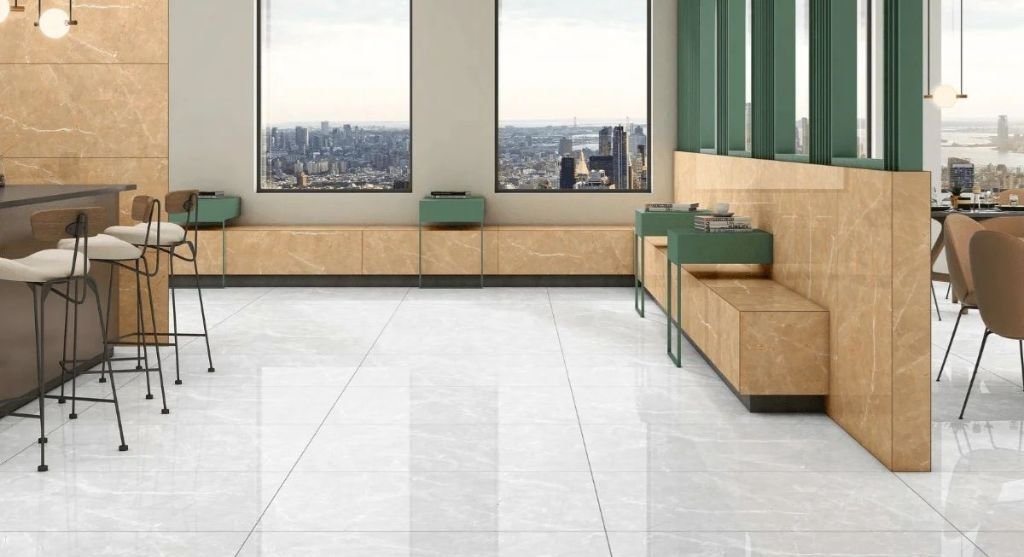
- Light, glossy tiles reflect natural light and read as more open and airy — a strong choice for smaller or dimmer living rooms.
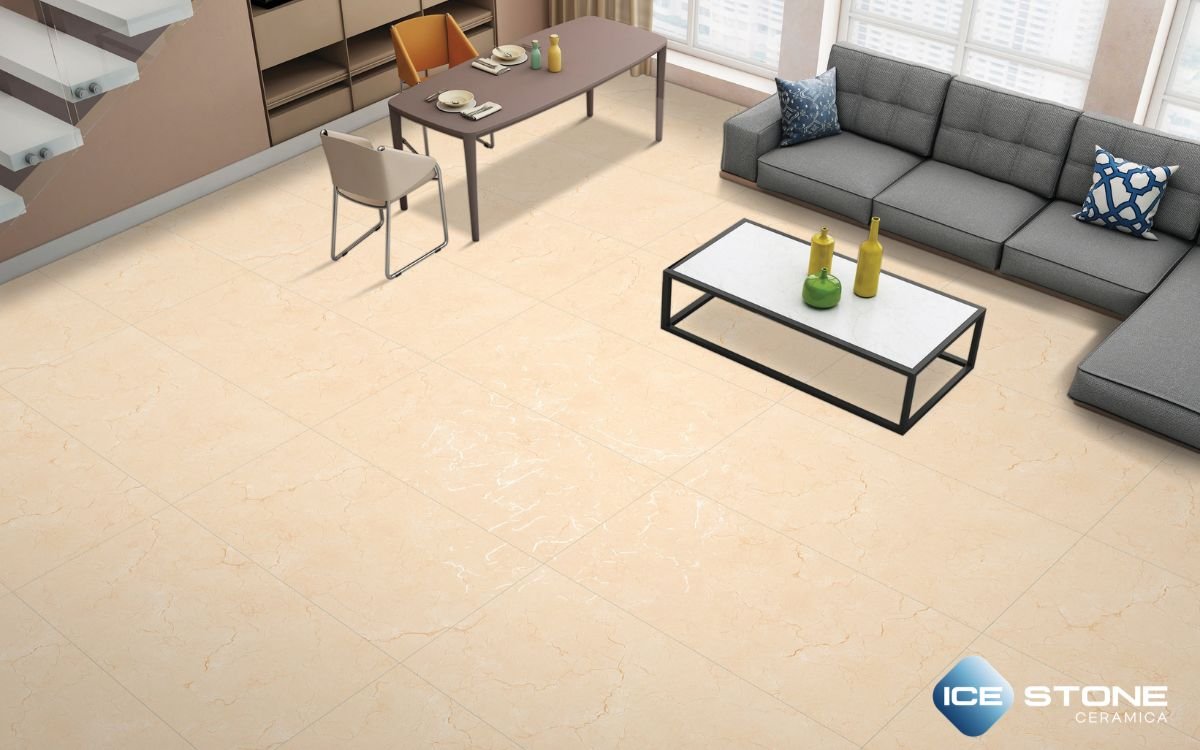
- Earthy, matte tones (beige, terracotta, warm greys) create a calmer, more grounded feel and are the dominant direction in Indian living rooms in 2026, alongside lappato (semi-polished) finishes that split the difference between matte and gloss.
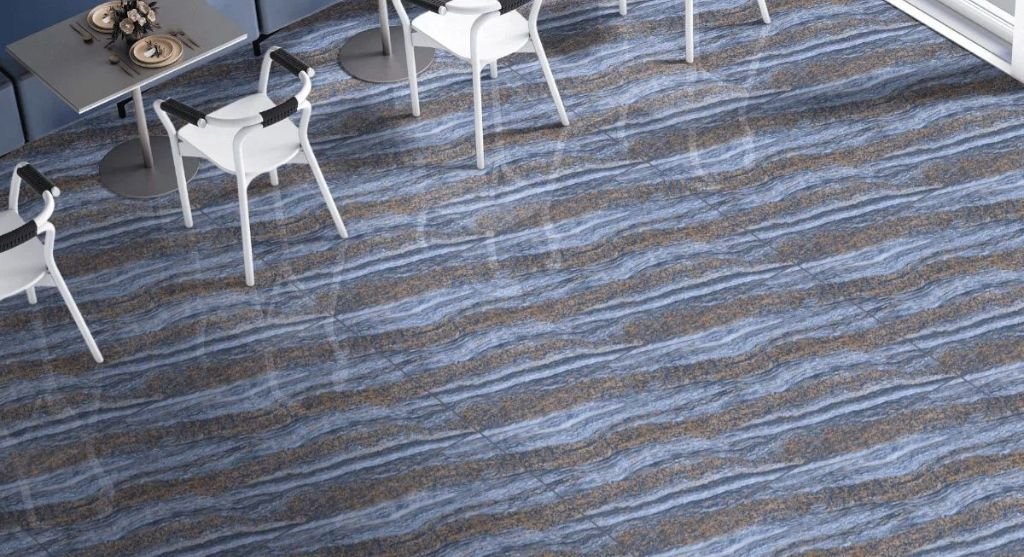
- Bold, dark tiles (charcoal, deep navy) work well in larger, well-lit rooms looking for a dramatic, contemporary statement, but can make a small or dim room feel closed in.
- Matte and textured finishes hide dust, footprints, and minor scuffs far better than high-gloss surfaces — a genuinely practical reason behind 2026’s shift away from shiny finishes, not just an aesthetic one.
If you’re drawn to a tile with visible veining or graining — most marble-look and some wood-look options — check multiple pieces for colour and pattern consistency before you buy. Inconsistent veining across tiles is one of the more common regrets homeowners report after installation.
See matching designs on our living room wall tiles page for a coordinated floor-and-wall look.
Budget and Price Range
Pricing depends on three things, in order of impact: material (ceramic costs less than vitrified or porcelain at the same size), finish (a plain matte tile costs less than a textured, wood-look, or marble-look design), and brand tier. As a working example, mid-range vitrified tiles run around ₹60/sq ft for material alone. For a 600x600mm (2×2 ft) box — which typically holds 4 tiles covering 14-16 sq ft — that works out to roughly ₹600-1,400 per box depending on material and finish.
Material is only part of the total cost. Add installation labour (₹15-35/sq ft in most Indian cities) and adhesive/grout (₹8-15/sq ft), and a 500 sq ft living room typically comes to ₹40,000-55,000 all-in for material plus labour. GST (usually 18%) is generally quoted separately, so confirm whether it’s included before you finalise a quote. Large-format tiles add to this because they need a flatter screed, back-buttering, and often two installers.
Rather than estimate manually, run your own room dimensions through our tile calculator for an instant material and cost estimate, and see current SKU pricing on our living room floor tiles page.
Durability, Maintenance, and Slip Resistance
A living room floor needs to survive years of daily use without looking tired, which makes a few technical checks worth doing before you buy:
- Check the IS standard on the box — IS 15622 for vitrified and GVT tiles, IS 13630 for ceramic tiles — to confirm you’re getting what’s advertised.
- Ask for rectified tiles if you want the tight, near-invisible grout joints large-format layouts need for a premium look.
- Choose matte or textured finishes over high-gloss for genuine grip underfoot, particularly if the living room connects to a balcony or entryway that can track in moisture.
- Order 5% extra tile from the same batch and store it for future repairs — discontinued series become very difficult to colour-match later.
Living Room Tiles for Homes with Kids and Pets
Households with kids or pets should weight two factors above pure aesthetics: scratch resistance and slip resistance. Full-body vitrified tiles resist visible scratching better than surface-glazed options, and a matte or lightly textured finish offers meaningfully better grip than gloss — worth prioritising even over a slightly less dramatic design.
Common Mistakes to Avoid When Selecting Living Room Tiles
- Assuming small tiles suit small rooms. Large-format tiles usually make a compact living room feel bigger, not smaller.
- Mixing batches. Even the same product code can shade-vary between production batches — always confirm a single batch number for the full order.
- Ignoring floor flatness. Large-format tiles need floor flatness within about 3mm over 3 metres; skipping this step is the most common cause of visible lippage after installation.
- Choosing gloss for a high-traffic room. It looks striking in the showroom and shows every footprint and scratch within weeks at home.
- Not budgeting for installation. Large-format and rectified tiles cost meaningfully more to lay than standard sizes — get an installation quote before finalising the tile.
Buying Checklist
- Measured room dimensions and identified overall shape (square, rectangular, open-plan)
- Decided on tile size based on room size (see size guide)
- Shortlisted material: vitrified, porcelain, marble-look, wood-look, or stone-look
- Picked a finish appropriate for traffic level (matte/lappato for high traffic)
- Confirmed IS standard marking on the box
- Requested rectified tiles if a tight-grout large-format look is wanted
- Confirmed single batch number for the full order, plus 5% extra
- Got an installation quote, not just a tile price
- Ordered or requested samples to view under the room’s actual lighting
- Ran room dimensions through the tile calculator for a material and cost estimate
FAQ’s
What is the best tile size for a living room?
It depends on room size: 600x600mm suits small living rooms, 600x1200mm suits medium rooms, and 800x800mm or larger-format tiles suit large or open-plan living rooms. Browse 2×2 tiles and 1200x1800mm tiles directly, or check our full size guide once published.
Is matte or glossy better for a living room floor?
Matte and lappato finishes are generally the better everyday choice — they hide dust and footprints far better than gloss and offer more slip resistance, and they’re the dominant preference in Indian living rooms in 2026. Gloss still suits smaller, dimmer rooms where reflected light matters more than practicality.
Vitrified or porcelain — which is better for a living room?
Both work well. Vitrified (particularly PGVT) is the most common and cost-effective choice for Indian living rooms. Porcelain is denser and slightly more durable, and increasingly favoured for premium projects with very high foot traffic.
Are large tiles a bad idea for a small living room?
No — this is one of the most common misconceptions. Large-format tiles typically make a small living room look bigger, because fewer grout lines mean fewer visual breaks across the floor.
How much do living room tiles cost in India?
It depends mainly on material, finish, and brand tier. As a benchmark, mid-range vitrified tiles run around ₹60/sq ft for material alone, working out to roughly ₹600-1,400 per box for a standard 600x600mm size. Including installation labour and adhesive, a typical 500 sq ft living room comes to about ₹40,000-55,000 all-in, plus GST. Use our tile calculator to get an estimate for your exact room size.
Next Steps
Once you’ve narrowed down size and material, run your room’s dimensions through our tile calculator for an instant estimate, then browse the full range and real pricing on our living room floor tiles page — with pan-India shipping and a Bangalore showroom if you’d rather see and feel samples in person. Or dive deeper into a specific material — wooden floor tiles, marble floor tiles, 3D floor tiles, or stone floor tiles — to compare options side by side. You can also explore what vitrified tiles are and general tile buying considerations for more background.