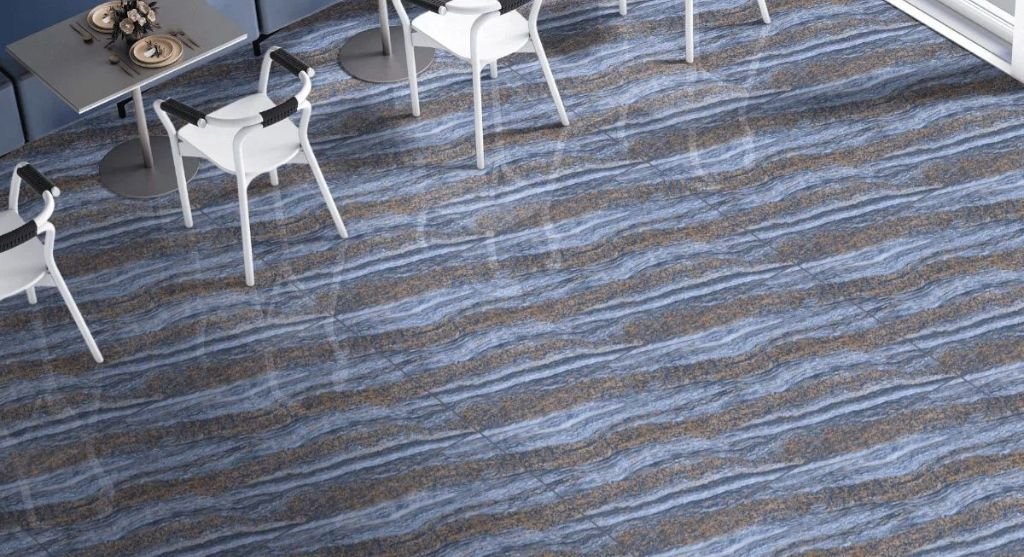

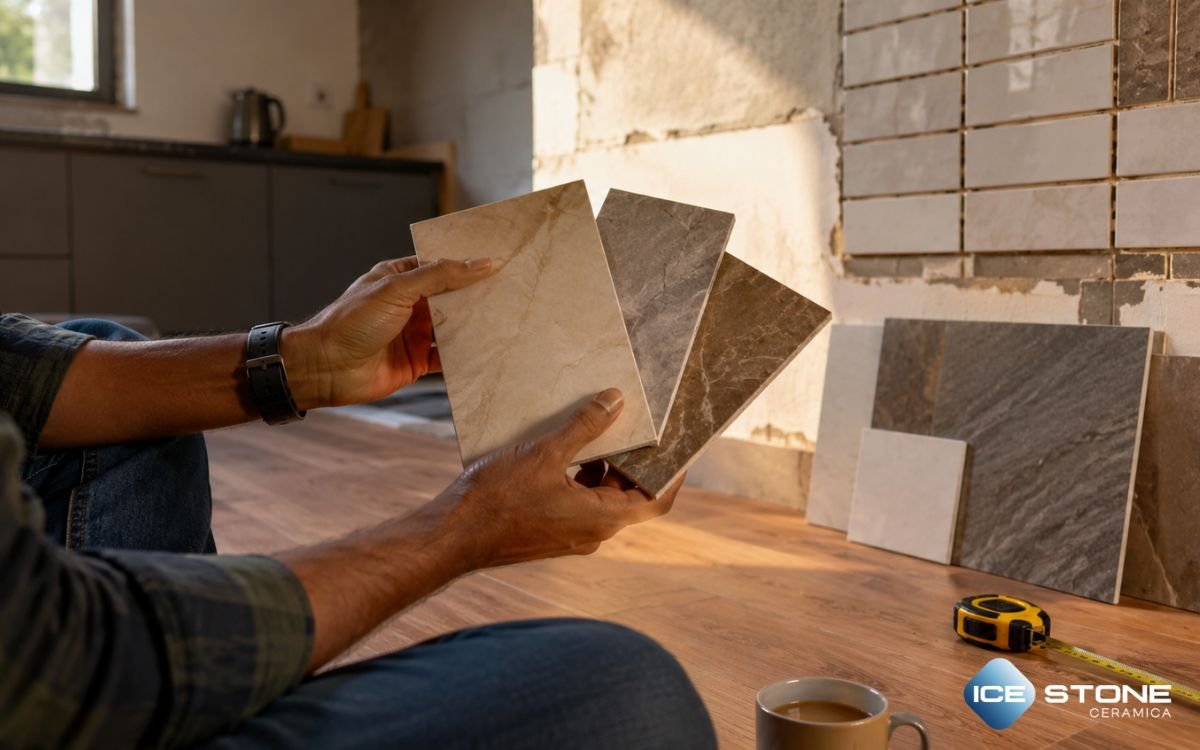
Ceramic tiles are hard, flat pieces made by shaping clay and firing it in a kiln at high heat. That’s the short answer. But if you’re picking tiles for your home or just trying to understand what you’re walking on, you need more than a dictionary line.
So here’s the full picture: what ceramic tiles are made of, how they’re built, what types exist, and where they actually work best.
Ceramic tiles are one of the oldest building materials still in daily use. People have been firing clay into tiles for thousands of years, and the basic idea hasn’t changed much. What has changed is the precision. Modern kilns, better glazes, and tighter manufacturing tolerances mean today’s ceramic tile is more consistent and more durable than anything made a century ago.
What are ceramic tiles made of?
Clay, sand, and water. That’s the core mix.
The clay itself is rarely one thing. Manufacturers blend kaolin, ball clay, and fire clay together, and each one pulls its weight. Kaolin keeps the tile light in color. Ball clay adds plasticity so the mixture can be shaped without cracking. Fire clay handles the heat during firing without warping.
To that base, factories add feldspar and quartz. Feldspar acts as a flux, it lowers the melting point of the mixture so the kiln doesn’t need to run as hot. Quartz adds structural strength and helps the tile hold its shape.
Mix all of that with water and you get a workable paste. Press it, dry it, fire it, and you’ve got a tile.
How ceramic tiles are made
The process runs through five stages, and skipping any of them shows up later as a cracked or warped tile.
- Mixing. Raw materials get combined and refined to strip out impurities. A dirty mix means uneven color and weak spots.
- Shaping. The paste gets pressed into molds or cut to size with machinery. This step locks in the tile’s dimensions.
- Drying. Tiles sit until moisture drops out. Skip this and the water turns to steam during firing, and the tile cracks.
- Firing. Kilns run past 1,000°C. This is where the clay actually turns into ceramic, a process called vitrification that hardens the tile and locks in its strength.
- Glazing. A coating goes on for color, texture, and protection. Glossy, matte, textured, whatever the design calls for.
Some tiles get fired twice, once before glazing and once after, for a harder finish. Others go through a single firing to save time and cost. Both work. The choice comes down to the finish the manufacturer wants.
Types of ceramic tiles
Not all ceramic tiles are built the same way, and the differences matter more than most buyers realize.
Glazed ceramic tiles
These have that coated top layer, which gives you color, pattern, and a barrier against stains and water. Most kitchen and bathroom tiles fall into this category. The glaze also seals the porous clay underneath, so spills and stains sit on the surface instead of soaking in.
Unglazed ceramic tiles
No coating, just the fired clay body straight through. They’re tougher underfoot and less likely to show wear, but you get fewer color and pattern options. Since there’s no glaze to chip or scratch off, the color runs consistent through the whole tile, so a deep scuff doesn’t stand out. You’ll see these in high-traffic commercial spaces.
Porcelain tiles
Technically a denser subtype of ceramic, made from finer clay and fired at higher temperatures. Lower water absorption, higher cost, and tough enough for outdoor use in most climates. The denser body also makes porcelain tiles heavier to handle and slightly trickier to cut, so installation usually takes a bit longer.
Terracotta tiles
Made from a specific reddish clay, fired at lower temperatures than standard ceramic. Popular for a rustic look, common in roofing and outdoor flooring. It’s also one of the most porous options on this list, which is why it needs periodic sealing when used outdoors or in wet spaces.
Each type solves a different problem. Glazed tiles win on looks. Unglazed and porcelain win on durability. Terracotta wins on that warm, natural finish nobody quite replicates with a machine-made pattern.
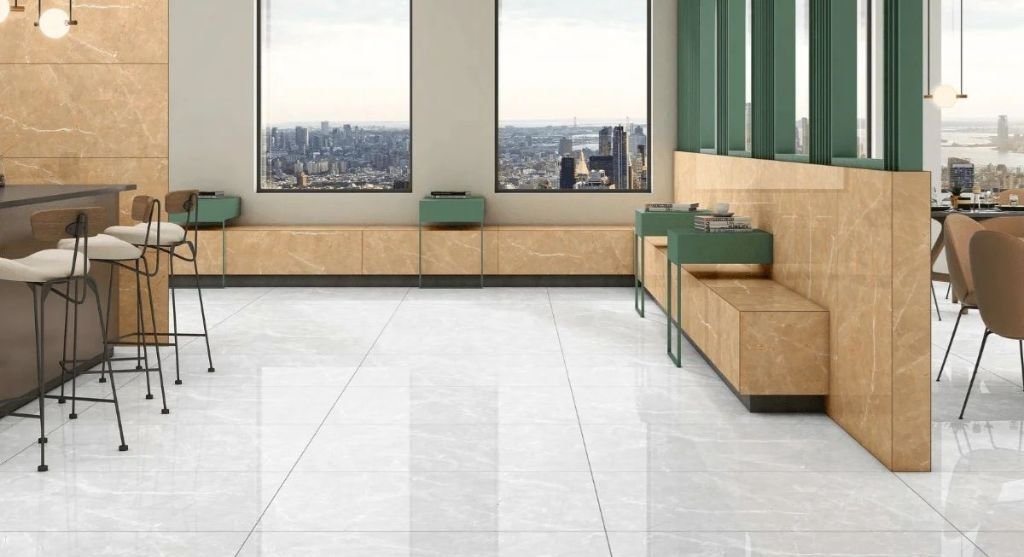
Within glazed tiles, you’ll also run into a finish choice: glossy, matte, or textured. Glossy finishes bounce light around a room and make small spaces feel bigger, but they show scratches and footprints faster. Matte finishes hide daily wear better and work well in busy households. Textured or rustic finishes add grip, which is worth considering for bathroom floors where slipping is a real concern.
If you want a wider view beyond ceramic, our guide on the different types of tiles available in the market covers stone, vitrified, and other materials side by side.
What are the properties of ceramic tiles?
If you’re comparing tiles before you buy, these are the numbers and traits that actually matter.
- Water absorption. Standard ceramic tiles absorb somewhere between 3% and 10% water by weight. That’s why they’re a solid pick for kitchens and bathrooms indoors, but a poor one for outdoor patios in freezing climates.
- Hardness. Rated on the Mohs scale, most ceramic tiles land between 5 and 7, hard enough to resist scratches from daily foot traffic and furniture legs.
- Thermal resistance. Fired at over 1,000°C, ceramic tiles handle heat well. That’s part of why they work near stoves and fireplaces.
- Stain resistance. The glaze does most of the work here. A well-glazed tile shrugs off spilled turmeric, wine, or oil, assuming you wipe it up before it sits for days.
- Weight. Lighter than natural stone, which makes installation easier and cuts down on structural load in multi-story buildings.
None of these numbers stay fixed across every tile. A cheap, thin ceramic tile and a premium one from the same factory can differ by a wide margin on water absorption alone. Check the technical spec sheet, not just the price tag.
Thickness plays a role too. Most ceramic floor tiles run 7mm to 10mm thick, while wall tiles can go thinner since they don’t carry foot traffic. Thicker tiles resist cracking under impact, which matters if you’re tiling a space that sees dropped pans or moved furniture.
Water absorption numbers get compared a lot against porcelain, since the two sit close on many spec sheets. If you want the exact figures, our porcelain tile water absorption guide breaks down what the percentages actually mean for your project.
What are ceramic tiles used for?
Floors, walls, backsplashes, and increasingly roofs. The applications spread wider than most people expect.
Flooring
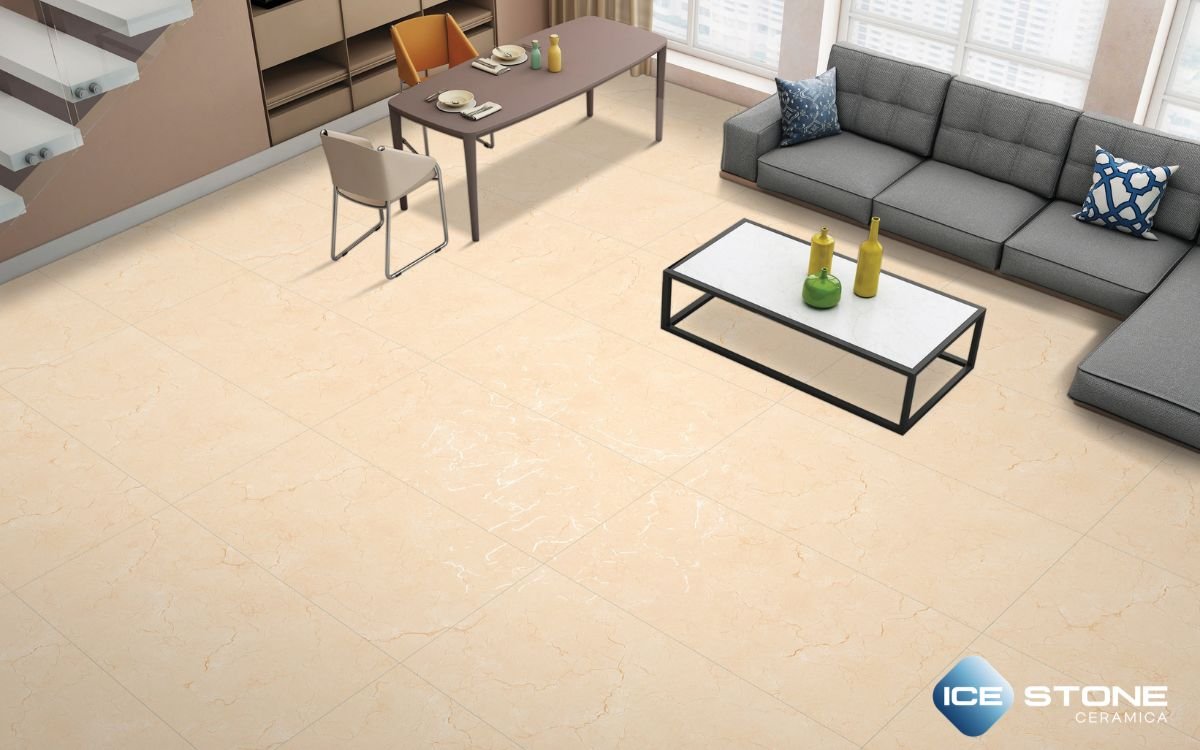
Kitchens, bathrooms, living rooms, hallways. Ceramic floor tiles handle moderate to high foot traffic and clean up with a mop and mild detergent. Go with a matte or textured finish here over glossy, wet glossy tiles get slippery fast, and that matters more in a kitchen or bathroom than the shine does.
Walls
Bathroom and kitchen walls benefit from the water resistance. A tiled wall behind a sink or stove takes splashes without staining or peeling, which paint just can’t match over time. Wall tiles also run thinner and lighter than floor tiles, since they don’t need to carry foot traffic, which keeps material costs down for full-height installations.
Backsplashes
Small format tiles, mosaics, subway patterns, these show up constantly in kitchen backsplashes where you want personality without committing an entire room to one design. Because the area’s small, it’s also where most homeowners feel comfortable experimenting with bolder colors or patterns they’d hesitate to use across an entire floor.
Roofing
Terracotta and glazed ceramic roof tiles handle rain, UV exposure, and temperature swings. Traditional homes lean toward unglazed terracotta, while modern builds often go with sleek glazed variants. Roof tiles also need a specific interlocking profile so water sheds properly, which is why they’re manufactured differently from flat floor or wall tiles even when the base clay is the same.
Commercial spaces
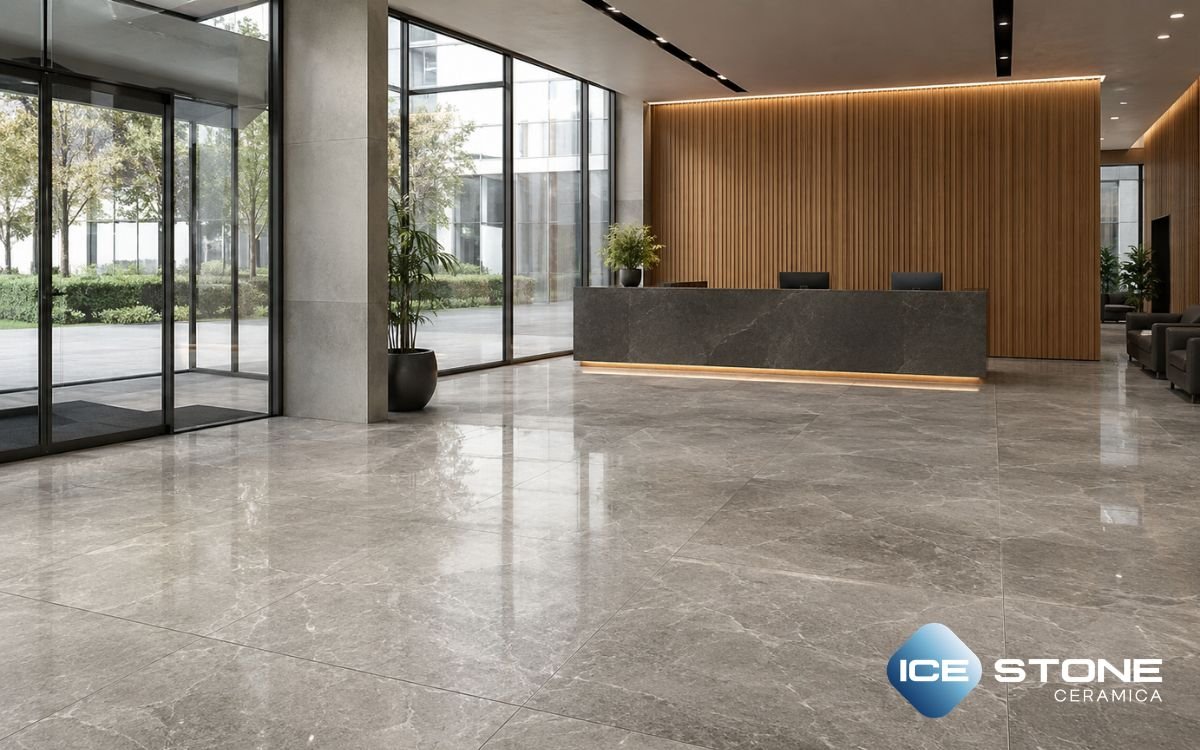
Restaurants, offices, hospitals. Unglazed or porcelain ceramic tiles show up in commercial spaces because they hold up under constant traffic and frequent cleaning with harsher chemicals. Slip resistance matters more in these spaces too, so a lot of commercial buyers specify a textured or matte finish rated for high foot traffic rather than a glossy one.
Where ceramic tiles struggle is outdoor flooring in freeze-thaw climates. Water gets into the tile’s pores, freezes, expands, and cracks it. If you’re tiling an exposed patio somewhere that sees real winters, vitrified or porcelain is the safer call.
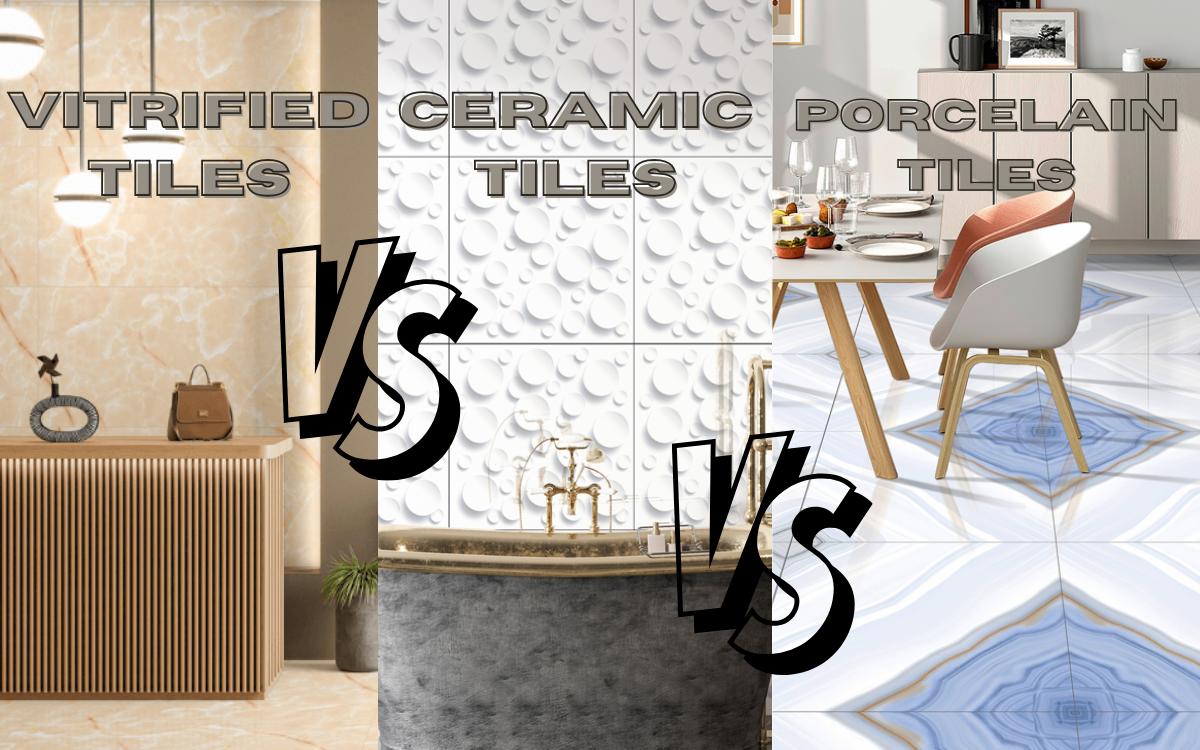
Ceramic tiles vs vitrified tiles vs porcelain tiles
People use these terms loosely, and that’s where confusion starts.
| Feature | Ceramic Tiles | Porcelain Tiles | Vitrified Tiles |
|---|---|---|---|
| What They Are | Standard ceramic tile made from natural clay | A denser, premium type of ceramic tile | Clay blended with silica and vitrified at extremely high temperatures |
| Water Absorption | Higher | Low | Near zero |
| Durability | Good for everyday residential use | Excellent | Exceptional |
| Porosity | More porous | Less porous | Almost non-porous |
| Strength | Moderate | High | Very high |
| Stain Resistance | Good | Very good | Excellent due to minimal pores |
| Best For | Indoor walls and floors | Indoor & outdoor residential spaces | Outdoor areas, commercial spaces, heavy-traffic floors |
| Design Variety | Widest range of colors, patterns, and styles | Wide range of premium designs | Slightly fewer design options than porcelain |
| Installation | Easiest to cut and install | Harder to cut than ceramic | Most difficult due to high density |
| Price | Most affordable | Mid-range | Highest upfront cost |
| Outdoor Use | Not recommended in harsh conditions | Suitable for most outdoor applications | Ideal for outdoor and extreme conditions |
| Heavy Foot Traffic | Suitable for light to moderate traffic | Suitable for heavy residential traffic | Best for commercial and high-traffic areas |
| Frost Resistance | No | Yes | Yes |
| Ideal Choice | Budget-friendly indoor renovations | Balance of durability and design | Maximum durability, water resistance, and long-term performance |
If your project stays indoors and budget matters, ceramic wins. If it’s an outdoor patio or a commercial floor that never stops seeing footsteps, look at vitrified or porcelain instead. For a full side-by-side breakdown, our vitrified tiles vs ceramic tiles vs porcelain tiles comparison walks through each one in more depth.
How to maintain ceramic tiles
Ceramic tiles are low maintenance, not zero maintenance. There’s a difference.
Sweep or vacuum regularly to keep grit from scratching the glaze. For deeper cleaning, stick to pH-neutral cleaners. Bleach and harsh acidic cleaners strip the glaze over time and dull the finish.
Fix cracked or loose tiles fast. A single loose tile left alone lets water seep under the neighboring ones, and that turns a five-minute repair into a full section replacement.
Reseal grout lines every year or two in wet areas like bathrooms. Grout is more porous than the tile itself, and it’s usually where staining and mold actually start.
Ceramic tiles: frequently asked questions
What is a ceramic tile, in simple terms?
A ceramic tile is a flat piece of fired clay used to cover floors, walls, or roofs. The clay gets mixed with water, shaped, dried, and baked in a kiln until it hardens.
What are ceramic tiles made of?
Mainly clay, sand, and water, with feldspar and quartz added for strength and to help the mixture melt evenly during firing.
What is the difference between ceramic and porcelain tiles?
Porcelain is denser and absorbs less water, since it’s fired from finer clay at higher temperatures. Ceramic is more affordable and easier to cut, but less suited to outdoor or heavy-traffic use.
Where can you use ceramic tiles?
Mostly indoor floors and walls, kitchens, bathrooms, living rooms, and backsplashes. Some glazed and terracotta ceramic tiles also work on roofs.
Are ceramic tiles good for flooring?
Yes, for indoor rooms with light to moderate traffic. They’re durable, easy to clean, and come in far more design options than most alternatives. For outdoor floors or freezing climates, vitrified or porcelain tiles hold up better.
What is ceramic tile used for in a home?
Kitchens, bathrooms, hallways, and backsplashes see the most use, thanks to water resistance and easy cleanup. Living rooms and bedrooms use them too, mostly for the design range and lower cost compared to stone.
Choosing the right ceramic tile
There’s no single “best” ceramic tile. There’s only the right one for your room, your budget, and how much traffic that floor sees every day.
For a bathroom, prioritize water absorption and slip resistance. For a kitchen, stain resistance and easy cleanup matter more. For a roof, weather resistance carries the decision. If you want a checklist before you commit, our guide on 10 things to consider before buying ceramic tiles covers the questions worth asking upfront.
At Icestone Ceramica, we stock ceramic tiles, porcelain, and vitrified tiles across sizes, finishes, and colors, so you’re not stuck guessing which category fits your space. Browse the range or call us directly, and we’ll help you match the tile to the room instead of the other way around.