

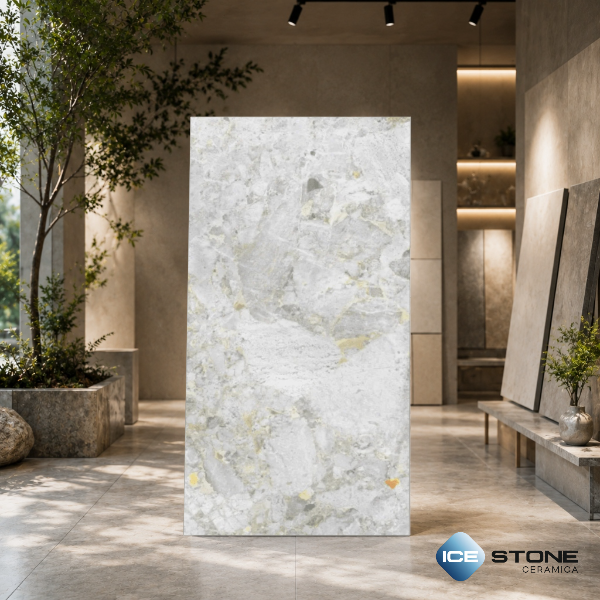
White floor tiles are the fastest way to make a room look bigger than it is. Light bounces off a white floor instead of getting soaked up, so a small living room or a narrow hallway reads more open the second you walk in.
At Icestone Ceramica, white floor tiles come in vitrified, ceramic, and porcelain, in sizes from 2×2 ft up to large-format slabs. Matt, glossy and textured finishes are all available, and every batch is checked for shade consistency before it leaves the warehouse (white is the one color where a shade mismatch actually shows).
Prices start around ₹55 per sq. ft. for 600×600 mm and go up from there depending on size and finish, up to ₹150 per sq. ft. for large-format 1200×1800 mm slabs. Full pricing is below.
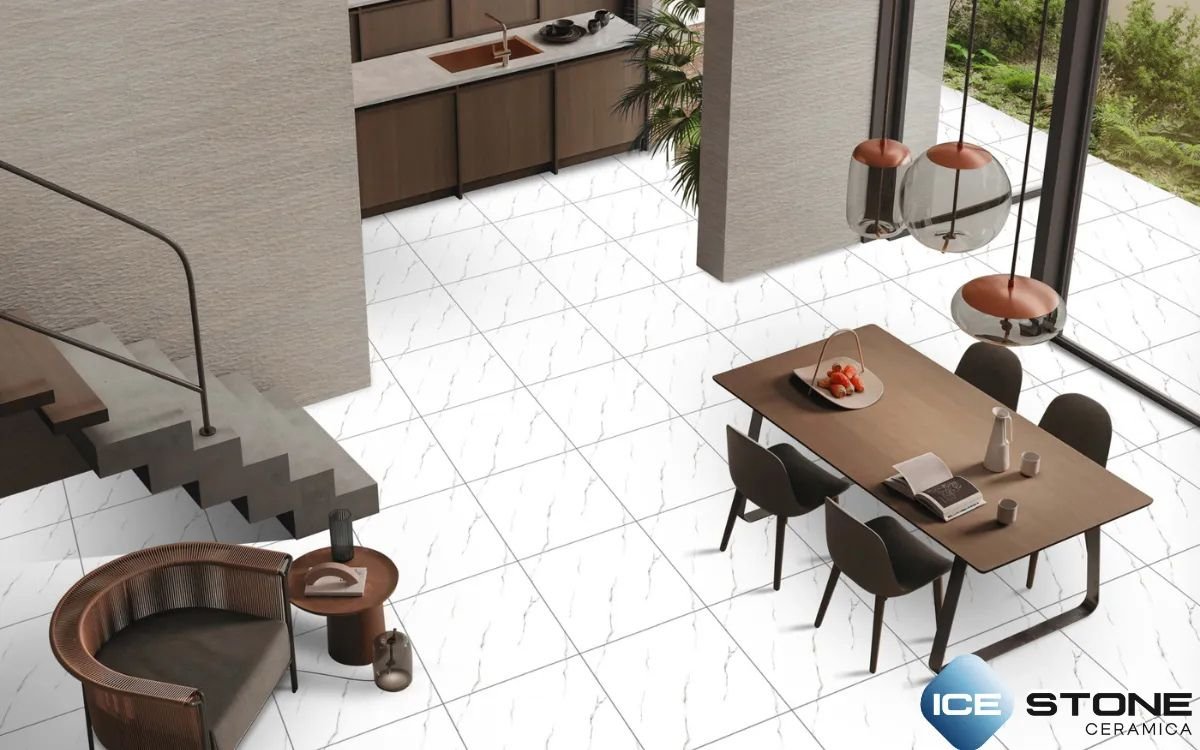
Types of white floor tiles
Plain white vs off-white floor tiles
Pure white and off-white aren’t the same tile, and picking the wrong one changes the whole room.
Pure white throws the most light and pairs best with bold or dark decor, since the floor stays neutral while everything else does the talking. Off-white (sometimes labeled ivory or bone) has a warmer undertone. It hides everyday dust and light footprints better and feels less clinical in a home that gets a lot of natural light already.
If your room already gets strong sun for most of the day, off-white usually looks better in photos and in person. Pure white can look almost blown-out in direct light.
White marble-look floor tiles
Marble-effect white tiles (Statuario and Carrara-style veining printed on a vitrified base) are one of the most searched white floor tile styles, and for good reason: you get the look of imported marble without the sealing, staining, and maintenance headaches real marble brings in a humid climate.
We’ve covered this style in full, including which veining patterns work in which rooms and how it compares to actual marble, on our marble floor tiles page.
White square floor tiles
Square-format white tiles, most commonly 2×2 ft, are the standard choice for Indian home layouts because they cut cleanly around doorways, columns, and odd room shapes without much wastage. See sizing, price breaks, and layout tips on our 2×2 floor tiles page.
Black and white floor tiles design
This is the single biggest design trend inside the white tile category, and the keyword data backs it up. Buyers searching “white floor tiles” are, more often than not, also looking at black and white combinations.
Black and white floor tile patterns
Two patterns dominate: checkerboard (alternating black and white squares, classic and a little retro) and border-style layouts, where a plain white field is framed by a black perimeter strip. Checkerboard works well in kitchens and entryways. Border layouts suit larger open living areas where you don’t want the whole floor broken up visually.
A herringbone or basketweave laid in black and white also shows up often in newer builds, usually as a feature strip rather than across the whole floor.
White floor tiles with black border
A black border around a white field does two things at once: it frames the room, and it hides the wear line that forms near walls and skirting first. It’s a low-risk way to add contrast without committing to a full checkerboard floor.
Black and white tile floor for kitchen
Kitchens are where this combination gets used the most, and it’s practical, not just aesthetic. A black and white kitchen floor camouflages both flour dust (shows on plain black) and oil spots (shows on plain white) better than either color alone.
Red and white combinations show up occasionally too, usually in retro-styled kitchens or as a smaller accent strip rather than the main floor color.
White floor tiles’ design and texture
Modern white floor tile designs lean toward large-format slabs with minimal pattern, wide-format planks that mimic stone, or a subtle linear texture that catches light without looking busy.
Texture matters more on white than on darker colors. A flat, high-gloss white surface reflects everything, including scuff marks and footprints. A tile with light texture, sometimes marketed as a “carving” or “matt structure” finish, hides daily wear far better while still reading as white from a few feet away.
Finishes: matte vs. glossy white floor tiles
Glossy white reflects the most light and looks the most premium in photos. It also shows every water spot, footprint, and scratch, which is why it’s rarely used in high-traffic zones like entryways or kitchens.
Matt white hides smudges and is less slippery when wet, so it’s the better call for bathrooms, kitchens, and anywhere kids or elderly family members walk regularly. You lose a bit of shine, but you gain a floor that still looks clean on day three, not just day one.
If you’re torn between the two for the same room, go matte. The maintenance difference is bigger than the visual one.
What wall color goes with white floor tiles?
A white floor is one of the few floor colors that goes with almost any wall shade, which is exactly why this comes up so often.
- Warm neutrals (beige, sand, soft taupe) keep the room cozy without fighting the brightness of the floor.
- Muted pastels (sage green, dusty blue, blush) work well in bedrooms and living rooms where you want some color without visual noise.
- Bold or dark walls (charcoal, navy, forest green) create the strongest contrast and make the white floor look even brighter by comparison.
The one combination to be careful with is stark white walls paired with stark white floors. It can flatten a room and make it feel less like a design choice and more like an unfinished one. Adding even a slightly warmer wall shade fixes this instantly.
Grout color pairing for white floor tiles
Grout color changes the personality of a white floor more than most people expect before they’ve seen it installed.
White or light grey grout keeps the floor looking seamless, almost like one continuous surface, which suits minimalist and modern interiors. Mid-to-dark grey grout defines each tile edge clearly and hides dirt buildup in the grout lines far longer, which matters in kitchens and high-traffic hallways where white grout tends to grey out within a year regardless of how often it’s cleaned.
For most homes, grey grout is the practical middle ground: enough contrast to define the tile, enough darkness to stay looking clean.
White floor tiles by room
White floor tiles for living room
Living rooms are where white floors get used most often, especially in open-plan layouts, since a light floor visually connects the space instead of breaking it into smaller-looking zones. Modern living room layouts pair a large-format white slab with minimal grout lines to push that effect further. Full room-specific guidance is on our living room floor tiles page.
White kitchen floor tiles
White kitchen floor tiles brighten what’s usually one of the smaller, more enclosed rooms in an Indian home. Go matt or satin here, not glossy: kitchens see oil splatter and water regularly, and a matt finish is both safer underfoot and easier to keep looking presentable between deep cleans.
White bathroom floor tiles
White bathroom floors make even a small bathroom feel less cramped, and they make it obvious the moment something needs cleaning, which some buyers actually prefer. Anti-skid matt or textured finishes are a must here, not optional. More detail on slip ratings and layout is on our bathroom floor tiles page.
White floor tiles price in Bangalore
Pricing depends mainly on tile size:
| Tile size | Approx. price (₹/sq. ft.) |
|---|---|
| 300 x 600 mm | ₹67 – ₹75 |
| 400 x 400 mm | ₹70 – ₹85 |
| 600 x 600 mm | ₹55 – ₹83 |
| 600 x 1200 mm | ₹62 – ₹81 |
| 1200 x 1800 mm | ₹125 – ₹150 |
Note: Prices are approximate and vary depending on design, finish, thickness, and collection. Please check individual product pages or contact our team for current pricing.
How to choose the right white floor tiles
The honest downside of white floors: they show dirt faster than any other color. That’s the trade-off you’re making for the brightness, and it’s worth planning around rather than discovering after installation.
A few things that actually help:
- Pick matt or textured over glossy for any room with regular foot traffic.
- Go slightly off-white instead of pure white if the room already gets strong natural light.
- Choose grey grout over white grout almost everywhere except very low-traffic rooms.
- Ask about the PEI rating (abrasion resistance) if the floor will see heavy daily use, not just occasional walking.
None of this means white floors are high-maintenance in any dramatic sense. It just means the finish and grout choice matter more here than they do for a midtone color.