

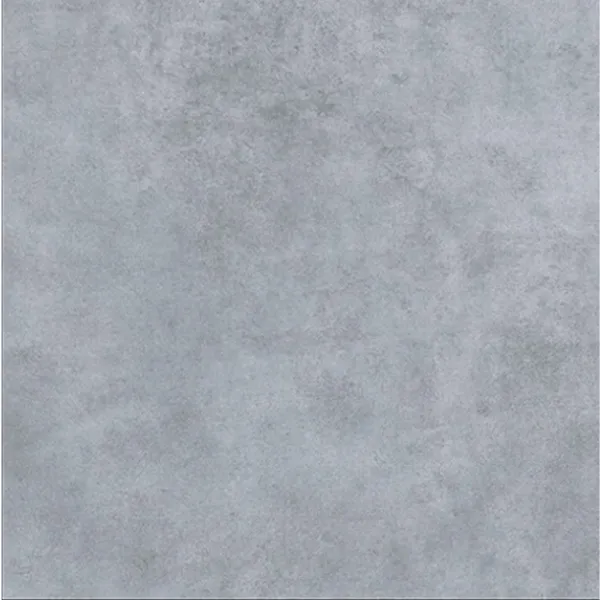
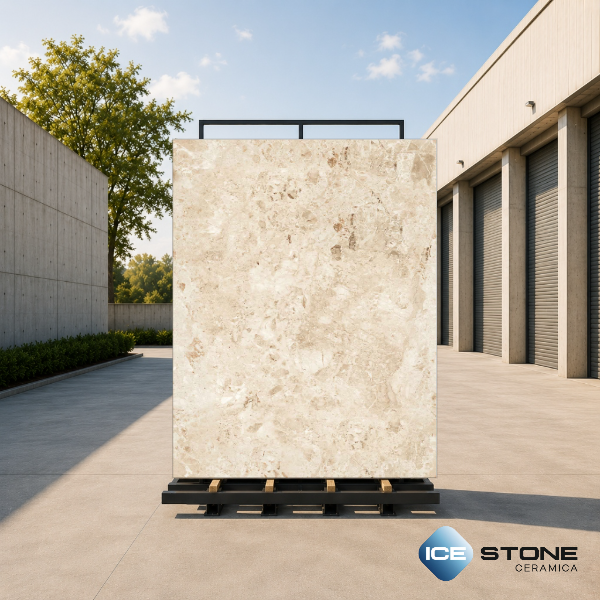
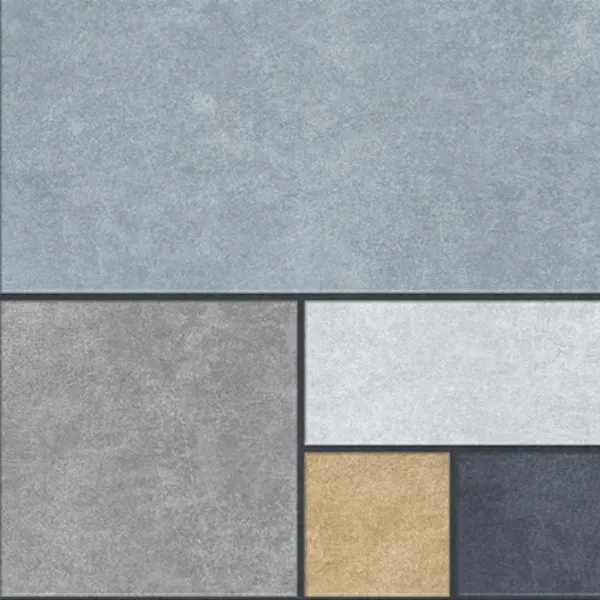
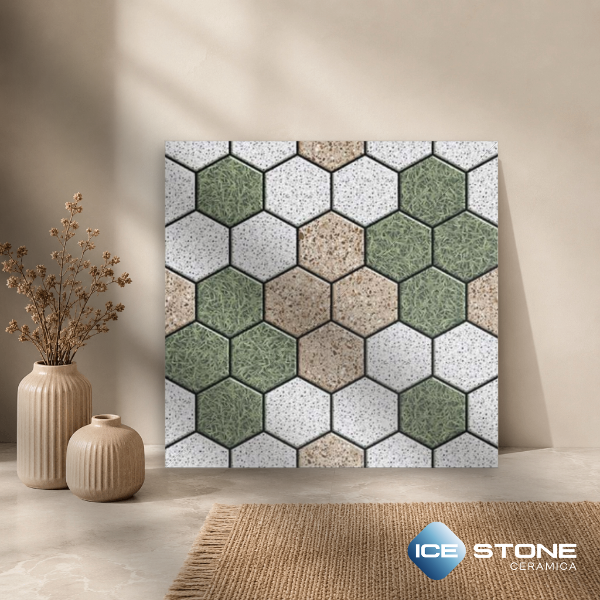
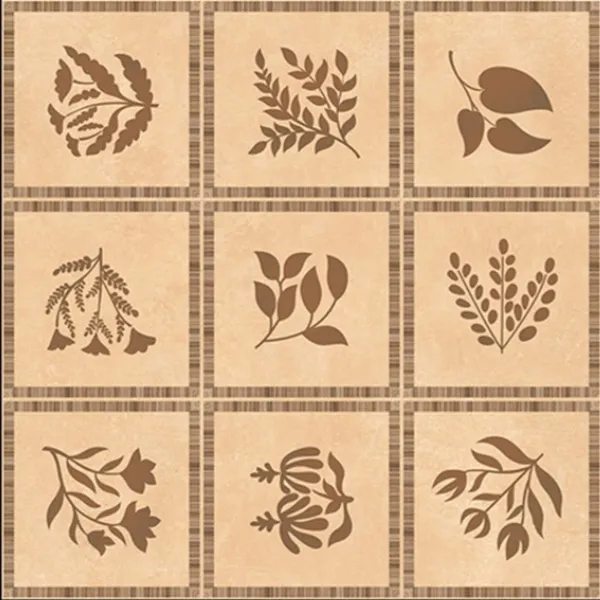
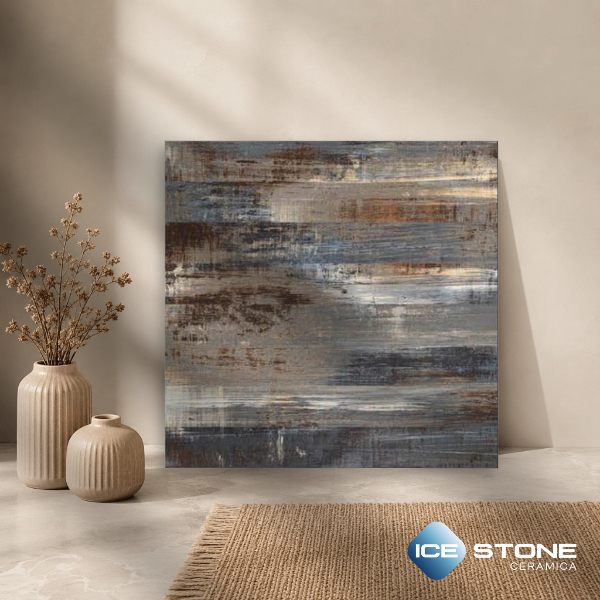
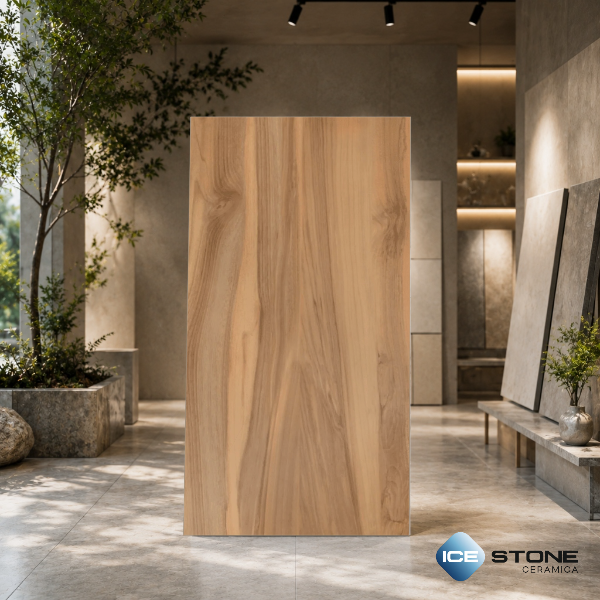
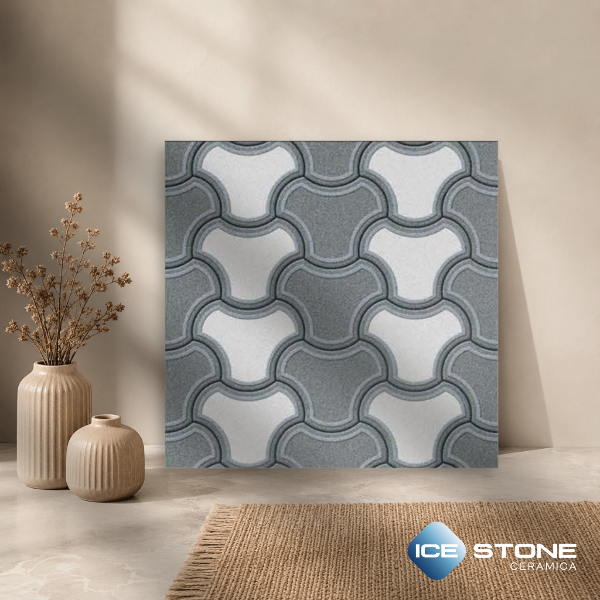
Vitrified floor tiles are the most common flooring choice across Indian homes and commercial spaces. They resist water, don’t stain, and hold their finish for years without sealing. At Icestone, vitrified floor tiles are available in 600×600mm, 600×1200mm, and large-format 1200×1800mm slab sizes, priced between ₹55 and ₹129 per sq. ft. Explore our full range of Tiles, or filter by room, finish, size, design, and colour below to find the right tile for your project.
What are vitrified floor tiles?
Vitrified tiles are made by firing clay, silica, and feldspar together at very high heat. This process, called vitrification, turns the mix into a dense, glass-like material with almost no pores. Less porosity means the tile barely absorbs water, so stains, spills, and moisture don’t sink in the way they do with a regular ceramic tile.
Standard vitrified floor tiles come in 8mm to 10mm thickness for home use, with slightly thicker options made for high-traffic commercial and outdoor floors. That extra body thickness, combined with the dense structure, is what lets vitrified handle heavy footfall without cracking the way a thinner, more porous tile would.
That’s the main reason vitrified tiles have become the default flooring material in Indian homes built over the last decade. It doesn’t need sealing, it holds up to daily foot traffic, and it costs a fraction of natural stone.
Vitrified vs ceramic vs porcelain: what’s the difference?
| Tile type | Water absorption | Sealing needed | Best for | Typical price range |
|---|---|---|---|---|
| Ceramic | Higher (glazed surface only) | No, but glaze wears over time | Walls, light-use floors | Lower |
| Vitrified | Very low (dense throughout) | No | All floors, high-traffic areas | ₹55–₹129/sq.ft |
| Porcelain | Lowest | No | Wet areas, premium finishes | Higher |
Ceramic tiles have a glaze on top, so once that layer wears down, the body underneath is more porous and prone to chipping. Vitrified tiles are dense right through, so a scratch or chip doesn’t expose a different colour or a weaker layer underneath. Porcelain goes a step further on density, which is why it usually costs more per sq. ft. than vitrified.
Vitrified tiles flooring: best rooms and applications
Vitrified flooring works in nearly every part of the house, but the size and finish you pick should change room to room.
Living room and bedroom
600×1200mm tiles in a glossy finish are popular here, and large 1200×1800mm slabs are increasingly used for a more seamless, joint-free look in bigger living rooms. The larger the format, the fewer grout lines, which gives the floor a cleaner look and makes a small room feel bigger. See our full Living Room Floor Tiles and Bedroom Floor Tiles ranges for design-specific options.
Kitchen and bathroom
600×600mm tiles in a matt or anti-skid finish are the safer pick. Water and oil spills are common, and a matt surface grips better underfoot than a glossy one. Browse Kitchen Floor Tiles and Bathroom Floor Tiles for room-specific designs.
Parking and outdoor areas
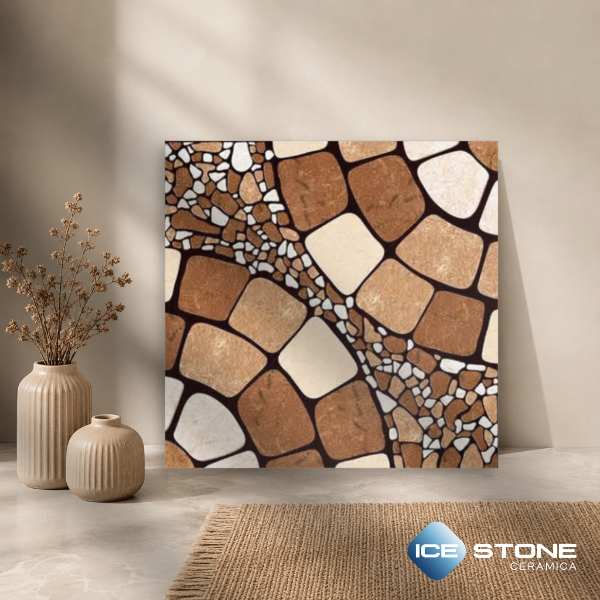
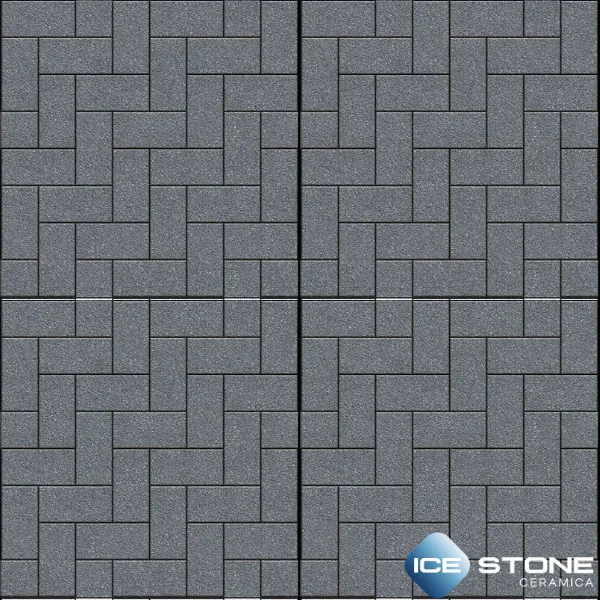
600×600mm matt vitrified tiles are used the most here. Geometric and pebble-mosaic patterns are common choices for parking floors since they hide tire marks and daily wear better than plain designs. See our dedicated Parking Floor Tiles and Outdoor Floor Tiles collections.
Balcony and terrace
Matt-finish 600×600mm tiles handle sun exposure and occasional rain well, without fading or becoming slippery.
Commercial spaces
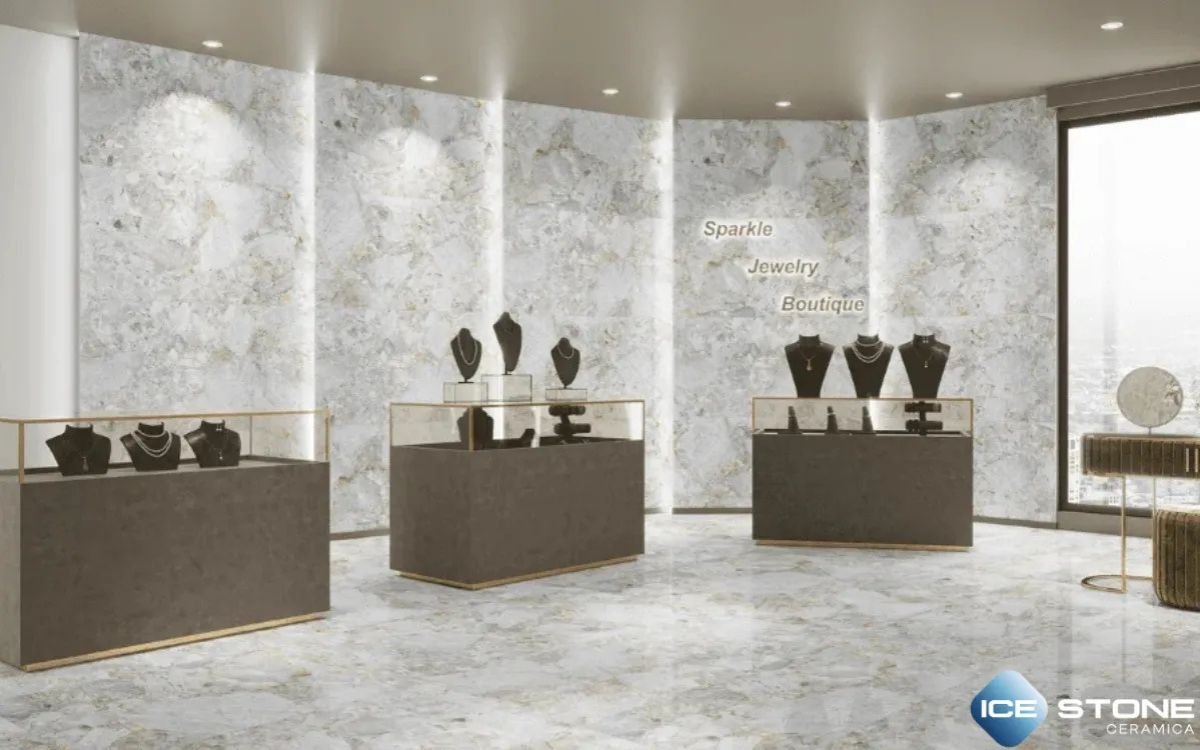
Offices, showrooms, and retail floors often use 600×1200mm or 1200×1800mm slab tiles for the same reason living rooms do: fewer joints, easier cleaning, and lower long-term upkeep. Check our Commercial Tiles range for options built for heavy footfall.
Vitrified floor tiles: sizes available
| Size | Common use | Approx. price/sq.ft |
|---|---|---|
| 600×600 mm | Kitchen, bathroom, parking, utility areas | ₹55 – ₹83 |
| 600×1200 mm | Living room, bedroom, commercial floors | ₹62 – ₹81 |
| 1200×1800 mm (slab) | Living room, commercial, feature floors | ₹129 |
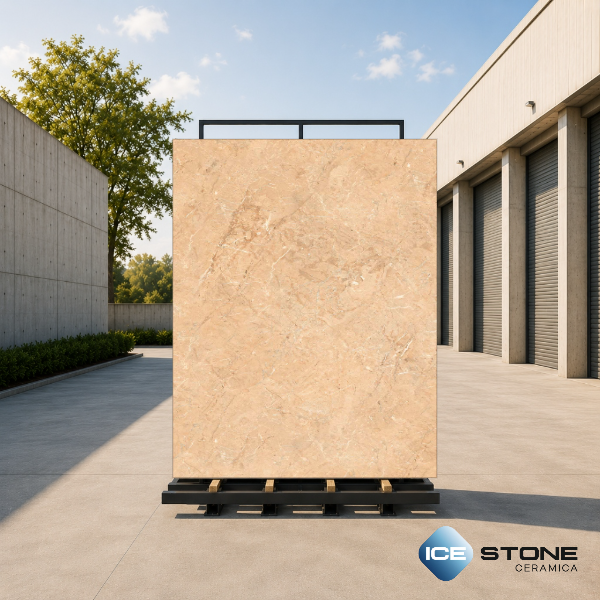
600×600mm is the more versatile, budget-friendly format and is easier to install on smaller or uneven floors — see the full 2×2 Floor Tiles range for options in this size. 600×1200mm costs slightly more per sq. ft. at the upper end but needs fewer tiles and less grout on larger floors. The 1200×1800mm slab sits at the premium end since it’s a large-format, mostly glossy marble-design tile, but it cuts grout lines down to a minimum for open living spaces and commercial floors. Thickness generally runs 8mm to 10mm for the two smaller sizes, with commercial-grade and slab options going slightly thicker.
Vitrified floor tiles finishes
Matt finish
The anti-skid option. It’s the standard pick for parking, bathrooms, and kitchens, where grip matters more than shine.
Glossy finish
Reflects more light and works well in living rooms and bedrooms, where the goal is a brighter, more polished look. It also shows up on most of the marble-look 1200×1800mm slabs and wood-look designs.
High gloss and luster finishes
High gloss takes the reflective look further, best suited to formal living spaces where light and openness are the priority. Luster sits between matt and glossy, offering a soft sheen without the full reflectivity of a high-gloss surface.
Carving and rustic finishes
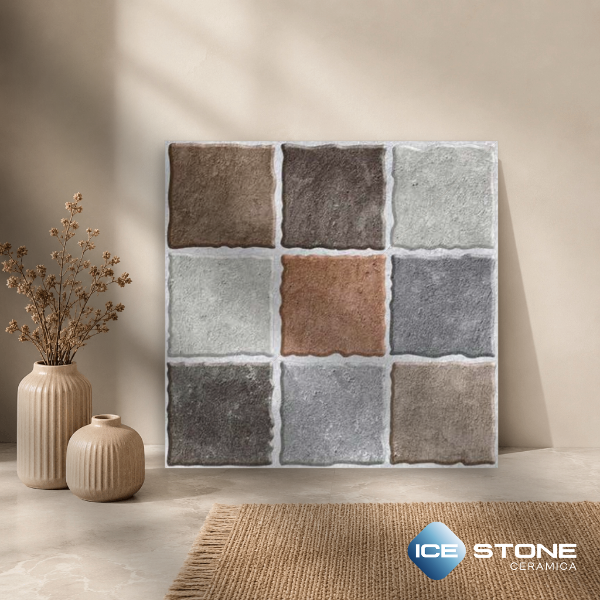
Carving finish adds a raised or textured surface pattern, often used for feature walls or accent floor sections rather than full-room flooring. Rustic finish mimics a natural, worn stone look, popular in outdoor and semi-outdoor spaces.
Vitrified floor tiles design
Design in vitrified tiles has moved well past plain, single-tone options.
Marble-look designs
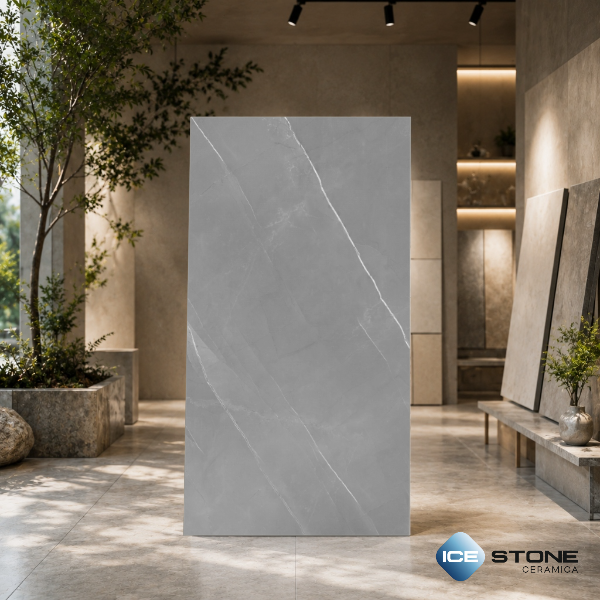
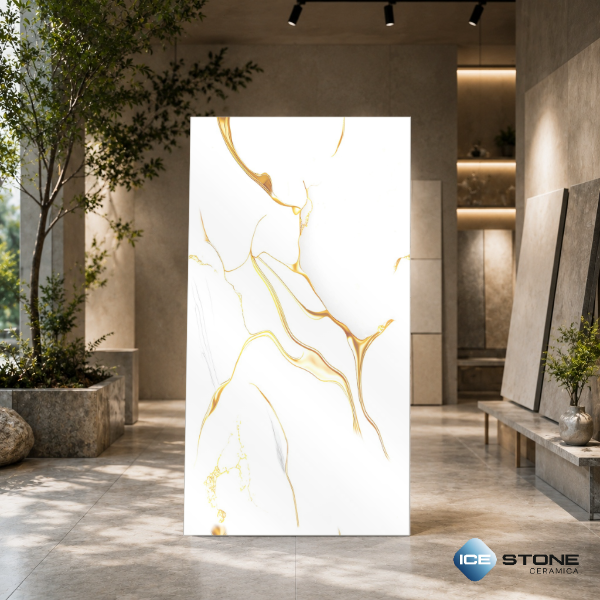
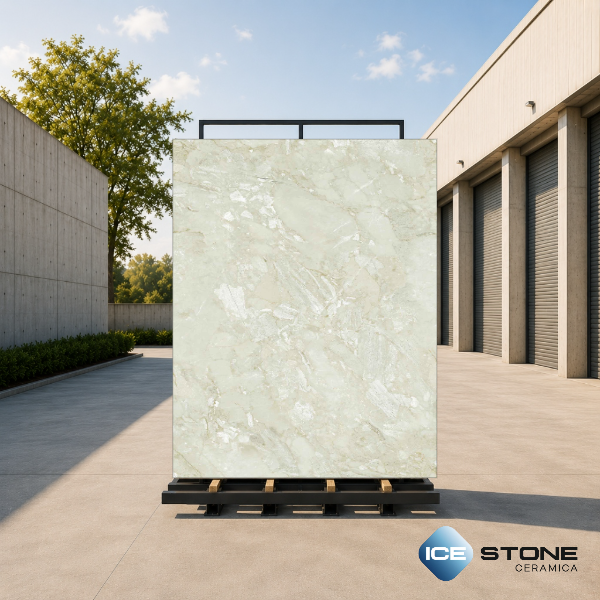
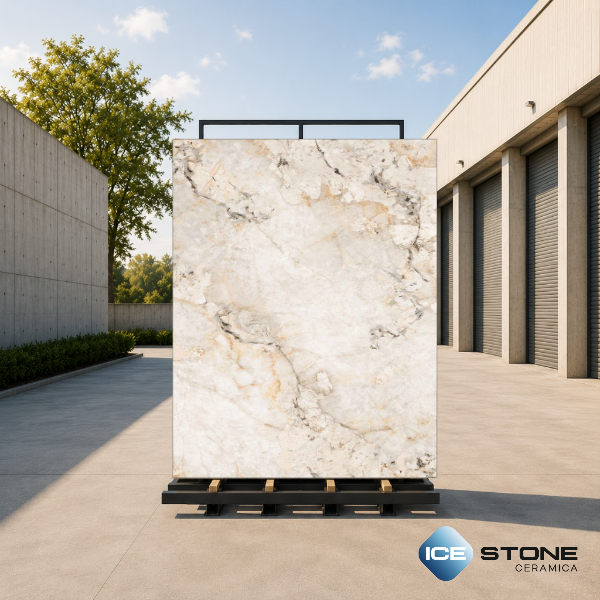
Marble-look tiles replicate the veining of natural marble and are most common in the glossy 1200×1800mm slab range, without the cost or upkeep of real stone.
Wood-look and stone-look designs
Wood-look and stone-look designs give you the warmth or texture of those materials on a surface that doesn’t warp, crack, or need sealing the way real wood or natural stone does.
Pattern and geometric designs
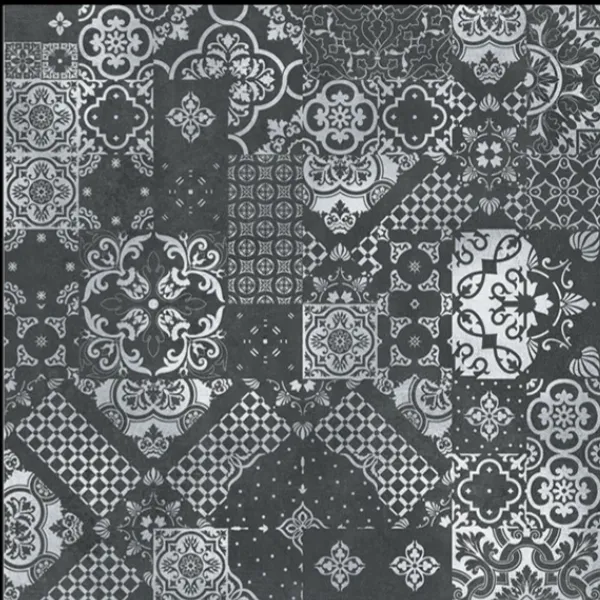
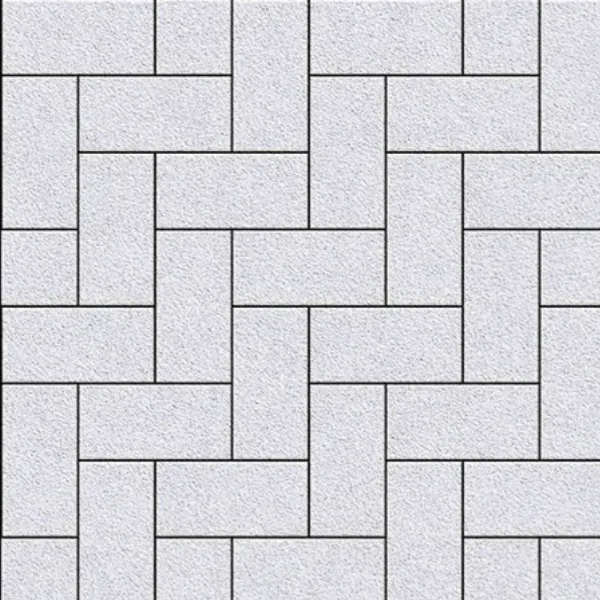
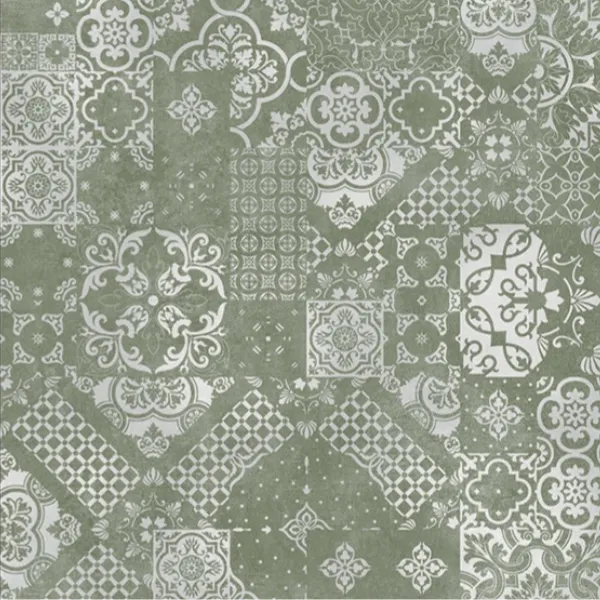
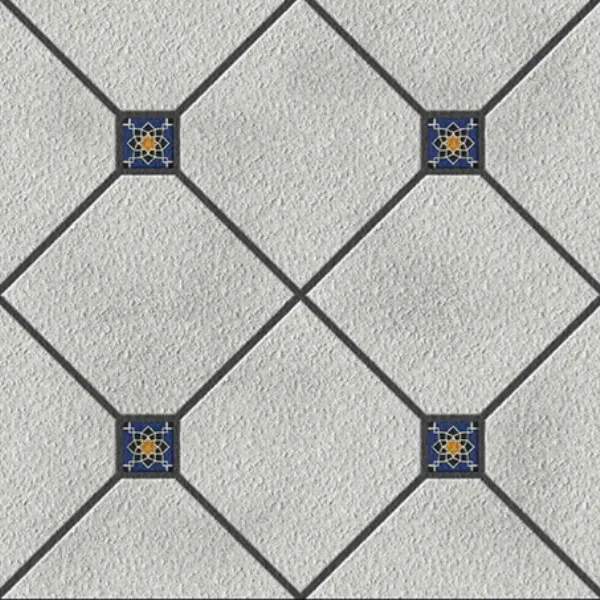
Pattern designs (Castel Stone, basket-weave, and pebble-mosaic) are common in the 600×600mm matt range and are especially popular for parking and outdoor floors, where a busier pattern hides dirt and wear better than a plain tile. Textured designs work well alongside these for extra grip.
If you’re picking a design for a specific room, lighter marble and wood tones tend to work better in bedrooms and living rooms, while textured or patterned designs suit high-traffic areas like parking and balconies. Darker shades across any design also tend to hide daily wear and stains better than very light or white tones.
Vitrified floor tiles price list
Price depends mainly on size and finish. Here’s what it looks like across Icestone’s current range:
| Size | Approx. price/sq.ft |
|---|---|
| 600×600 mm | ₹55 – ₹83 |
| 600×1200 mm | ₹62 – ₹81 |
| 1200×1800 mm (slab) | ₹129 |
Prices vary by size, design, and collection. Check individual product pages for current pricing.
What affects the price?
- Size — 600×1200mm sits slightly higher on the low end than 600×600mm, while the 1200×1800mm slab format costs the most per sq. ft. but cuts grout lines to a minimum.
- Finish — glossy and high-gloss finishes generally sit at a different price point than matt.
- Design complexity — multi-colour geometric patterns and marble-veining designs cost more to produce than plain tones.
As a rough example: a 200 sq. ft. living room in 600×1200mm glossy vitrified at around ₹70/sq. ft. works out to roughly ₹14,000 for tiles alone, before adhesive, labour, and wastage. The same room in 1200×1800mm slabs at ₹129/sq. ft. would come to around ₹25,800. Use our Tile Calculator to work out the exact quantity for your room, including a wastage margin.
Exact pricing varies by design and collection. Check individual product pages above for current rates.
How to choose the right vitrified floor tile
By room. Go glossy 600×1200mm for living rooms and bedrooms. Go matt 600×600mm for kitchens, bathrooms, and parking.
By finish. If the floor sees water or oil regularly, pick matt or anti-skid. If it’s a dry, low-traffic space, glossy is fine and looks sharper.
By budget. Both sizes fall in a similar price band, so the choice usually comes down to room size and how many grout lines you’re comfortable with.
By upkeep. If you’d rather not worry about scuffs showing over time, full body or double charge tiles hide wear better than a printed surface layer.
Vitrified floor tiles buying checklist
- Check the finish matches the room (matt for wet areas, glossy for dry areas)
- Confirm the size (600×600mm, 600×1200mm, or 1200×1800mm slab) works with your room dimensions to minimise cutting
- Ask for the batch number — tiles from the same batch match better in shade
- Compare price per sq. ft. before ordering
- Use the Tile Calculator or Area Calculator to order the right quantity, plus 5-10% extra for wastage
- Request a sample if you’re unsure about colour or pattern in real light
Installation and maintenance
Vitrified tiles need a flat, cured base and are laid with tile adhesive rather than a thick sand-cement bed. This keeps the floor level and reduces the risk of hollow spots under the tile. Grout lines are usually kept narrow, around 2mm to 3mm, given how dimensionally consistent vitrified tiles are compared to natural stone. Large-format 1200×1800mm slabs need extra care during handling and cutting, and a wet saw is recommended over manual cutting to keep edges clean.
For cleaning, a regular sweep followed by a mop with a mild, pH-neutral cleaner is enough. There’s no sealant to maintain, and the low porosity means dirt has little to bind to. Avoid acidic or abrasive cleaners on glossy and high-gloss finishes since repeated use can dull the shine over time.