
Park a car on the wrong tile and you’ll know it within a year. Hairline cracks. A corner that’s chipped where the tire clips it turning in. Grout gone dark from oil nobody could wipe clean.
Heavy duty parking tiles exist because normal floor tiles were never built for this job. They’re not decoration. They’re structural flooring for driveways, car porches, basements, showrooms, and any surface that has to take repeated wheel load without giving up.
If you’re replacing a cracked driveway or fitting out a new car porch, here’s what actually matters when you’re picking car parking tiles, not just what looks good in a showroom.
What makes a tile “heavy duty”
Three things separate heavy duty parking tiles from the tile in your bathroom: thickness, density, and how they’re fired.
Most residential wall or floor tiles run 6 to 8mm thick. Parking tiles usually start around 9mm and go up to 20mm for commercial vehicle traffic. Thickness alone doesn’t tell the whole story though. A porcelain tile at 10mm can outperform a cheap ceramic tile at 15mm, because it’s denser and absorbs almost no water.
Manufacturers rate tiles by breaking strength and PEI abrasion rating (a scale from 1 to 5 that measures how well a glazed surface resists foot and wheel traffic). For car parking floor use, you want PEI 4 or 5, minimum. Anything lower and you’re looking at a worn, dull patch within a couple of years.
The materials that actually work for car parking
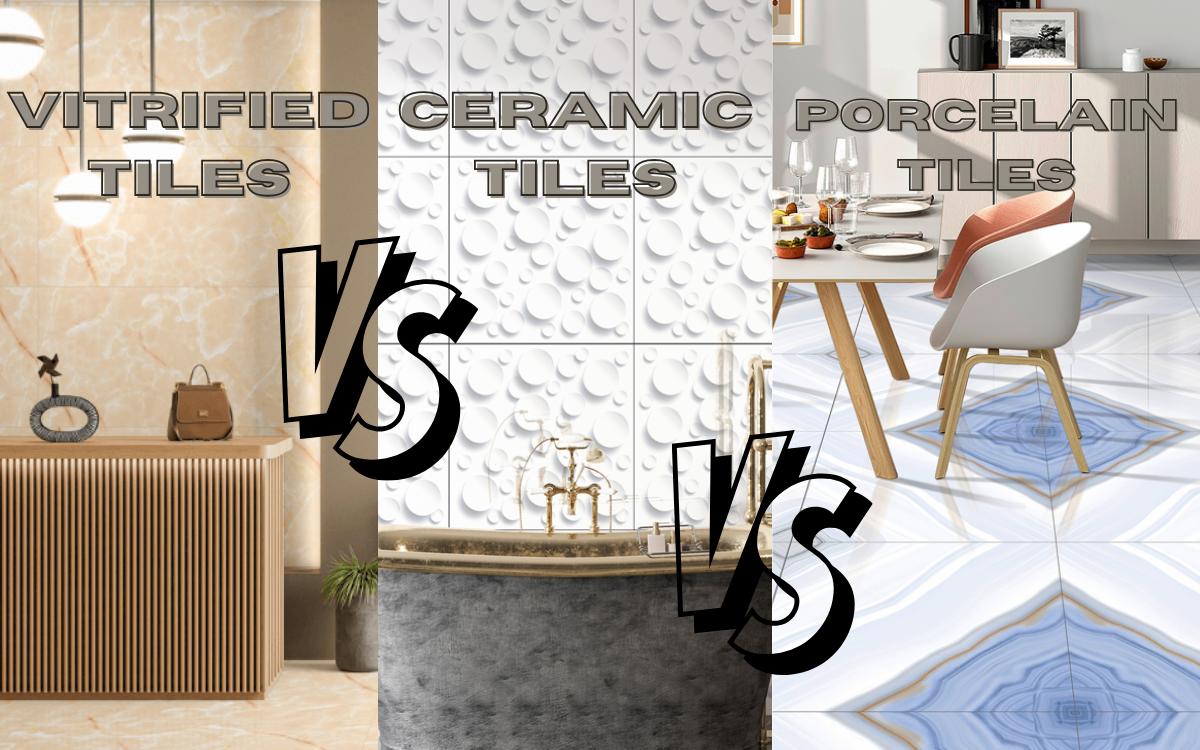
Double charge vitrified tiles. These have a strong colour layer that runs deeper into the tile body, so scratches and chips don’t expose a different colour underneath the way they do on cheap glazed ceramic. This is probably your best bang-for-buck option for a driveway or car porch.
Full body vitrified tiles. The colour and pattern run all the way through the tile, not just the top layer. More expensive, but if a chip does happen, it’s barely visible. Common in commercial parking and showroom floors where the surface has to look sharp for years.
Porcelain tiles. Very low water absorption (under 0.5%), which matters a lot if you’re dealing with rain, washing the car, or a driveway that floods slightly during monsoon. Porcelain tiles for outdoor car parking are a solid pick specifically because water doesn’t sit inside the tile and freeze-thaw or heat-expand it apart.
GVT (glazed vitrified tiles). Good middle ground on price. Fine for covered car porches with lighter traffic, less ideal for open driveways that take direct sun and rain for years.
Concrete pavers are still around too, mostly in bigger commercial car park tiles projects where budget matters more than finish. They’re rugged but they stain, and cleaning oil out of raw concrete is a genuine pain.
Anti-skid matters more than people think
This comes up a lot: do anti-skid tiles chip easily under vehicle load?
Not if you buy the right ones. Anti-skid or matte-finish parking tiles get their grip from surface texture, not a coating that wears off. A quality double charge or full body vitrified tile with an anti-skid finish holds that texture as long as the tile itself lasts, because the texture is baked into the surface, not sprayed on.
Where people run into trouble is buying a smooth, glossy tile meant for indoor floors and using it in a car porch. Add a wet tire and that surface turns into a slide. Anti-skid isn’t optional for any parking floor that sees rain, washing water, or oil drips. It’s the difference between a driveway and a hazard.
Sizes and what fits where
Most heavy duty parking tiles come in 2×2 feet (600x600mm) or 2×4 feet. Larger format tiles mean fewer grout lines, which sounds nice, but fewer joints also means less room for the tile to expand and contract with heat. For big open driveways, a lot of installers still prefer 2×2 for that reason.
For car parking floor tiles on ramps, you want a rougher, higher-grip texture than a flat car porch, since gravity adds force to whatever’s rolling on it. Tiles rated for stairs or ramps usually have deeper grooves or a pebbled finish for exactly this reason. Don’t reuse a flat driveway tile on a ramp. It won’t hold.
Parking tiles pricing varies a lot by size, thickness, brand, and finish, so I won’t throw out a number that might be wrong for your area. Our parking tiles guide breaks down current price ranges by size and finish if you want a starting point. What I’d say here: get quotes for double charge vitrified in 2×2 first, since it’s the most common and easiest to compare across suppliers.
Can you park a car on porcelain tile?
Yes, as long as it’s rated for it. Not every porcelain tile is a parking tile. Indoor porcelain floor tiles are usually thinner and rated for foot traffic only. Outdoor-rated porcelain parking tiles are thicker, have a rougher anti-skid face, and are tested for point-load pressure (a car’s weight sitting on four small tire contact patches, not spread evenly like a person walking).
Check the box or spec sheet for a vehicular or heavy traffic rating before you buy. If a supplier can’t tell you the load rating, that’s a sign to ask more questions or go elsewhere.
Car porch, driveway, garage, or showroom: does it change the tile?
A bit, yes.
A covered car porch is protected from direct rain and sun, so you have more flexibility on look and design. A GVT or lighter vitrified tile works fine there.
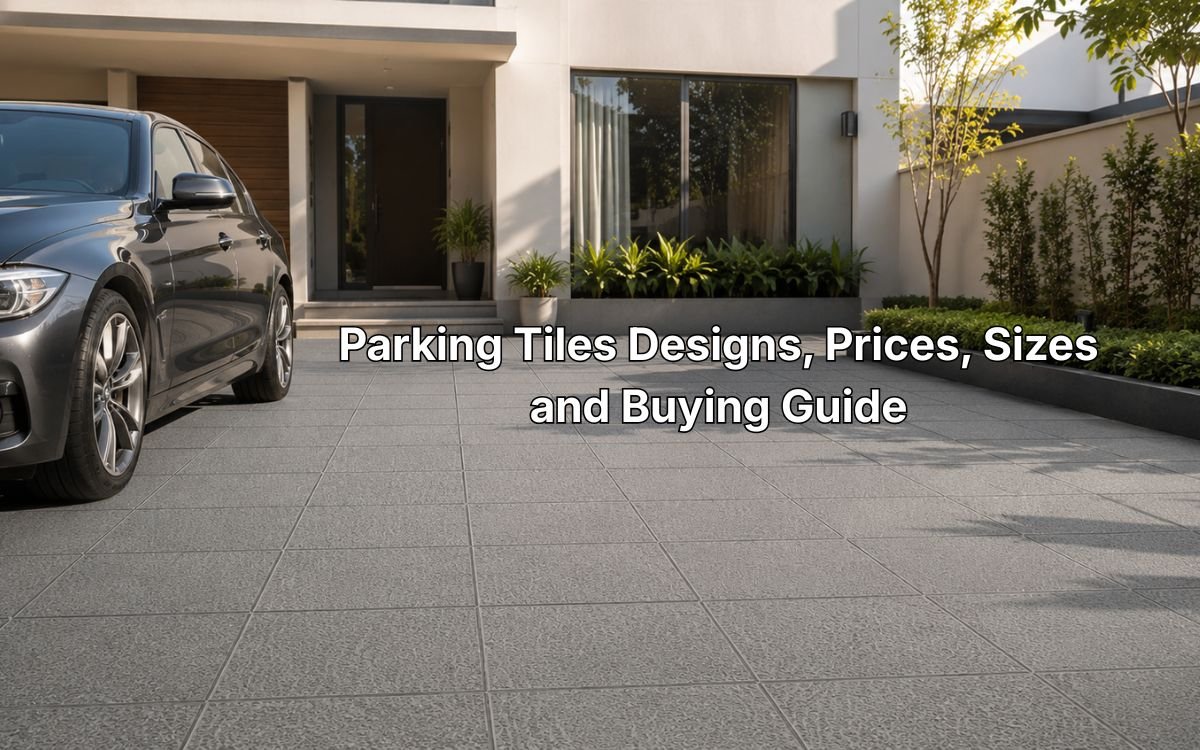
An open driveway takes weather beatings for years. Go with porcelain or double charge vitrified, both rated for outdoor use, both handling water without swelling or fading.
A garage floor deals with less weather but more chemical exposure: oil, brake fluid, coolant. Look for a stain-resistant glaze here specifically.
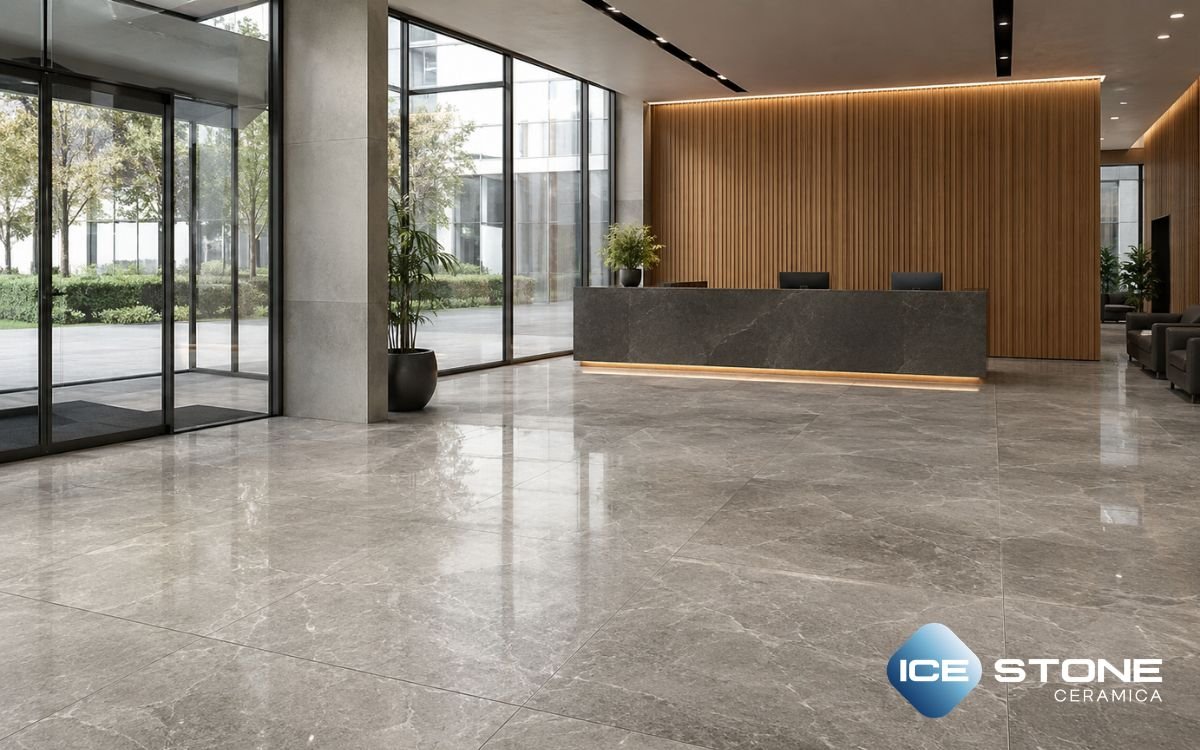
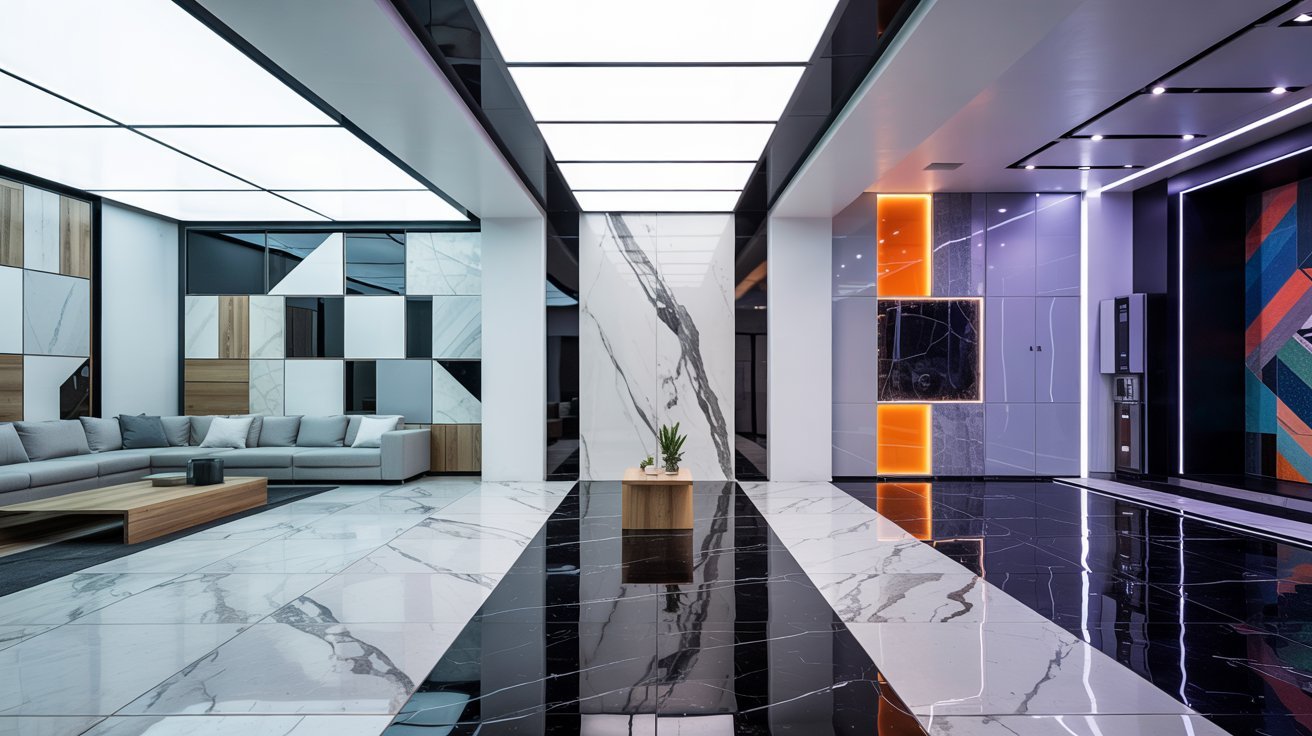
Car showroom tiles have a different job entirely. They still need to hold vehicle weight, but the priority shifts toward finish and consistency, since the floor is part of the sales experience. Full body vitrified in a polished or semi-polished finish is common for that reason.
How to clean parking tiles without wrecking them
We’ve covered the full cleaning method for porcelain elsewhere, but the short version for parking floors: sweep loose debris first, always. Grit dragged around under a mop is what actually scratches a glazed surface over time, not the mopping itself.
For oil stains, don’t scrub with anything abrasive. Use a mild degreaser, let it sit for a few minutes, then rinse. A pressure wash works well outdoors for driveways, just don’t aim it directly at grout lines at close range for extended periods, since that can erode the joint filler over time.
Skip harsh acids unless the manufacturer specifically says the tile can handle them. Vitrified and porcelain tiles resist stains well on their own. Most spills wipe off with water and a normal household cleaner if you get to them within a day or two.
Installation basics that save you a callback later
Even the right tile fails if it’s laid wrong.
The base needs to be flat and fully cured before anything goes down. Skip this step on a rushed timeline and you’ll get hollow spots that crack the first time a heavy vehicle rolls over them.
Use an adhesive rated for exterior and heavy load use, not the standard mortar mix meant for wall tiles. Cheaper adhesive is where a lot of “good tile, bad result” driveway jobs actually go wrong.
Leave proper expansion joints, especially on a long driveway or a big open car parking area. Tiles expand slightly in heat. Without a joint to absorb that movement, they push against each other and pop up at the edges.
And grade the slope correctly before laying anything, even 1 to 2 percent, so water runs off toward a drain instead of pooling on the tile surface. Standing water is what eventually gets into hairline cracks and starts the freeze-thaw or heat-cycle damage that ages a floor early.
Quick answers on car parking tiles
What’s the difference between a car tile and a regular floor tile?
Thickness, density, and surface texture. A car tile (heavy duty parking tile) is built for point-load pressure from tires and constant exposure to weather, oil, and grit. A regular tile isn’t rated for any of that.
Are heavy duty tiles for car porch different from open driveway tiles?
Mostly in how much weather protection you need. A covered porch can use a slightly lighter tile. An open driveway needs full outdoor-rated porcelain or double charge vitrified.
What’s the best tile for a car parking area on a budget?
Double charge vitrified in a standard 2×2 size, ordered in bulk if you’re covering a large parking area or lot. It holds up well and doesn’t carry the premium of full body vitrified or high-end porcelain.
Do parking tiles need special grout?
Yes. Use an exterior-rated, stain-resistant grout, ideally epoxy-based for driveways and garages. Standard cement grout stains fast under oil and tire marks.