

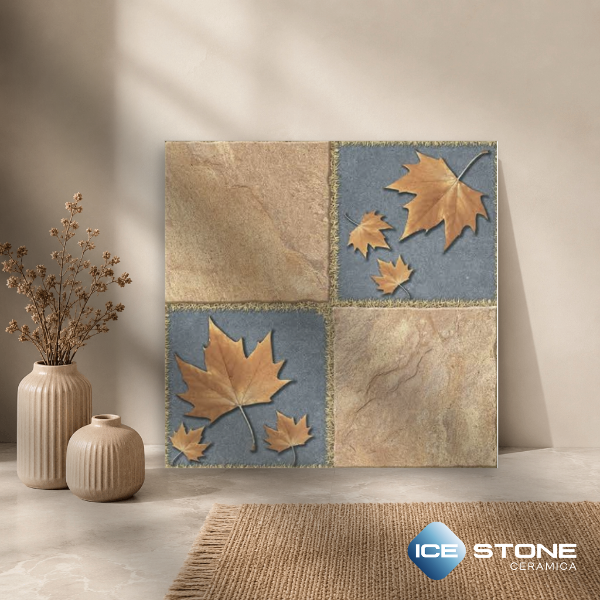
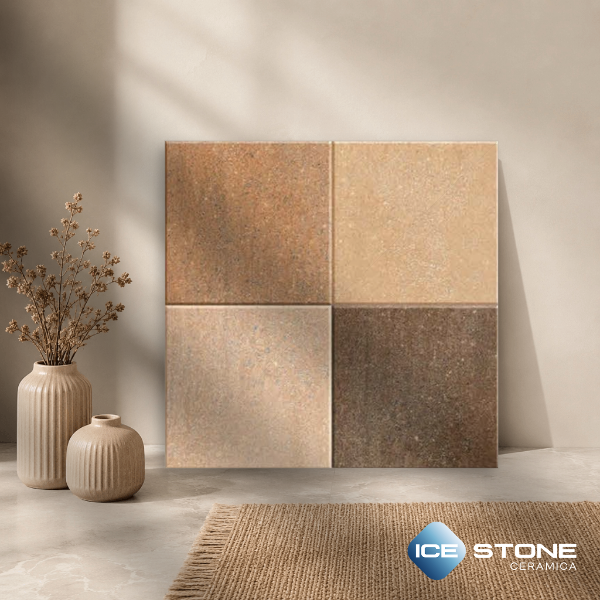
Pattern floor tiles turn a plain floor into the focal point of a room, borrowing the layout and motif work of hand-laid mosaic and inlay flooring without the labour or cost that traditional craftsmanship demands. Instead of relying on individual pieces set by hand, each tile is manufactured with the pattern built into its surface, so a single tile repeats or interlocks to recreate a look that once took skilled tile-setters days to lay. This manufactured approach is similar to how our texture floor tiles recreate natural surfaces on a durable base. Explore our full range of Floor Tiles for every other design and room in the home.
Understanding Pattern Floor Tiles
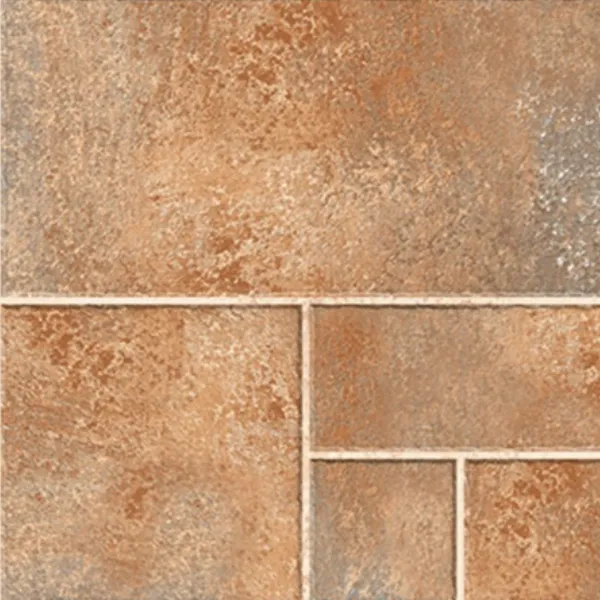
Pattern floor tiles are ceramic, porcelain, or vitrified tiles printed or textured with a repeating design — geometric shapes, florals, mosaics, or interlocking motifs — rather than a single flat colour or plain texture. The pattern is engineered to align across tiles, so once laid, the floor reads as one continuous design rather than a grid of individual pieces. This makes them a practical way to bring in decorative flooring, like an inlay or rug-effect design, without the cost or fragility of natural stone inlay work.
Herringbone, Chevron & Other Popular Layouts
Herringbone is one of the most requested layouts, where rectangular tiles are set at right angles to each other in a zig-zag arrangement, adding movement to an otherwise plain floor. Chevron takes this a step further, with tiles pre-cut at an angle so the zig-zag forms a continuous “V” rather than a broken one — a more tailored, formal look than herringbone.
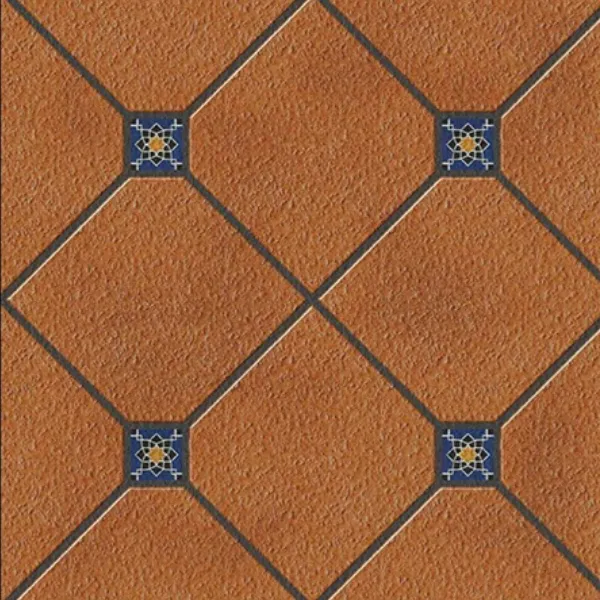
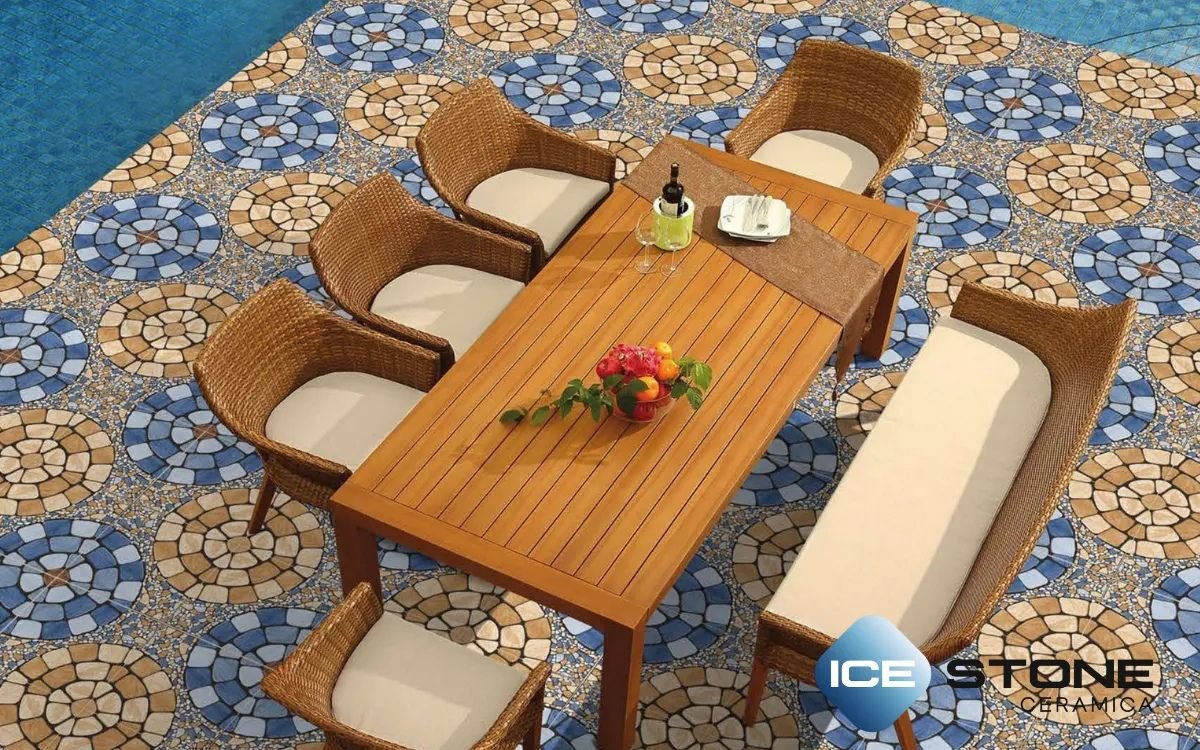
Diagonal and diamond layouts rotate a standard square tile 45 degrees, which can make a small room feel more spacious since the eye follows a longer visual line across the floor. Brick and hexagon layouts lean more casual and are common in kitchens, hallways, and outdoor spaces where a relaxed, organic pattern suits the setting better than a formal grid.
Wood-Inspired Pattern Tiles
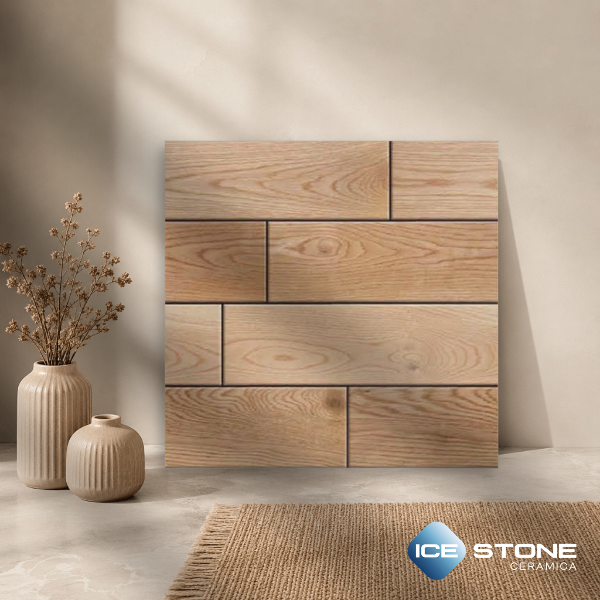
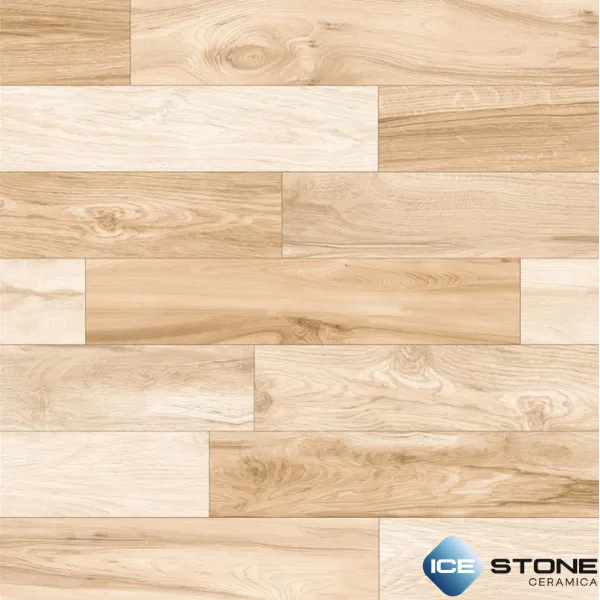
Wood-pattern tiles combine the warmth of a timber floor with the structure of a tile layout, often finished in herringbone or chevron to mimic traditional parquet flooring. They work particularly well in living rooms and bedrooms, giving a heritage, parquet-style look without the maintenance real wood parquet requires.
Mosaic-Style Pattern Tiles
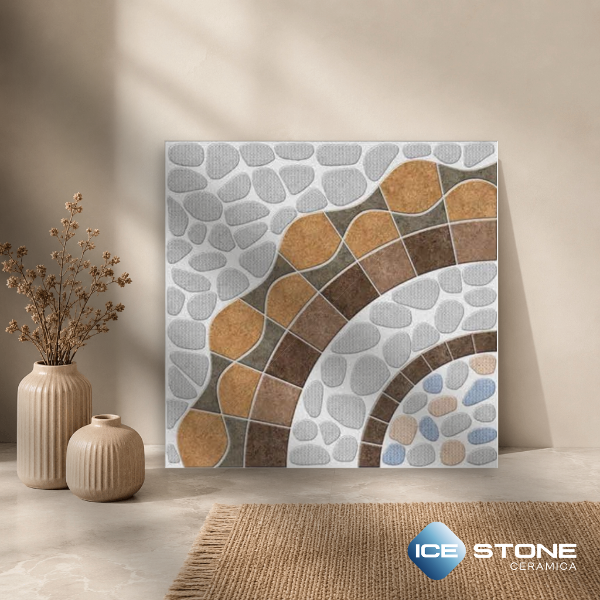
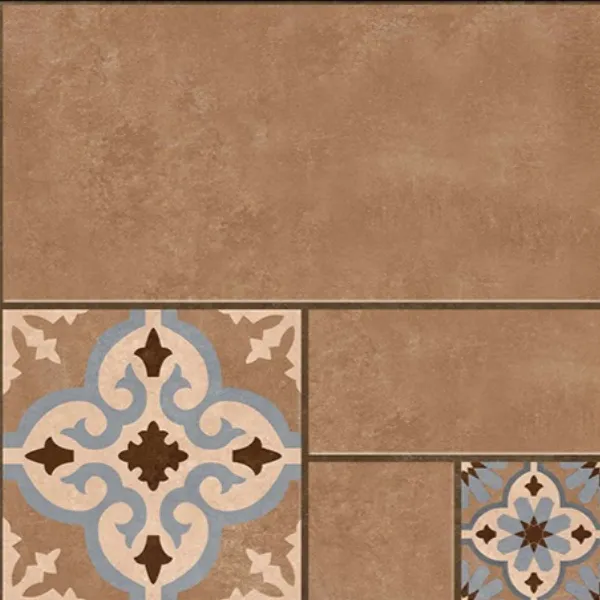
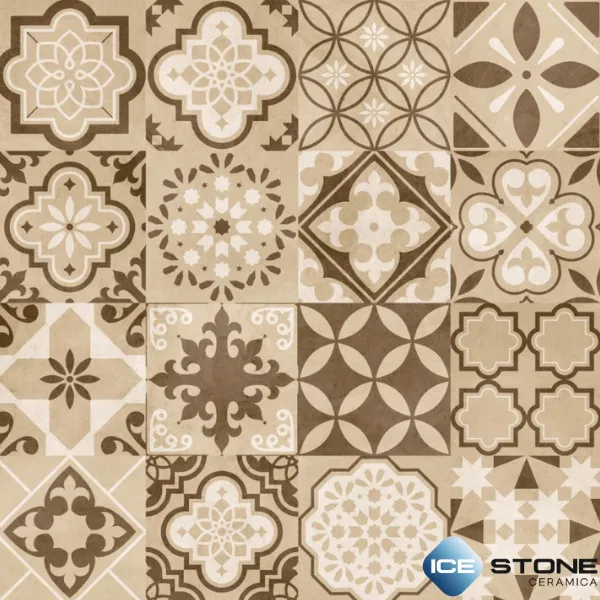
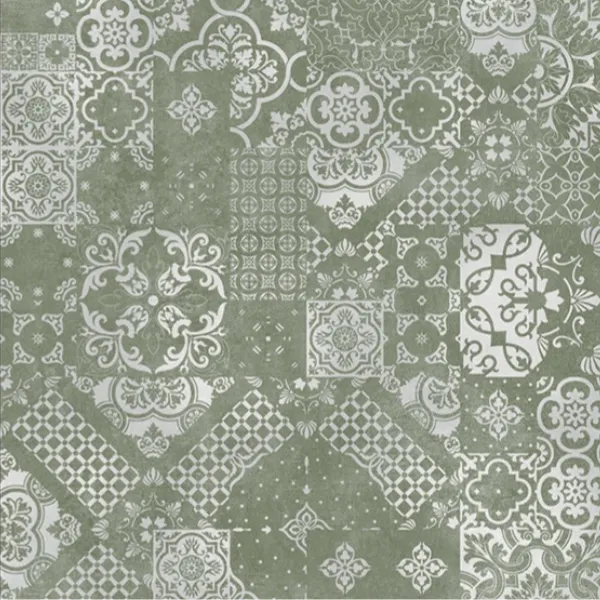
Mosaic pattern tiles recreate the look of small, hand-set mosaic pieces — often in Moroccan, floral, or geometric motifs — but as a single manufactured tile rather than dozens of tiny individual pieces. This makes installation faster and more consistent than true mosaic work, while still delivering the intricate, decorative look mosaic flooring is known for. They’re a popular choice for feature areas like entryways, backsplashes, and accent floor sections rather than covering an entire room.
Design Variations in Pattern Tiles
Geometric vs Floral Motifs
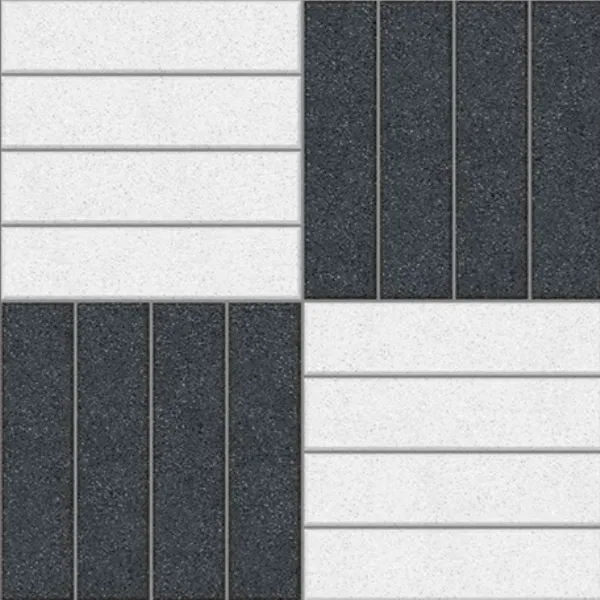
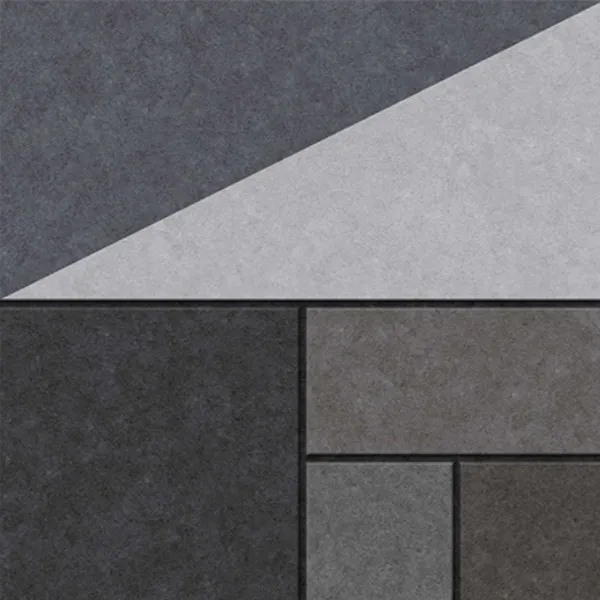
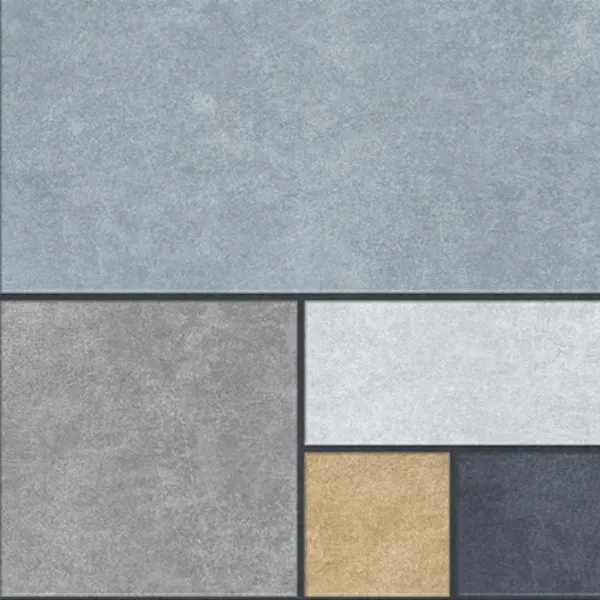
Geometric patterns — hexagons, diamonds, interlocking lines — suit modern and minimalist interiors, while floral and Moroccan-inspired motifs bring in a more traditional or bohemian character. Two-colour and multi-colour patterns, often in contrasting shades, are used to define specific zones within a larger open space.
Matt vs Glossy Pattern Surface
A matt-finish pattern tile tends to soften the visual impact of a busy design, making it easier to live with over a large area. A glossy finish, by contrast, sharpens the pattern’s edges and colour contrast, which works well for smaller accent areas but can feel overwhelming across an entire floor.
Colour Combinations That Work Best
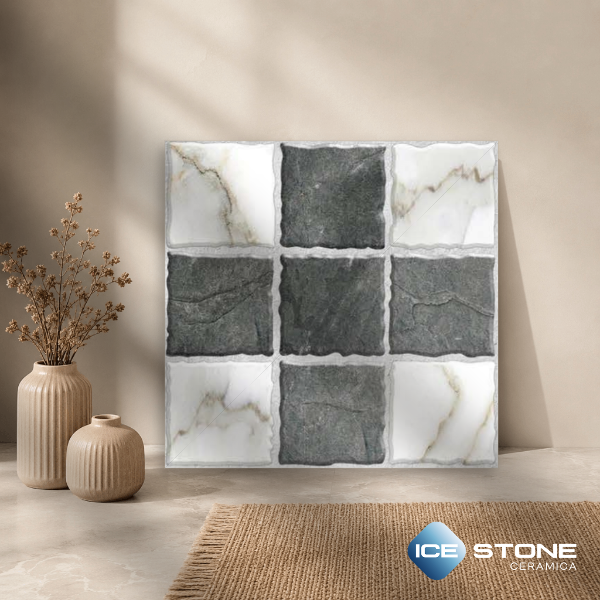
Black and white remains the most searched-for combination, largely because of its classic checkerboard and Moroccan-tile associations. Grey-based patterns pair easily with most wall colours and furniture, making them a safer choice for larger areas, while blue and green patterned tiles are typically reserved for smaller accent zones like bathrooms or entryways where a bolder statement works better.
Rooms That Suit Pattern Floor Tiles
Bathrooms and kitchens are the most common spaces for pattern tiles, since a smaller footprint means a busier design doesn’t overwhelm the room, and the pattern helps disguise everyday wear. In living rooms, wood-pattern and marble-pattern tiles in herringbone or chevron layouts add a more elevated, formal character. Hallways and entryways often use pattern tiles as a deliberate design statement, since they’re seen briefly rather than lived in, which suits a busier or more colourful design better than a room used for long periods.
Price Guide for Pattern Floor Tiles
| Finish | Price Range (₹/Sq.Ft) |
|---|---|
| Matt | ₹55 – ₹83 |
| Glossy | ₹62 – ₹81 |
| Carving | ₹64 |
Prices vary by design, layout, and collection. Check individual product pages for current pricing.
Picking the Right Pattern for Your Space
Match Layout to Room Size
Diagonal and chevron layouts help stretch the visual line of a small room, while herringbone and brick layouts suit larger, open areas where the repeating motion of the pattern has room to read clearly. Busier, multi-colour patterns generally work better in smaller rooms like bathrooms than across an entire open-plan living area.
Balance Pattern with Wall/Furniture Colour
A patterned floor works best against comparatively plain walls and furniture, since too many competing patterns in one room can make the space feel cluttered. If the walls or furnishings are already bold, a subtler grey or single-tone pattern tile keeps the overall look balanced rather than busy.
Caring for Patterned Floor Tiles
Patterned tiles need the same day-to-day care as any ceramic, porcelain, or vitrified tile — regular sweeping and mopping with a mild, pH-neutral cleaner. The one thing worth watching for on lighter, multi-colour patterns is grout staining, since light-coloured grout lines show dirt more readily than a plain, single-tone floor; sealing the grout at installation helps keep the pattern looking sharp over time.